About Diphlebia euphoeoides Tillyard, 1907
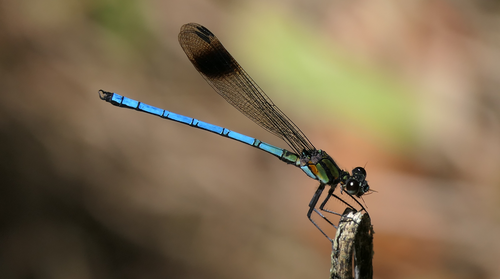
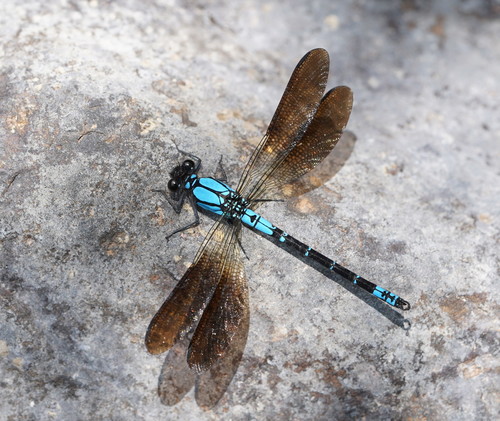
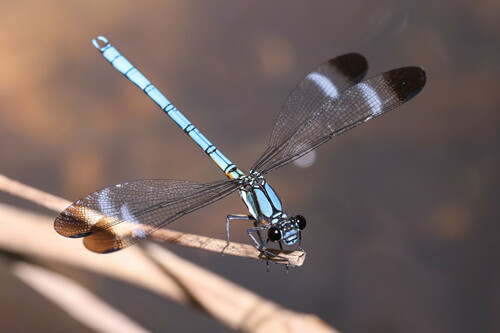
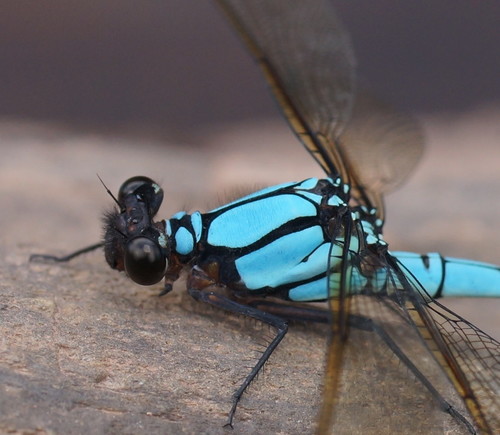
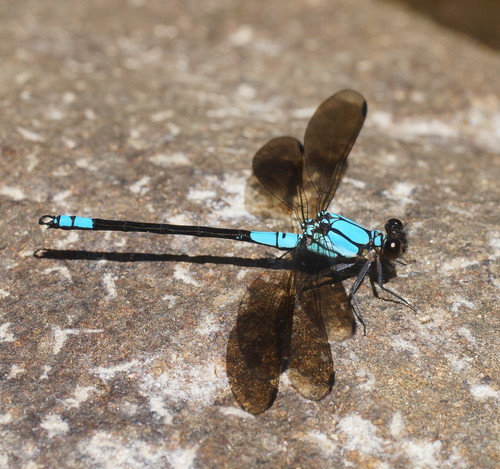
Diphlebia euphoeoides (sometimes misspelled Diphlebia euphaeoides), commonly called the tropical rockmaster, is an Australian species of broad-winged damselfly. It is part of a group known as azure damselflies. This species is found in Queensland, Australia, and Papua New Guinea. It typically lives near lakes, waterfalls or streams at relatively low altitudes, and is occasionally seen near dry pools. Unusually for damselflies, it is a relatively large insect that holds its wings outspread when at rest. It is often mistaken for dragonflies, but like most damselflies, its body is less robust than that of dragonflies, and its eyes do not meet, unlike most dragonflies. The larvae are wide and flat, with long saccoid gills for underwater breathing. The inner tooth of the larval labial palps is elongated. Specific identifying characteristics for the larvae include the mid-ventral position, distal width, basal width, and length of the median lobe. The larval motor patterns of this species are similar to those of larvae in the family Coenagrionidae. Males of the species have a bright blue and black body and dark wings. It can be told apart from the sapphire rockmaster (Diphlebia coerulescens) by the smaller size of blue markings on the base (front end) and underside of the fourth to sixth abdominal terga. The abdomen is otherwise black. This species has the widest wings of any species in the genus Diphlebia, and its hindwings are wider than its forewings. The legs are brownish black. Females are predominantly brown and yellow-green, and have smoky-coloured wings. This species undergoes incomplete metamorphosis to develop from egg to adult. Like the adult stage, the nymph is a predator. Eggs are laid underwater on moss and reeds around November. The nymphal stage lasts approximately one year. Adults usually emerge in September and October. It is an uncommon species, but it is not considered to be under threat. This species was first described in 1907 by Robin Tillyard, a young English-born entomologist. Tillyard collected the lectotype at Mervyn Creek in Queensland in January 1905. In 1910, Forster collected a specimen from the area around Port Moresby in New Guinea, named it Diphlebia reinholdi, and this taxon is now classified as the same species as Diphlebia euphoeoides.