About Diphasiastrum complanatum (L.) Holub
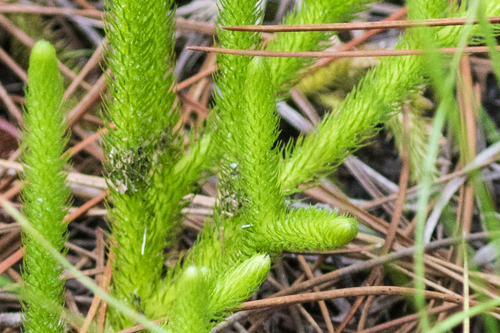
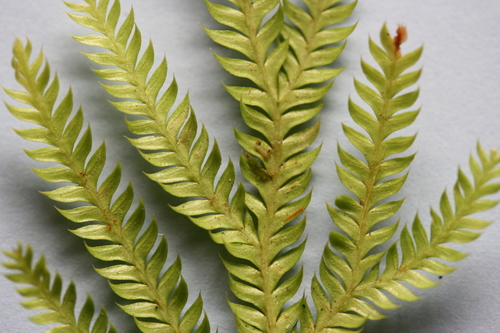
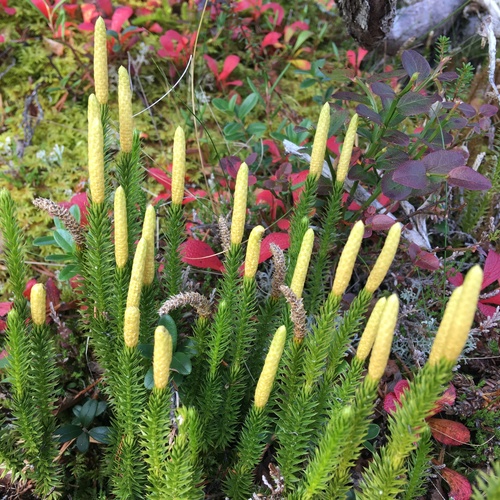
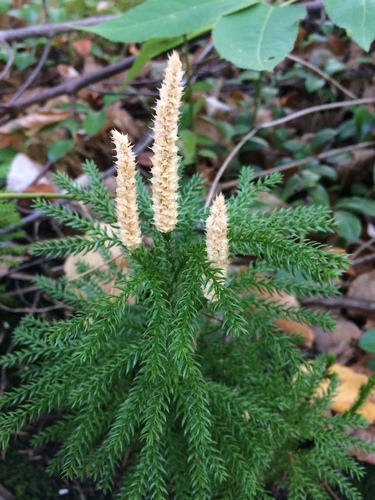
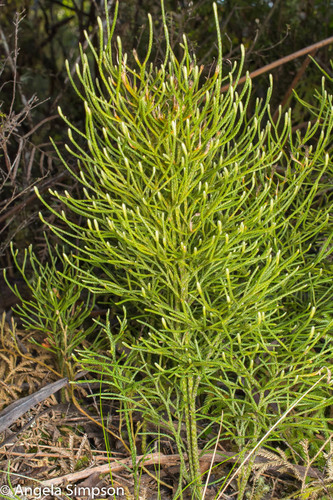
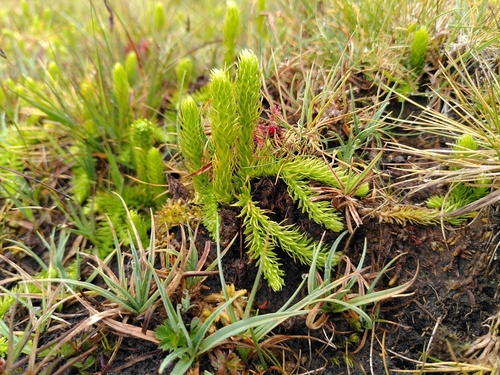
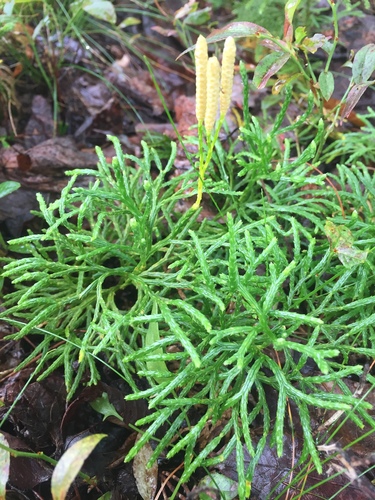
Diphasiastrum complanatum (L.) Holub is a perennial herb that spreads via stolons growing along the ground surface. Its above-ground stems typically branch within a single geometric plane, which is the origin of its specific epithet "complanatum", meaning "same plane". Upright offshoots of the main stem are 5 to 30 cm long, with flattened tops, and the entire stem can reach lengths of over 100 cm. Its leaves are small and scale-like, and lie parallel to the stem. Horizontal shoots can take root, and over time the plant forms large clonal colonies. One study by Eino Oinonen documented a clonal colony of this species in Finland that measured 250 m (820 ft) in diameter. Strobili (spore cones) are borne vertically, in groups of up to 4 at the tips of some branches. Sporangia are held in densely cylindrical spore cones that have long stalks. As the species is currently recognized, its distribution includes Canada, Greenland, northern and central Europe (including montane regions of the British Isles), Russia, China, Japan, India, Thailand, and the northern United States. Historically, this species was used to dye wool in Finland.