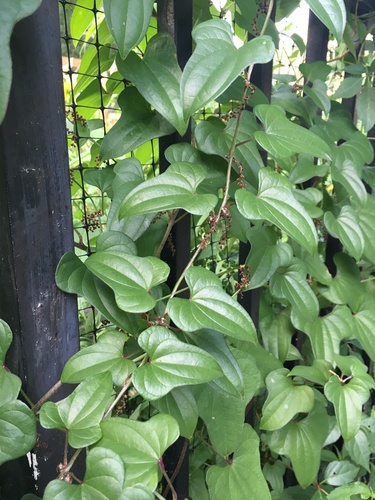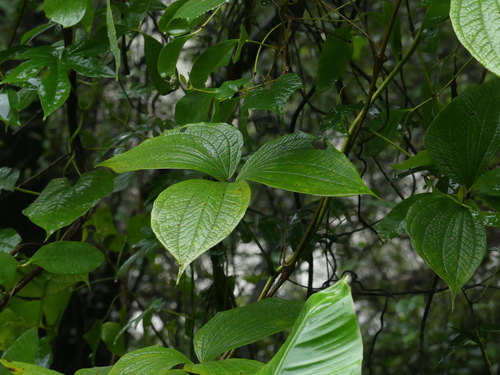
About Dioscorea hispida Dennst.
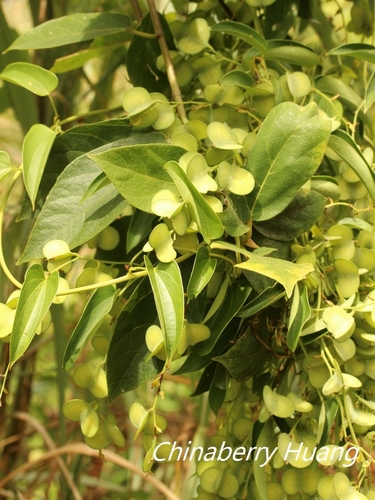
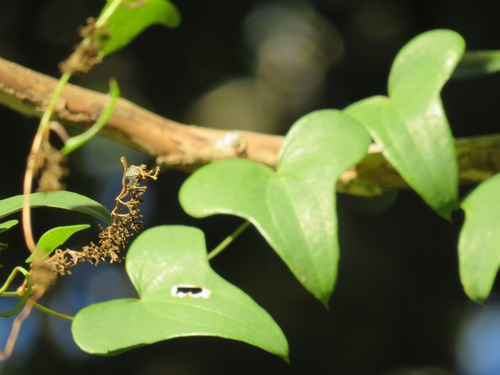
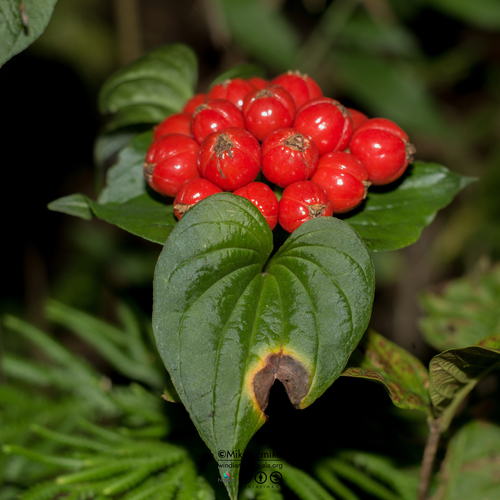
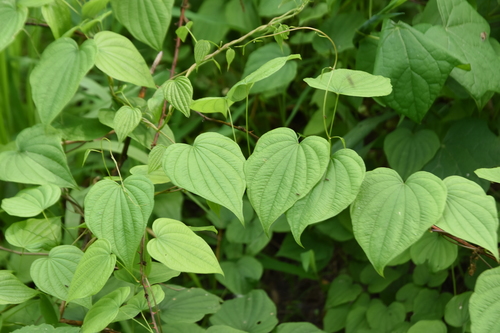
Dioscorea hispida, also commonly called the Indian three-leaved yam, known as nami in Tagalog and gadung in Indonesia, is a yam species belonging to the genus Dioscorea. It is native to South and Southeast Asia. This plant is poisonous when raw, so careful processing is required to make it safe to eat. Many different groups of people use its tuber as a food source. Fresh tubers are toxic because they contain saponins and calcium oxalate raphides, so they must be processed before consumption. The typical processing method involves cutting the tuber into thin strips, placing the strips in a sack or net, and leaving the container in a stream for several days to allow toxins to leach out. After leaching, the tuber is dehydrated and then cooked. Grated gadung tubers are used in Indonesia and China to treat early-stage leprosy, warts, calluses, and fish eyes. The bulbs of the gadung plant are additionally used to treat wounds caused by syphilis. In Thailand, slices of gadung root are applied to relieve stomach spasms and colic, and to draw out pus from wounds. In the Philippines and China, the plant is used to ease pain from arthritis and rheumatism, and to clean wounds on animals. The main component of gadung is its tuber, which contains thick mucilage made up of water-soluble glycoproteins and polysaccharides. These glycoproteins and polysaccharides act as water-soluble dietary fiber and function as hydrocolloids, and have been shown to have beneficial effects in lowering blood glucose levels and total cholesterol levels, especially LDL cholesterol.