About Dioscorea elephantipes (L'Hér.) Engl.
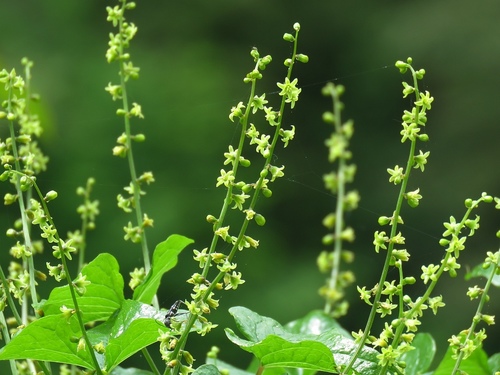
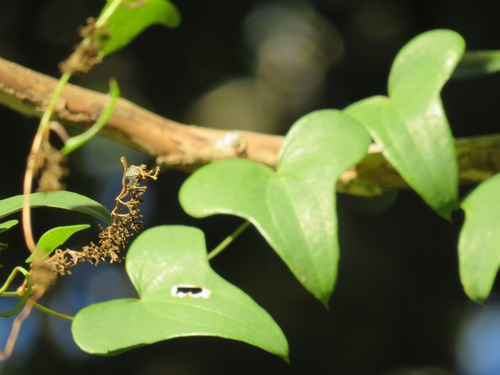
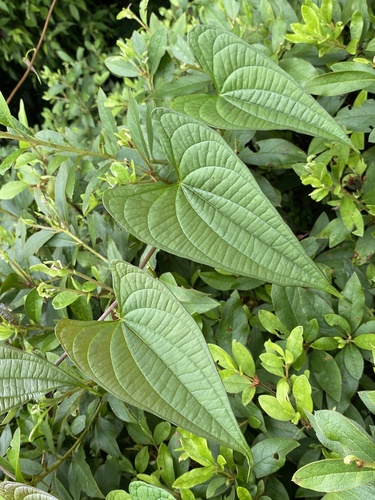
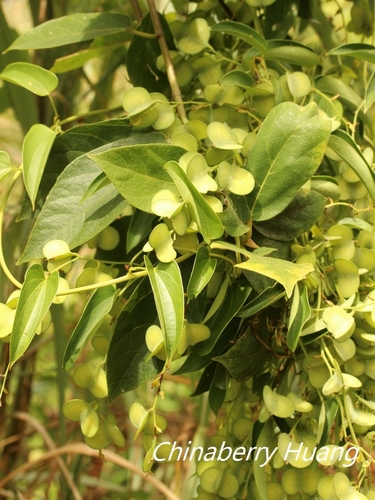
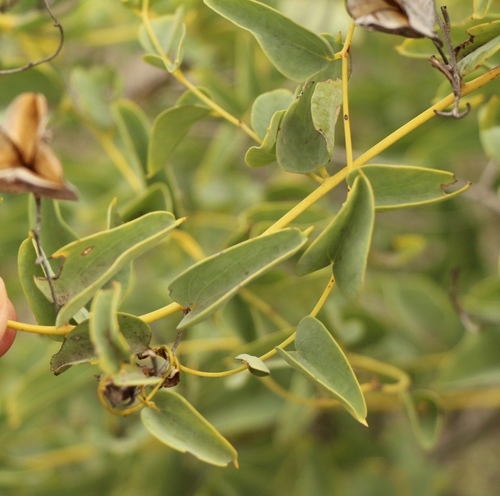
Dioscorea elephantipes (L'Hér.) Engl. is a deciduous climbing plant. It gets the common name "elephant's foot" from the appearance of its large, partially buried tuberous stem (also called a caudex). This structure grows very slowly but often reaches a considerable size, frequently measuring more than 3 m (10 ft) in circumference, with nearly 1 m (3 ft 3 in) of height above ground. The tuber can weigh as much as 365 kg. It is rich in starch, which gives it the alternate common name Hottentot bread, and its outer surface is covered in thick, hard, corky plates. This species is primarily a winter grower; it produces slender, leafy climbing shoots, and bears dark-spotted greenish-yellow flowers in winter (May or June within its native habitat). Its flowers are dioecious, meaning male and female flowers grow on separate individual plants. Its natural distribution is the arid inland regions of the Cape in South Africa. Its range extends from central Northern Cape, where it grows around Springbok, south to the Clanwilliam and Cederberg area, and eastwards through the districts of Graaff Reinet, Uniondale and Willowmore, as far east as Grahamstown. It was recently rediscovered in a section of Northern Cape Province during an expedition that collected seeds for the Millennium Seed Bank Project. Within its native range, it is most commonly found on rocky north- and east-facing slopes, growing in quartz or shale-based soils. This species is not difficult to cultivate, but it requires extremely coarse, well-drained soil and sparse watering. It is deciduous and drops its leaves during the summer, at which point it enters a dry dormant period. It has been awarded the Royal Horticultural Society's Award of Garden Merit.