About Dioscorea bulbifera L.
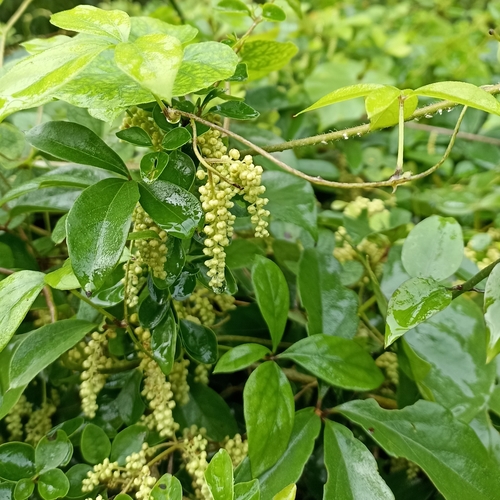
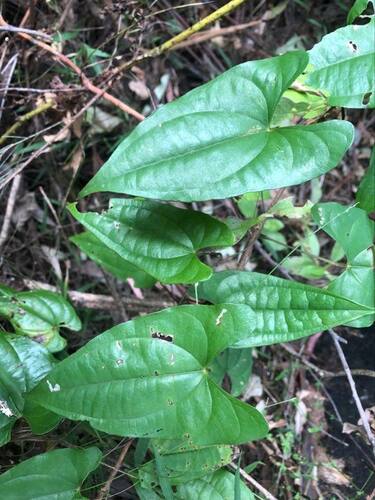
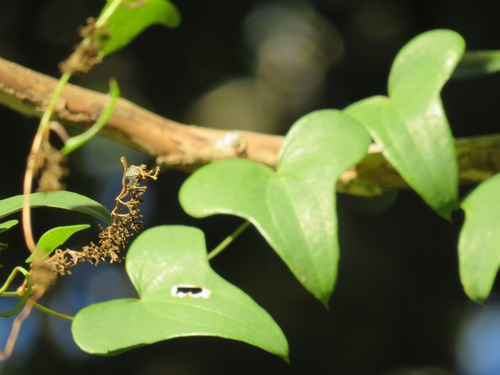
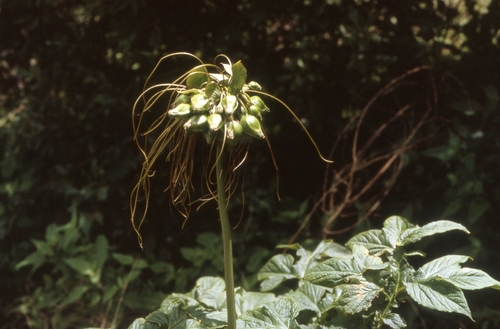
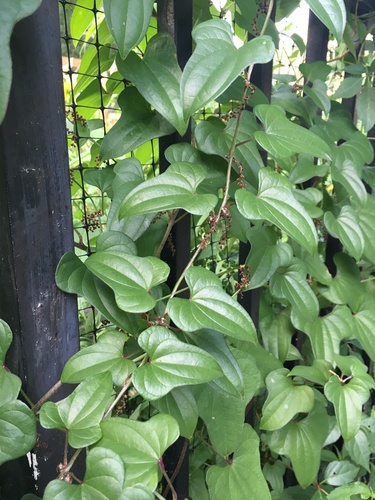
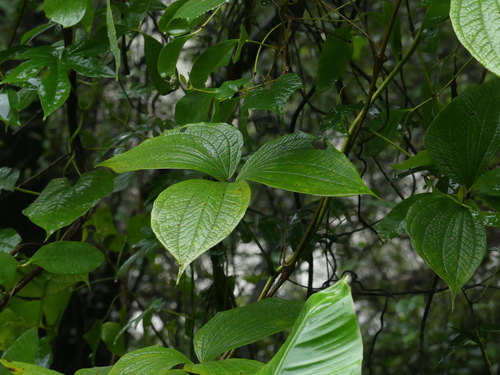
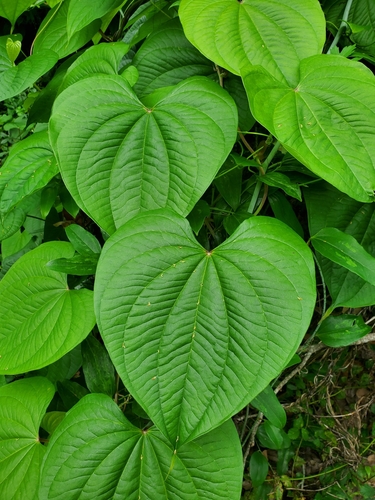
Dioscorea bulbifera L., commonly called air potato, is a perennial vine with broad, alternate leaves, and two distinct types of storage organs. It forms bulbils in the leaf axils of its twining stems, and produces oblong, small potato-like tubers underground. Air potato grows extremely quickly, reaching roughly 20 centimeters (8 inches) per day, and can eventually grow over 18 meters (60 feet) long. It typically climbs all the way to the tops of trees, and tends to outcompete and displace native plants. New individual plants grow from bulbils formed on the parent plant, and these bulbils act as the species' main method of dispersal. The aerial stems of air potato die back during winter, but the plant resprouts the following growing season from both existing bulbils and underground tubers. The primary means of spread and reproduction for this species are through the bulbils. Their small size makes air potato difficult to control, because even the smallest bulbils can sprout at a very early growth stage. The vine produces small white flowers, but these flowers are rarely seen when the vine grows in regions like Florida. It produces dry capsule fruits. This species is native to Africa, Asia, and northern Australia. It has been widely cultivated, and has become naturalized in many additional regions including Latin America, the West Indies, the southeastern United States, and a range of oceanic islands. It has been observed growing in habitats including forest edges, roadsides, and other areas with mesic, loamy sand. Uncultivated forms, such as those that grow wild in Florida, can be poisonous. These varieties contain the steroid diosgenin, which is the main raw material used to manufacture many synthetic steroidal hormones, including the hormones used in hormonal contraception. There are claims that even wild forms of D. bulbifera become edible after drying and boiling, which has led to confusion over the actual toxicity of the plant. Some varieties of D. bulbifera produce edible tubers and are cultivated as a food crop, particularly in West Africa. The tubers of edible varieties often have a bitter taste that can be removed through boiling, after which they can be prepared the same way as other yams, potatoes, and sweet potatoes. Air potato has been used as a folk remedy to treat conditions including conjunctivitis, diarrhoea, and dysentery, alongside other ailments. D. bulbifera holds high cultural importance for the Tiwi people of Australia, who use it in an important traditional ceremony called kulama. During the kulama ceremony, the tubers are ritually cooked and eaten on the third day of the ceremony. In Nigerian Pidgin English, this plant is known as the up-yam, because it is most often cultivated for its above-ground bulbils rather than its underground tubers.