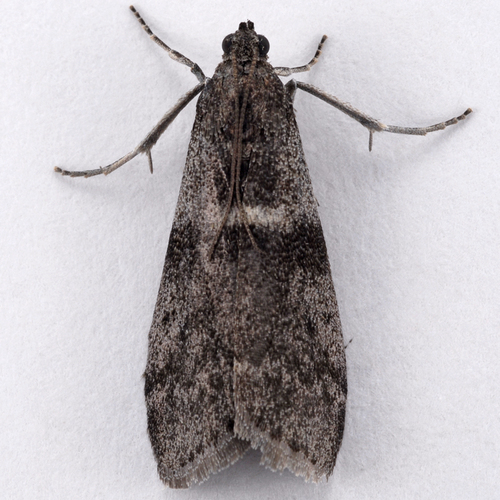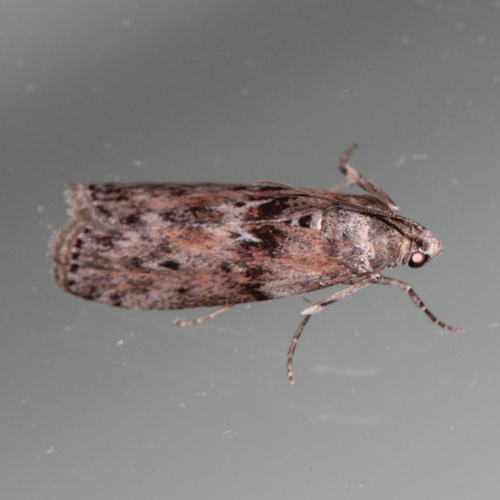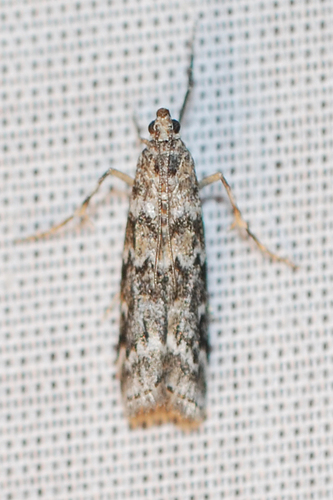
About Dioryctria reniculelloides Mutuura & Munroe, 1973
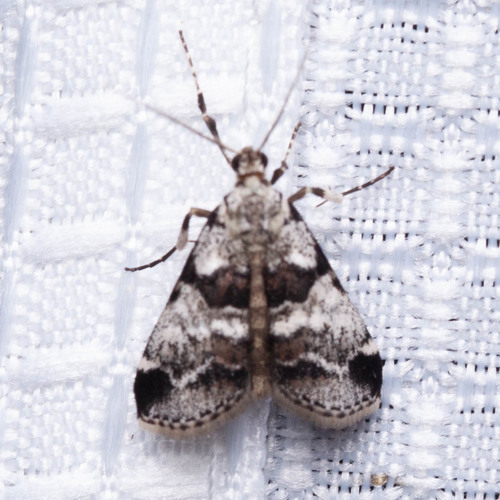
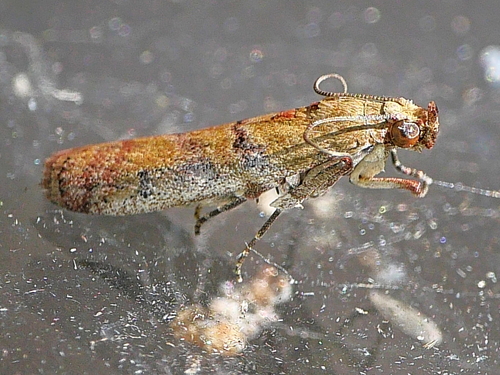
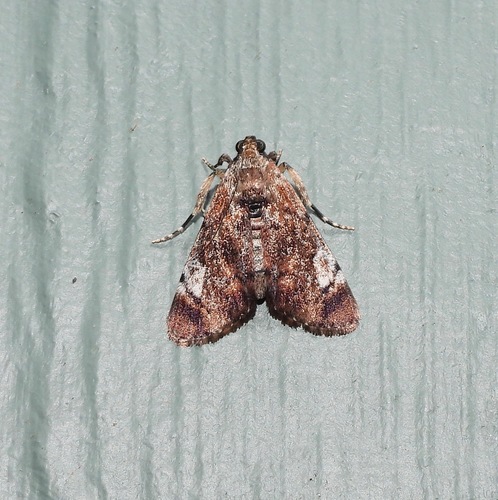
Dioryctria reniculelloides, commonly known as the spruce coneworm, is a moth species belonging to the family Pyralidae. It was first described by Akira Mutuura and Eugene G. Munroe in 1973. This species is distributed across North America from Nova Scotia to Alaska; in eastern North America, its range extends south to New York, while in western North America it reaches south to California and New Mexico. A population of this species was first recorded in China in 2009. The spruce coneworm occurs throughout most or all of the range of spruce in North America, and it occasionally becomes abundant, often during outbreaks of the spruce budworm. Its larvae feed on the new foliage and cones of spruce, and also often feed on balsam fir, as noted by Ives & Wong in 1988. When the species is abundant, it can become a serious pest, particularly on white spruce, according to Hedlin et al. 1980. The wingspan of adult spruce coneworm moths ranges from 9.5 to 11 mm. Adults are active on the wing from June to August, with one new generation produced each year. The larvae of this species feed on plants in the genera Picea, Tsuga, Abies, as well as on Pseudotsuga menziesii and Pinus contorta. Spruce budworm larvae sometimes cause superficial damage to spruce cones, but their impact on the seed crop is minimal at least in central Canada, as reported by Ives & Wong 1988. Henricus fuscodorsana, the cone cochylid, has larvae that feed inside cones and damage cone scales and seeds, and these larvae typically cause less than 10% loss to a seed crop, per Hedlin et al. 1980. Dioryctria reniculelloides overwinters as a first-instar larva, and pupation occurs in late June and early July.