About Diodora graeca (Linnaeus, 1758)
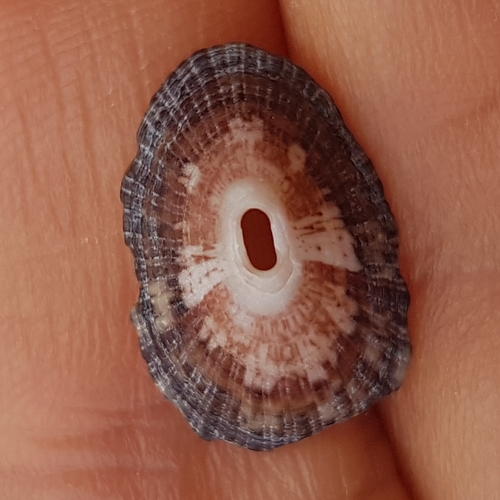
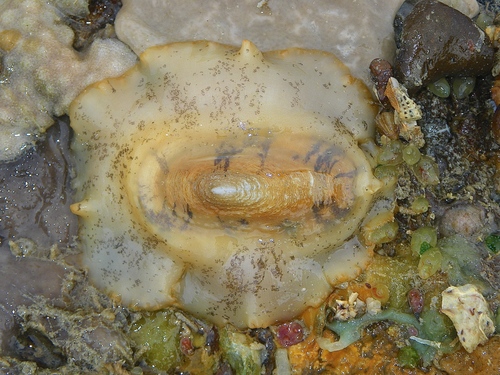
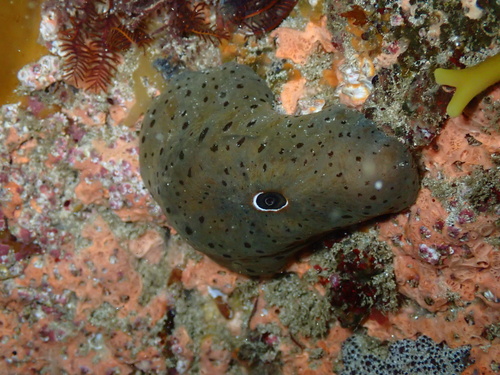
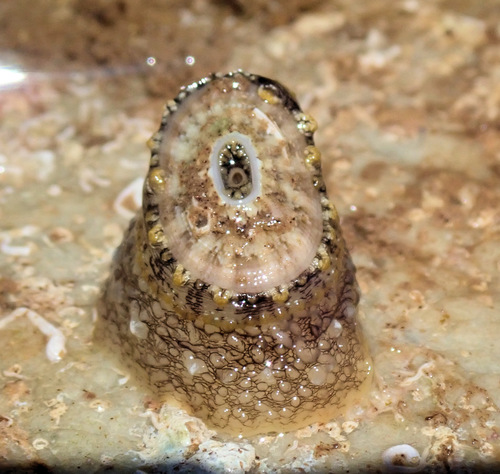
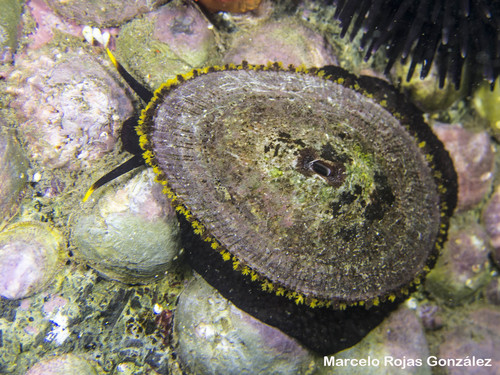
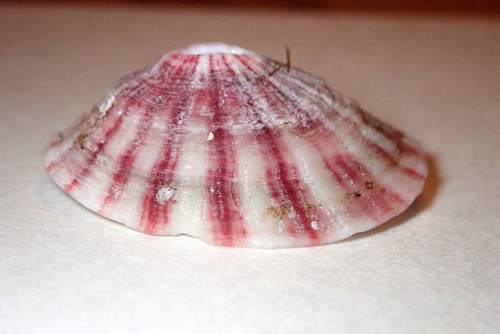
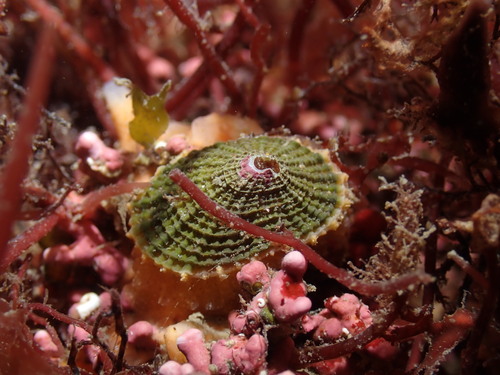
The oval shell of Diodora graeca is small, measuring 25 mm long and 18 mm wide, and is rather flat. It has no whorls and is shaped like a shield. The base of the shell is slightly bent. Its aperture sits on the dorsum and is keyhole-shaped; this opening functions as an outlet for water and waste products. The shell has subtle reticulated sculpture: concentric cords are crossed by radial ridges, with alternate ridges being larger. Shell color ranges from creamy white to yellowish white, and often has a slight orange tint. This species is mainly herbivorous, and also feeds on detritus. The soft body of the animal has a broad creeping foot and a well-developed mantle. Its carotenoid content has been studied, and the following carotenoid substances have been detected: α-carotene, β-carotene, γ-carotene, zeaxanthin, diatoxanthin, mutatoxanthin and astaxanthin. This keyhole limpet is found clinging to rocks or beneath stones in the sublittoral zone, down to depths of a few hundred meters. Its distribution ranges from the Mediterranean and West Africa, to the North Sea, where it is widespread on the coasts of Ireland and western Britain, and the subarctic North Atlantic. Specimens that wash up on beaches of the south-eastern North Sea are almost certainly fossils from the Pliocene and Eemian, because the species no longer occurs in this area.