About Diodora cayenensis (Lamarck, 1822)
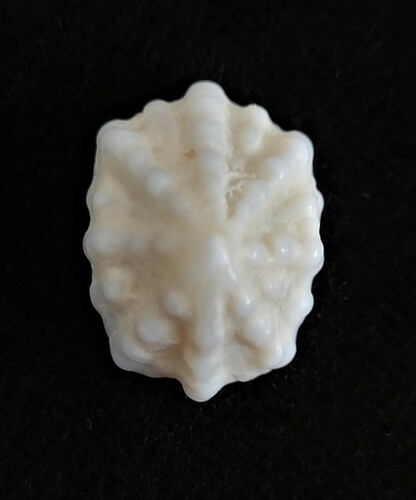
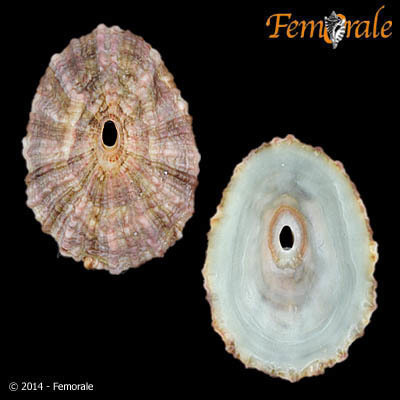
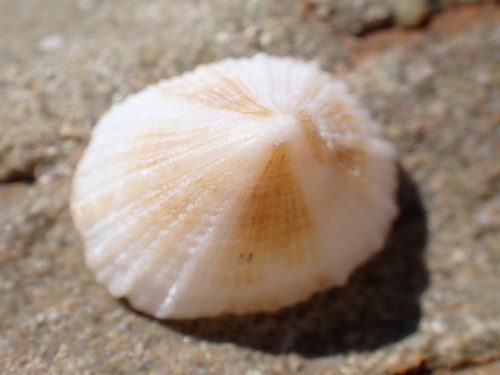
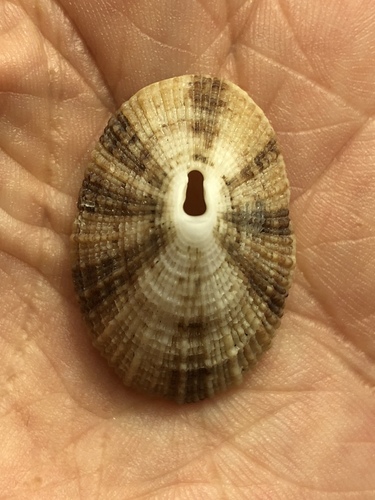
Diodora cayenensis, commonly known as the Cayenne keyhole limpet, is a small to medium-sized species of limpet. The shell of this species ranges in size from 15 mm to 50 mm; the largest individual ever recorded measures 51 mm. The shell takes the shape of an effectively elevated low cone, with a small, subcentral keyhole-like opening, or orifice, at its top. The external surface of the shell has a sculpture of many radiating ribs. Its external coloration varies from white to pinkish gray or brown, and sometimes displays faint rays. The interior of the shell is white to gray. Internally, the keyhole opening is outlined by a truncate callus, which has a deep pit along its posterior edge. The shell’s margins are dentate, caused by erosion from contact with nearby shells and rocks. The keyhole opening plays an important role in the limpet’s respiration, allowing water to enter and exit the shell. This limpet species lives in inlets and offshore waters, where it attaches to rocks or shells. It is occasionally found on sponges, and may also wash up on sound and ocean beaches. Diodora cayenensis is distributed from New Jersey south through the West Indies to Brazil; it is also found in the Gulf of Mexico, the Caribbean Sea, and off the Canary Islands. Certain species of crab are opportunistic predators that may target D. cayenensis, including stone crabs of the genus Menippe and spider crabs of the genus Libinia. These crabs use their powerful claws to crush the limpet’s shell to access its soft flesh. Diodora cayenensis is primarily herbivorous, feeding on a variety of algal species. It uses its radula to scrape algae off surfaces such as rocks and coral. By consuming algae, the species contributes to regulating algal populations within its habitat. Diodora cayenensis competes with other herbivorous organisms, including other limpet species, sea urchins, and herbivorous fish, for access to algal food resources. This competition for food can influence the distribution and abundance of D. cayenensis in its habitat. The Cayenne keyhole limpet reproduces through broadcast spawning, a form of external sexual reproduction common in sessile organisms. To compensate for the constantly changing conditions of its habitat, D. cayenensis releases large quantities of eggs into the water column to increase fertilization rates and, in turn, the number of surviving offspring. As a reproductive strategy, broadcast spawning depends heavily on turbulent water movement to bring compatible male and female gametes together for fertilization to occur.