About Diodora aspera (Rathke, 1833)
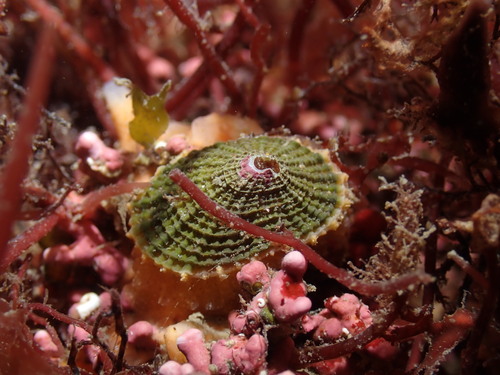
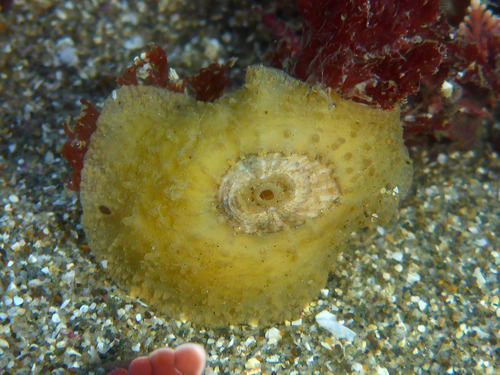
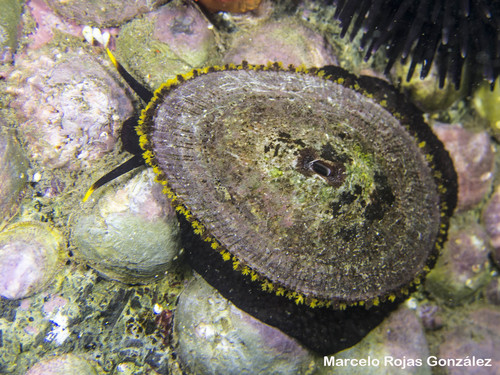
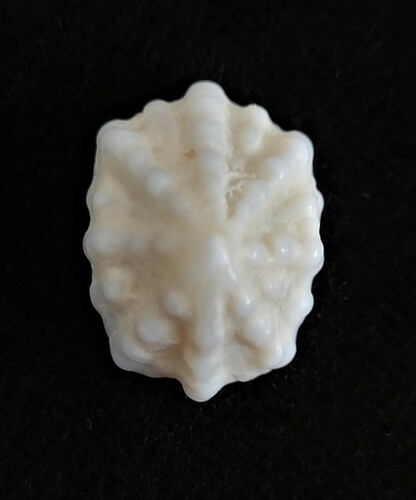
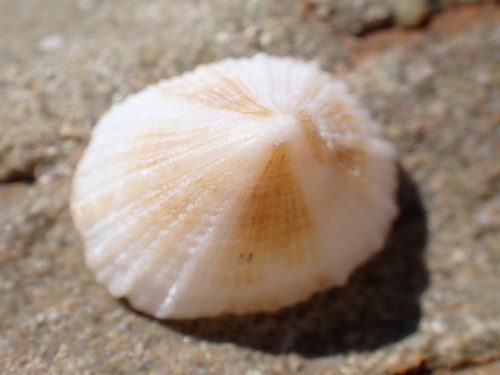
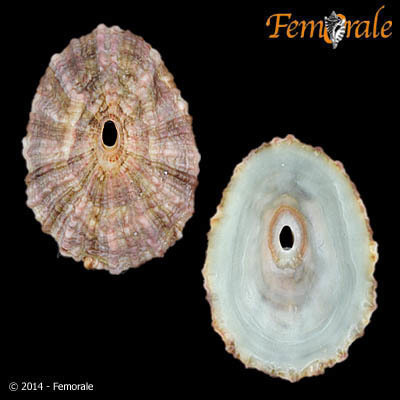
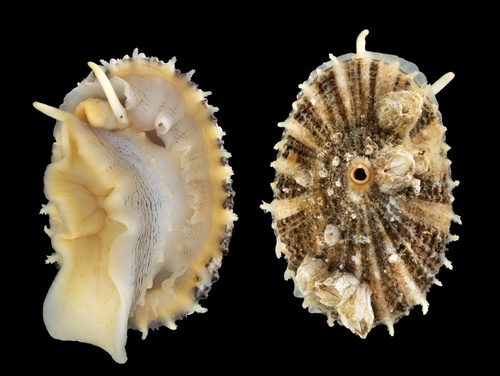
Diodora aspera has a cone-shaped shell that reaches a length of about 7 cm (2.8 in). Near the shell's apex sits an aperture around one tenth the length of the shell; this opening is used for respiration and waste elimination. The species has a broad foot that creates suction to cling to rock surfaces, and a large mantle that can cover the shell's margin. The shell's outer surface is sculpted with coarse ribs, and is typically greyish-brown or grey, often marked with dark and pale radiating color bands. The shell margin is crenulate, and the shell interior is white.
This species is native to the northeastern Pacific Ocean, ranging from Alaska to Mexico. It lives in the lower intertidal zone and shallow sub-littoral zone, down to around 12 m (40 ft) deep. It most often clings to the lower sections and undersides of rocks, but can sometimes be found on kelp holdfasts and stalks. When exposed during low tide, it consistently attaches to the same spot, where its shell fits neatly to the rock's contours.
During high tide, this keyhole limpet crawls across rocks, using its radula to scrape off bryozoans and algae to eat; it also consumes certain species of sponges. Diodora aspera individuals are separate sexes, and individuals with mature ripe gonads are present year-round. Eggs and sperm are released into the water column, where fertilization occurs, and the resulting larvae eventually settle on the seabed. This keyhole limpet acts as a host for the ectoparasitic copepod Anthessius nortoni. The scaled polychaete worm Arctonoe vittata is a commensal of D. aspera, living between the limpet's foot and shell. This worm grows up to 10 cm (4 in) long, and may need to bend to fit in its living space. Though the worm is a predator, it does not harm its host; instead, it searches for prey as the limpet moves around. It will however defend its host if a predatory starfish approaches, by biting the starfish's tube feet. The keyhole limpet itself can also defend against starfish attacks. When certain starfish species approach, the limpet quickly extends and folds its mantle upward to cover its shell, while another mantle flap descends to cover its foot. At the same time, it extends an inhalent siphon through the aperture to cover the shell apex. These defensive movements prevent the starfish from gaining a grip on the limpet shell with its tube feet, and there may also be a chemical deterrent present in the mantle. Regardless of the exact mechanism, the starfish will abandon its attack, and the limpet lowers its mantle after roughly twenty minutes. This defensive response is not triggered by all starfish, and is likely mediated by a chemical cue.