About Dioctria atricapilla Meigen, 1804
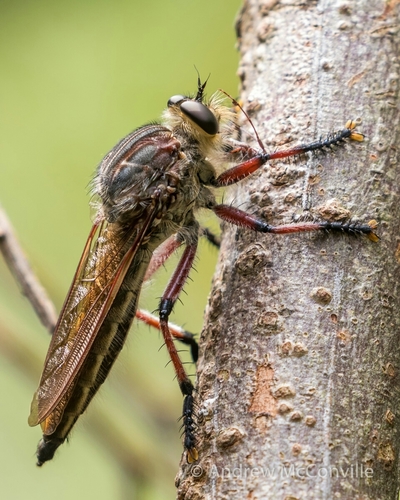
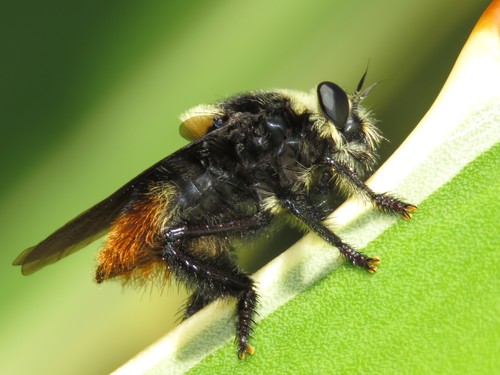
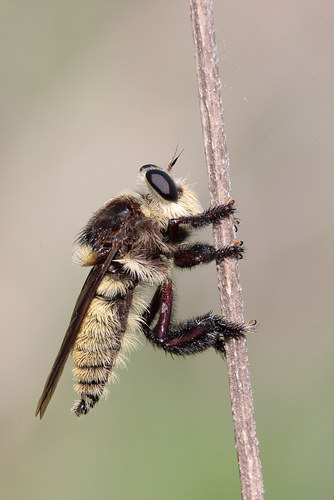
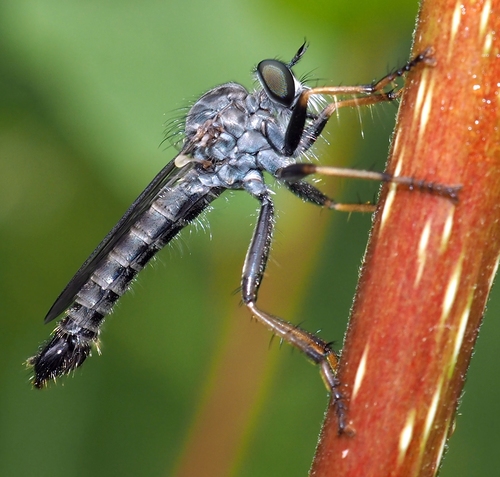
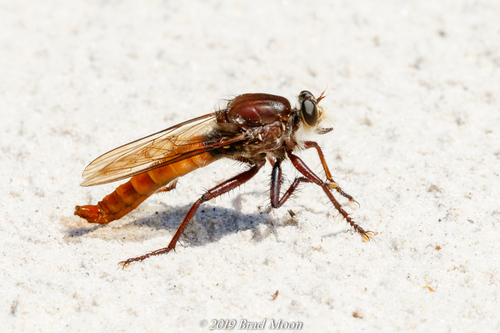
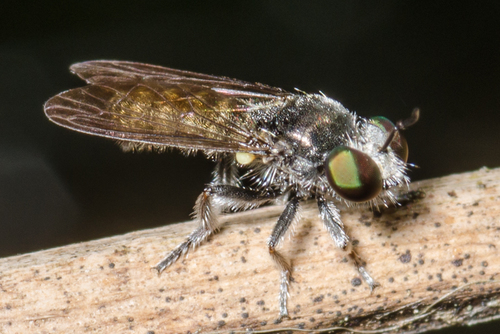
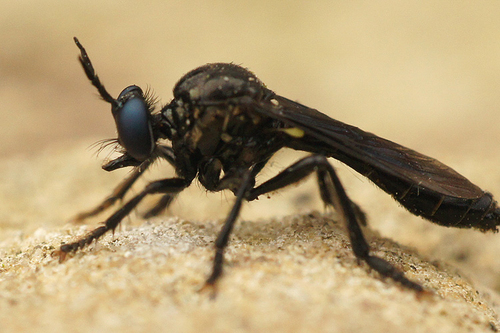
Dioctria atricapilla, commonly known as the violet black-legged robber fly, is a species of robber fly belonging to the subfamily Dasypogoninae. Adults of this species measure 9 to 12 millimeters in body length, with a wingspan of approximately 7 to 9 millimeters, and have short, three-segmented antennae. This is a predatory insect, and its diet mainly consists of smaller flies and predatory hymenopterans. It primarily lives and grows in grassland habitats, and adult individuals are typically active and seen between May and July. Like all robber flies, the violet black-legged robber fly feeds by perching on the lower stems of grasses, and ambushes passing prey mid-flight. The species' larvae usually develop in dung piles or decaying organic matter, though they can also grow and mature in ordinary soil. During mating, the male leads the courtship dance in front of the female. If the female is not receptive to the male's display, she will rapidly move her wings or fly away; if she is receptive, the male will begin copulation.