About Diocalandra frumenti (J.C.Fabricius, 1802)
Diocalandra frumenti is a species of weevil in the family Curculionidae, with common names including the palm weevil borer, the lesser coconut weevil, and the four-spotted coconut weevil. This species is found across Africa, Southern Asia, Northern Australia, and has also been recorded in the Canary Islands. The specific territories where it occurs include Somalia, Tanzania, Madagascar, the Seychelles, Mauritius, India, Sri Lanka, Bangladesh, Myanmar, Malaysia, Singapore, Indonesia, the Philippines, Japan, Taiwan, Papua New Guinea, various Pacific island groups, and Australia. It is a pest of coconut trees and multiple other palm species. While it infests a number of different palm species, it is a major pest of coconut (Cocos nucifera), oil palm (Elaeis guineensis), Canary Island date palm (Phoenix canariensis), date palm (Phoenix dactylifera), California fan palm (Washingtonia filifera), and Mexican fan palm (Washingtonia robusta).
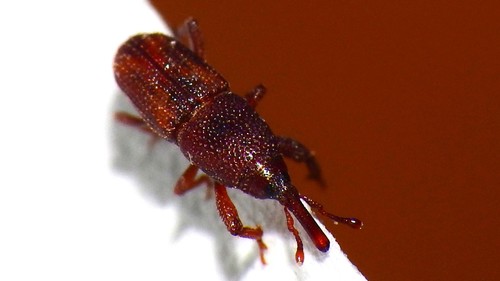
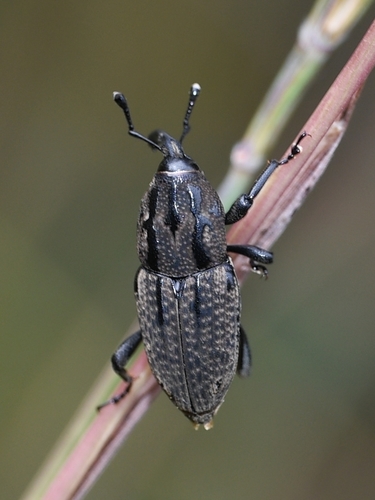
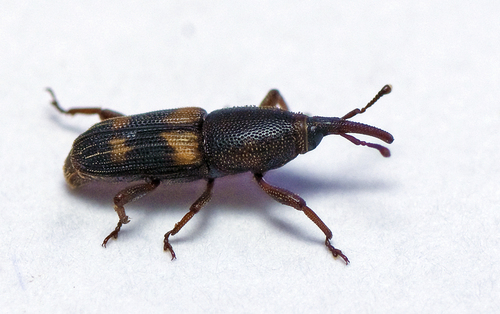
Adult Diocalandra frumenti are approximately 7 mm (0.3 in) long. They are glossy black, with four large rusty-brown or blackish-brown spots on their elytra, also known as wing covers. Females lay their eggs in crevices on palm stems; the eggs hatch after about one week. The larvae bore into the palm stem and create extensive internal tunnels. They pupate after eight to ten weeks, and adults emerge from the pupal case around eleven days after pupation starts.