About Dinocampus coccinellae (Schrank, 1802)
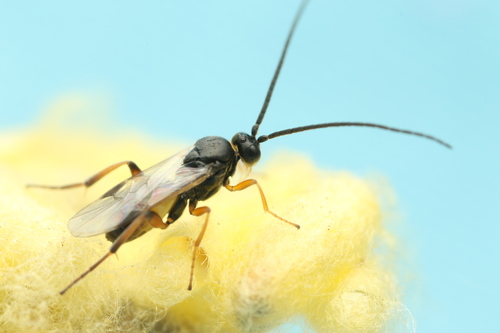
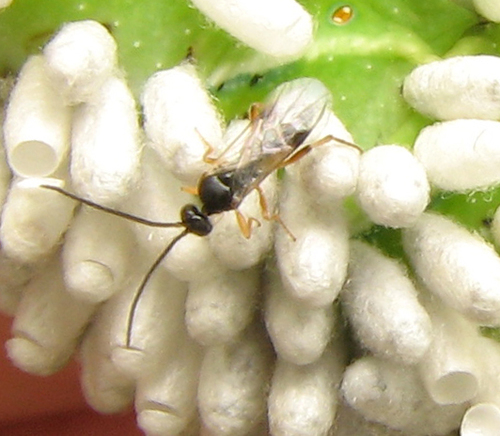
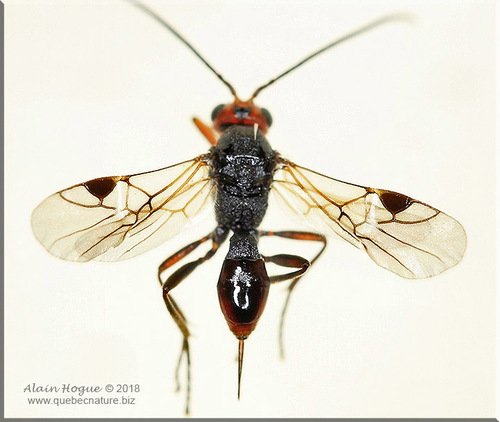
This species was first described by Schrank in 1802, based on an adult female individual. Schrank's original description reads: "Lady-bird killer 2155. Deep black, eyes green; head, front legs, and apex of the petiolate abdomen mussel-brown." A petiolate abdomen has a long, slender, stalk-like basal segment. Nearly all D. coccinellae are female, developing as offspring from unfertilized eggs; males of the species are only rarely found. Males that have been observed lack an ovipositor, and are slimmer and darker in color than females. In ecological terms, D. coccinellae is parasitised by Gelis agilis, a hyperparasite species known for mimicking ants. Wingless female G. agilis lay their eggs inside the cocoons of D. coccinellae. The eggs hatch immediately after being laid, and the hatching larvae consume the developing D. coccinellae wasp inside the cocoon. D. coccinellae cocoons that host G. agilis typically take twice as long for the adult parasite to emerge, compared to unparasitized cocoons.