About Diloma zelandicum (Quoy & Gaimard, 1834)
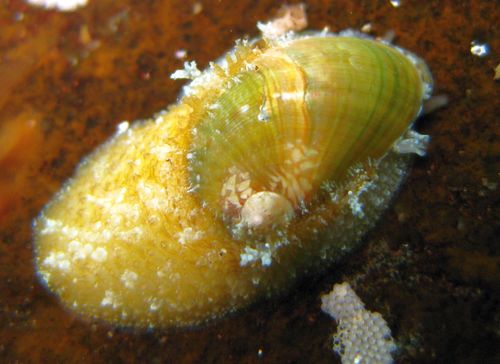
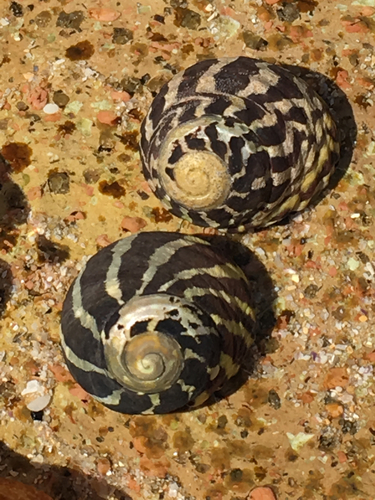
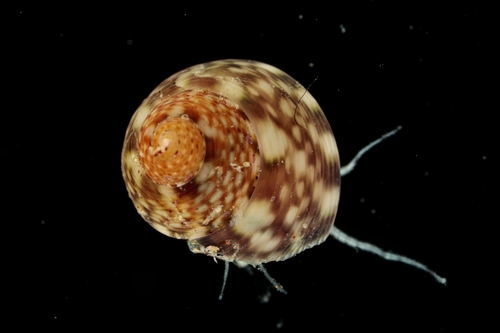
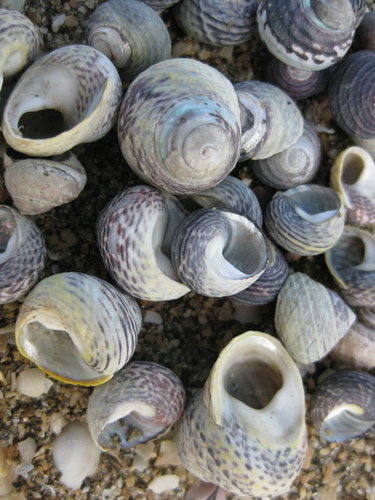
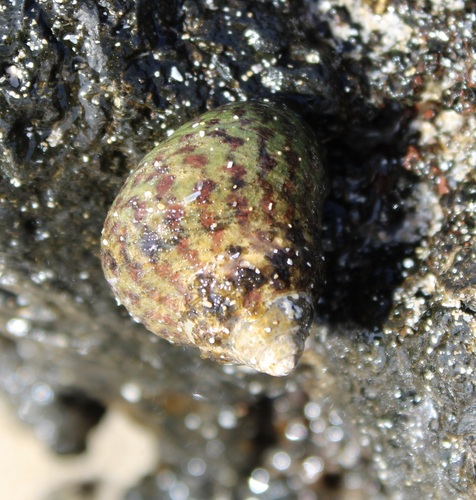
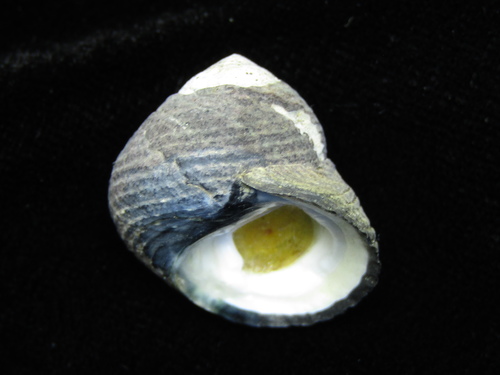
Diloma zelandicum is a marine species first described by Quoy & Gaimard in 1834. For its shell, the maximum height reaches 20 mm, and its maximum diameter reaches 25 mm. The shell is imperforate, depressed, and has an orbiculate-conoidal shape. It has six whorls, which are separated by impressed sutures. The whorls are slightly convex, greenish-black, shining, and marked with spiral grooves. There are around 5 grooves on the penultimate whorl. The body whorl is much enlarged, slightly depressed on top, rounded in the middle, covered with very oblique striae, has faint transverse grooves, and is slightly convex underneath. The aperture is subrhomboidal and has fine ridges inside. The sharp outer lip of the aperture is green. The basal margin of the aperture is thickened on the inside. The white columella is compressed and curved. The columellar callus is broadly expanded, and slightly depressed at the position where the umbilicus would otherwise be. This species is endemic to New Zealand, where it can be found off the coasts of the North Island, South Island, and Stewart Island. It has also been reported to occur off Tasmania.