About Diloma aethiops (Gmelin, 1791)
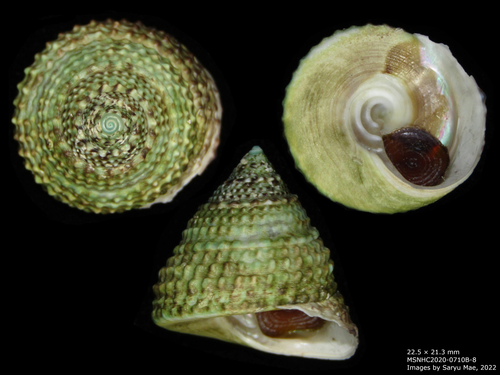
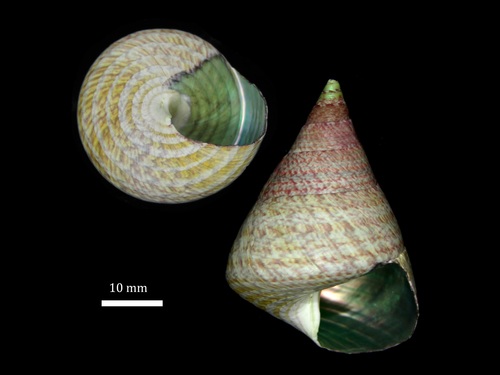
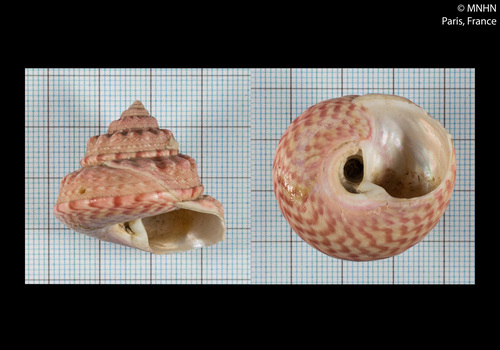
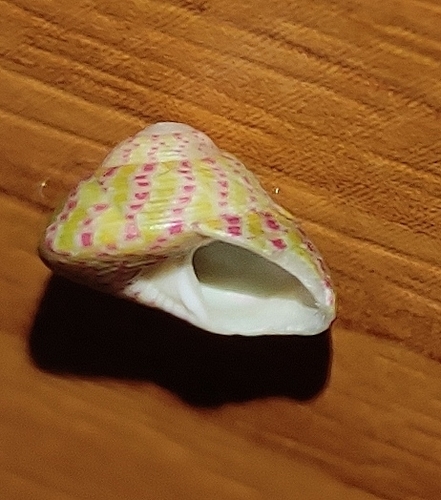
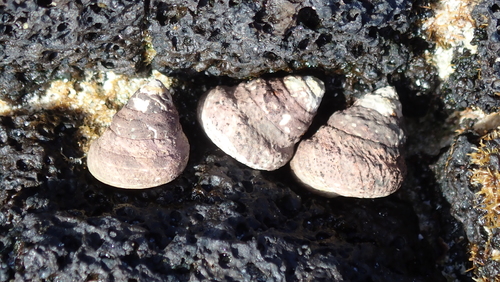
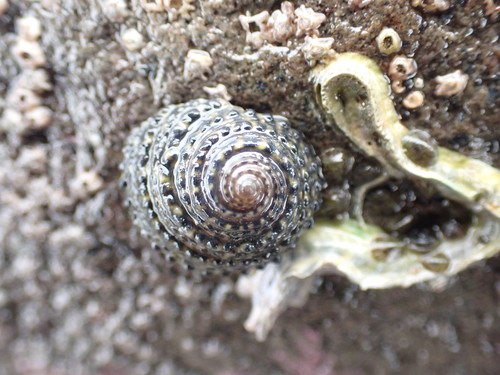
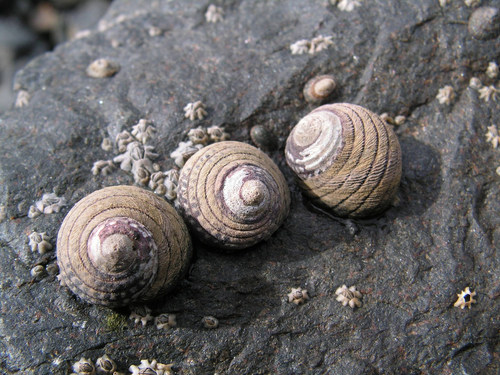
Diloma aethiops (Gmelin, 1791) has a shell that measures between 15 mm and 30 mm. The shell is thick, solid, imperforate, and has a depressed conical shape. It is blackish in color, with yellow or white dots along its ribs. The conic spire is more or less depressed and ends in an acute apex. The shell has five whorls that feature strong spiral ridges. There are three nodulous ridges on the penultimate whorl, and the interstices between ridges are marked with fine spiral striae. The body whorl is depressed, angled at its periphery, and marked with approximately five concentric, coarsely granulose lirae on its underside. The aperture is very oblique. The outer lip is edged with blackish, followed by a nacreous section, and lined with opaque white; the thickened lip is slightly notched at the position of the periphery. The oblique columella is nearly straight, flat, opaque white, and backed by nacreous material. The soft body of this species has a yellow foot on its underside, with a brown stripe around its outer contour, black coloring on the sides, and yellowish-white patches towards the rear. Its filaments are greenish, and its mouth is yellowish. This species is endemic to New Zealand. It ranges from common to abundant in rocky intertidal areas; it is the only trochid found on open rock surfaces in sheltered and semi-exposed coastal areas. In harbours or estuaries, it often occurs alongside Diloma subrostrata on hard packed mud among empty bivalve shells.