About Dillenia indica L.
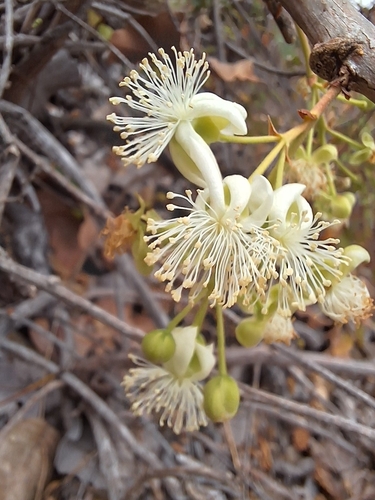
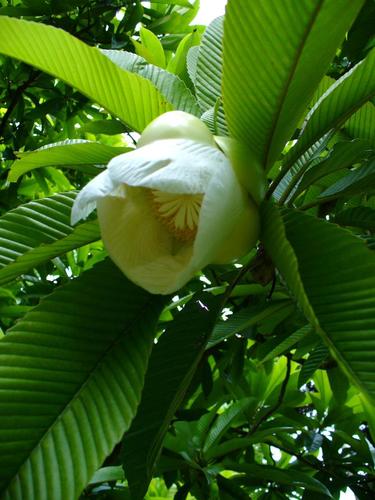
Dillenia indica L. is an evergreen large shrub or small to medium-sized tree that can grow up to 30 meters tall, with a crooked, irregular trunk. Its leaves measure 15–36 cm long, and occasionally reach 75 cm (30 inches), with a conspicuously corrugated surface marked by impressed parallel veins. The flowers are large, with a diameter of 15–20 cm, and bear five white or creamy yellow petals. The flowers have two sets of stamens: outer straight stamens 13–15 mm long, and inner bent yellow stamens 20–22 mm long. Its fruits are large, round, and greenish yellow, made up of 15 carpels joined together, with a total diameter of 5–12 cm. Each carpel holds five seeds embedded in an edible but fibrous and glutinous pulp. The common name elephant apple comes from this species producing a large hard edible fruit that is only accessible to wild megaherbivores such as elephants. A study of Buxa Tiger Reserve conducted by ecologists Sekar & Sukumar found that Asian elephants are particularly fond of D. indica fruits, and are therefore important seed dispersers for this tree. To adapt to the possibility of elephant extinction, this tree has evolved a backup dispersal strategy: the hard fruits that only megaherbivores can access slowly soften on the forest floor through the dry season, making them accessible to progressively smaller animals such as macaques, rodents and squirrels. Seeds from both old softened fruits and fresh hard fruits germinate well, allowing the tree to persist even if its main megaherbivore disperser does not survive. The sour fruit pulp is used in Indian cuisine for curries, jam (ouu khatta), and jellies. Because the fruits are a main food source for elephants, monkeys and deer, collecting fruit from core forest areas is prohibited. Commercial sale of the fruit is also prohibited, to prevent the complete breakdown of the forest's food chain system. The species' branches make good firewood.