About Dieffenbachia seguine (Jacq.) Schott
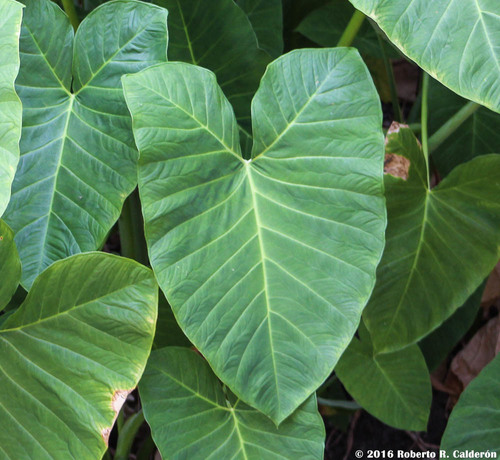
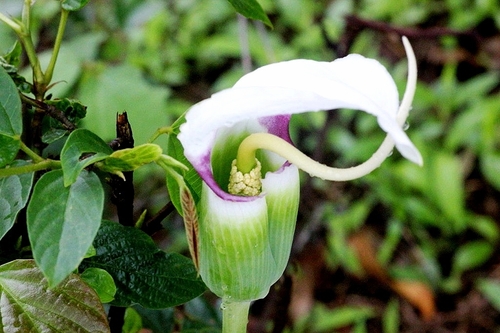
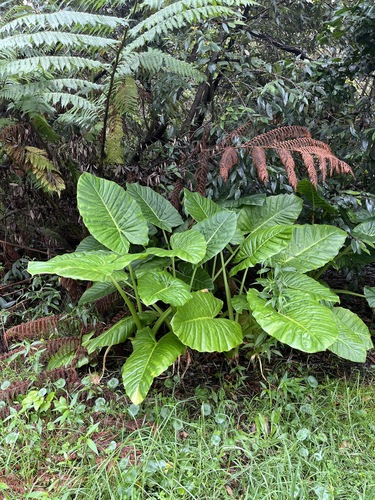
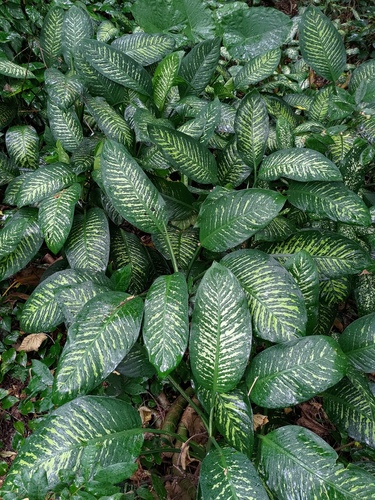
Dieffenbachia seguine belongs to the aroid plant family, which also includes other well-known genera such as Alocasia, Monstera, and Philodendron. Unlike many related aroids, D. seguine and its close relatives do not grow as vines or from tubers. Instead, they grow vertically into bamboo- or cane-like shrubs, which gives the species its common name of dumbcane. Smaller or juvenile plants typically reach only 3 feet (0.91 m) in height, while fully mature specimens can grow up to 10 feet (3.0 m) tall, with trunk widths between 2 feet (0.61 m) and 3 feet (0.91 m). The plant has large green leaves, which often have variegated white patterns. Like all members of the Araceae family and all Dieffenbachia species, D. seguine has toxic sap. The entire plant contains a high concentration of calcium oxalate crystals, which can cause harmful negative effects if ingested, ranging from anaphylactic shock and respiratory failure to death. This species produces the characteristic whitish inflorescence common to aroids, visually similar to the inflorescences of common calla lilies (Zantedeschia aethiopica) and peace lilies (Spathiphyllum wallisii). The inflorescence consists of a whitish bract called a spathe that surrounds an inner spadix. Dieffenbachia seguine is cultivated as an ornamental plant in shaded temperate gardens, and also grown as a potted house plant. Cultivars of this species are bred to display different patterns of variegation.