About Didemnum molle (Herdman, 1886)
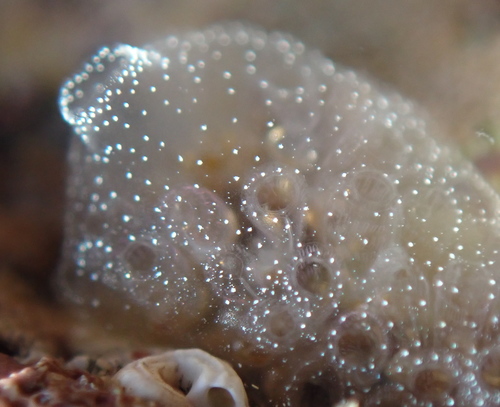
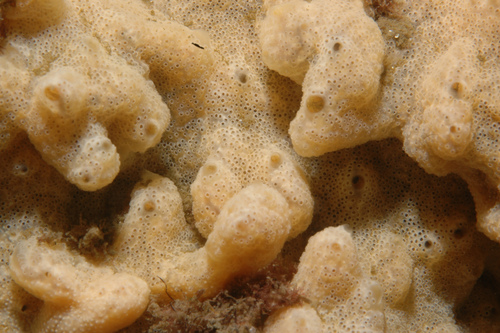
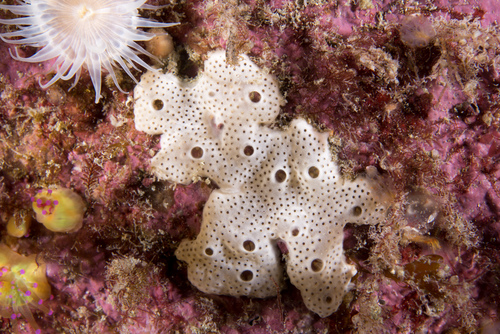
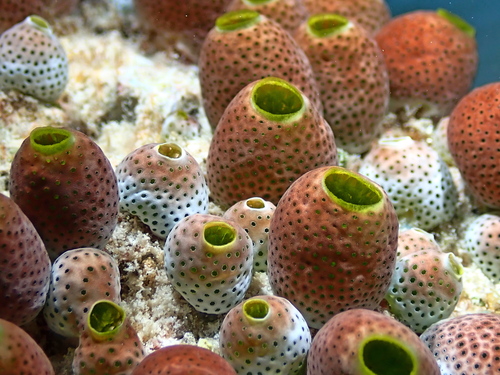
A Didemnum molle colony consists of multiple connected zooids that adhere to a substrate. Each individual zooid has a plump, urn-shaped body, reaching up to 10 cm (4 inches) in diameter. The body wall, called the tunic, is made of a strong yet flexible cellulose-like substance, and is perforated by many small holes called buccal siphons that draw water into the body. A large atrial siphon at the top of the body expels water out. The tunic is reinforced by many spherical calcareous spicules, which are especially concentrated around the neck of the urn-shaped zooid. Colonies may be white, brown, green, or a mix of these colors; this coloration comes from symbiotic blue-green algae of the genus Prochloron that live in the species' tissues. The tunic contains mycosporines, which filter ultraviolet radiation and protect the symbiotic cyanobacteria from damage in strong sunlight. In shallow water, colonies are small, have more intense color, and contain more spicules that give the outer surface a bright white appearance. At greater depths, colonies are larger, contain fewer spicules, and have a more greyish or brownish color. The tunic releases large amounts of mucus, making this species sticky to the touch. It looks very similar to Atriolum robustum, especially when young, but can be told apart by its mucus secretion and the internal network of canals that connect the thorax to the atrial siphon. Didemnum molle is native to the western Indo-Pacific, where it is common and widely distributed. It grows on rock or dead coral in shallow reefs. A green variant that grows directly on sand is found in New Caledonia.