About Didelphis marsupialis Linnaeus, 1758
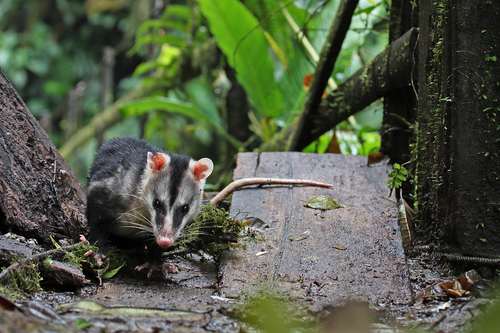
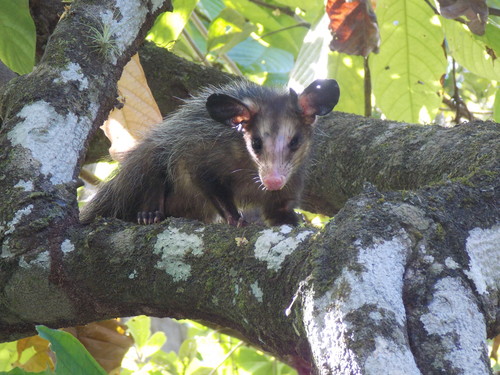
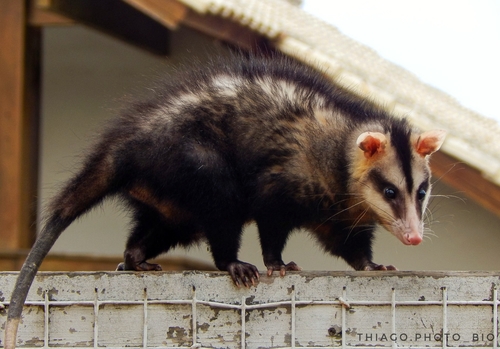
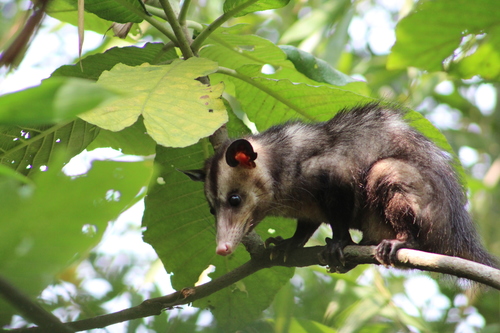
The common opossum (Didelphis marsupialis Linnaeus, 1758) is similar in size to a house cat. Its under-fur is yellow, but this layer is hidden by longer black guard hairs that cover the body. The tail, fingers, and face are lighter in color, and the tail has no fur. The total body length can reach nearly 20 inches (51 cm): the body alone is nearly a foot long, and the tail can grow to almost two feet long. It has large ears that are usually black, and a face that is typically pale peach, with black whiskers and eyes that reflect a reddish color in light. This size makes the common opossum one of the larger members of the Didelphidae family. Adult common opossums can weigh more than three pounds. Common opossums live in tropical and subtropical primary and secondary forests, at altitudes up to 2,200 m (7,200 ft). They use a wide variety of nest sites, and most commonly build nests in tree hollows. If no suitable site is available, they will dig burrows or nest in any dark location, which often brings them into conflict with humans. They prefer denning underground, but spend less time underground during the dry season. Their common predators include humans, domestic pets such as dogs and cats, and birds. After reaching maturity, female common opossums produce between five and nine offspring one to three times per year. The mother raises the young on her own. Common opossums can mate during most of the year, and do not mate for life. A female can give birth to up to 24 infants at once, but usually only one third of the infants survive. Young opossums stay with their mother for the first few months of life, and reach maturity before they turn one year old.