About Dicrurus ludwigii (A.Smith, 1834)
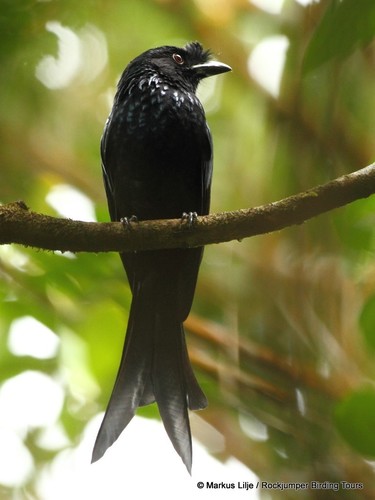
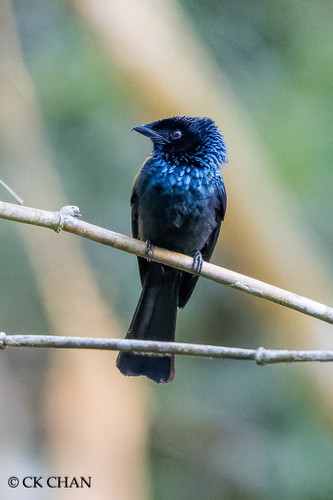
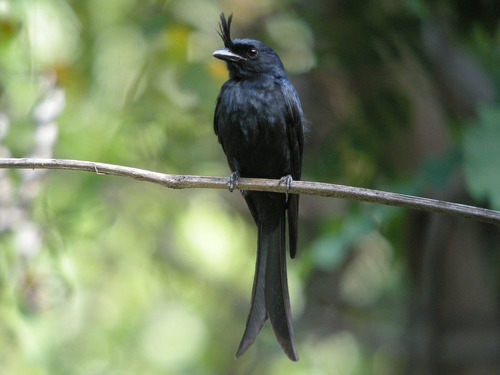
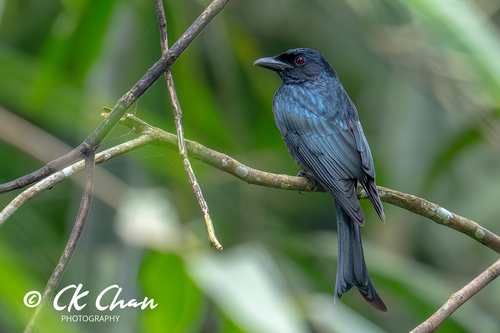
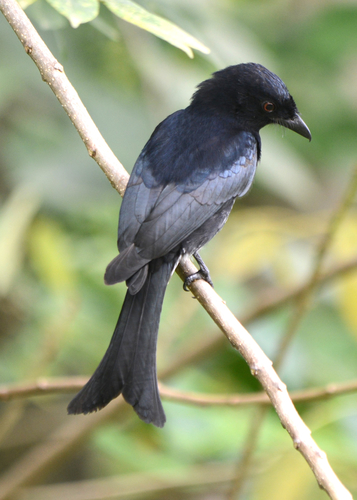
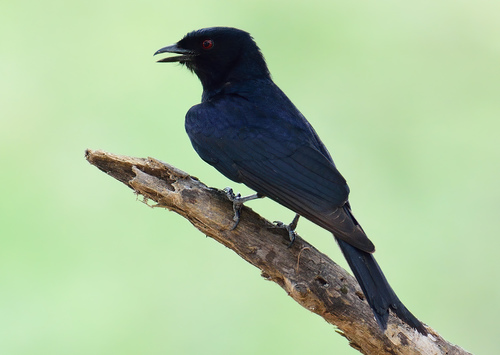
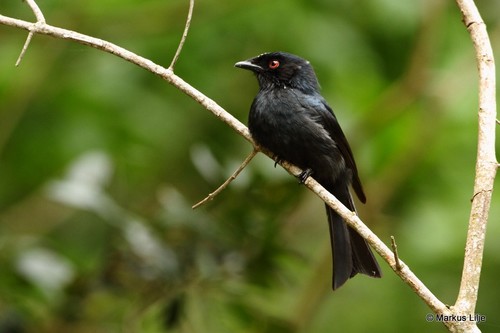
The square-tailed drongo, with the scientific name Dicrurus ludwigii, was formerly called the common square-tailed drongo. It is a passerine bird that belongs to the family Dicruridae. It is a common resident breeding bird across parts of southern Africa. These insectivorous birds typically inhabit forests or dense bush. Despite their small size, with an average length of 19 cm (7.5 in), they are aggressive and fearless, and will attack much larger species if their nest or young are threatened. The male is mostly glossy black, though its wings are a duller shade. The female looks similar to the male but has less glossy plumage. This species has a heavy, black bill and red eyes. It resembles the fork-tailed drongo, but is smaller in size. Its shorter tail does not have the deep fork that gives the fork-tailed drongo its name, and the fork-tailed drongo usually occurs in more open habitats. The square-tailed drongo has short legs, and when it perches prominently, it sits very upright, similar to a shrike. It catches prey by flycatching, or it takes prey from the ground. Its call is a harsh cherit-cherit. It lays two to three eggs in a cup-shaped nest placed in a tree fork high above the ground.