About Dicranopteris linearis (Burm.fil.) Underw.
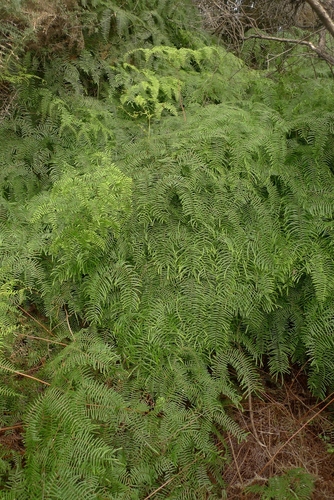
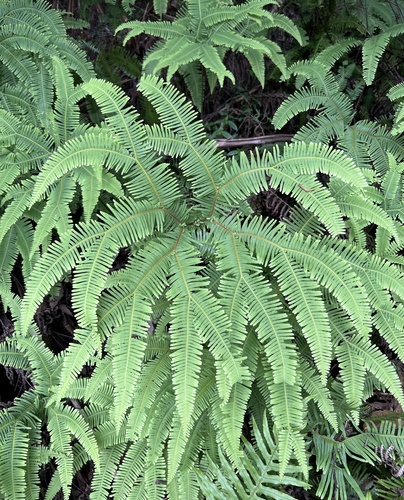
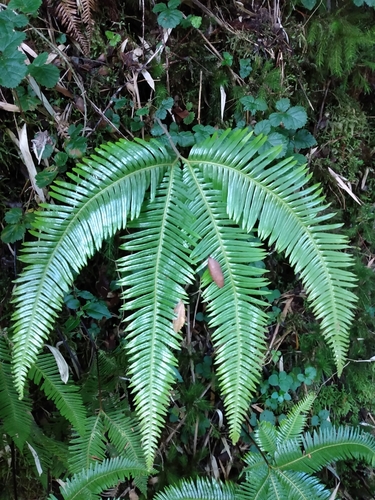
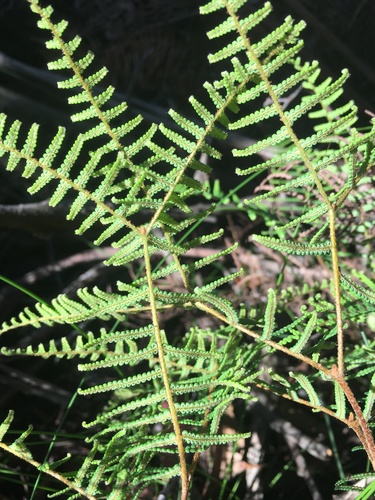
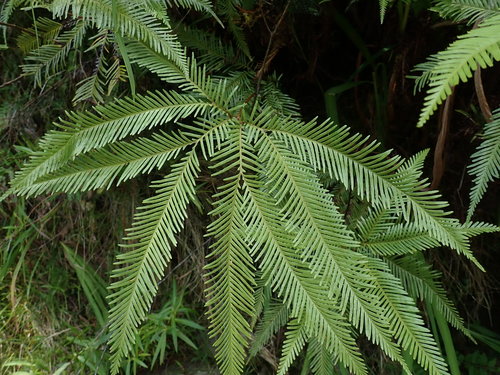
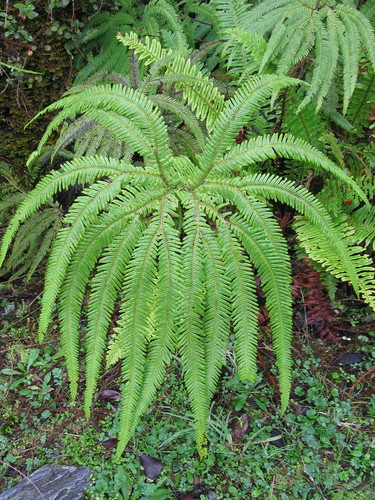
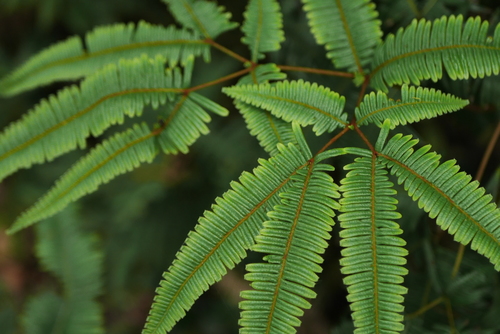
Dicranopteris linearis (Burm.fil.) Underw. is a common fern species with many common names, including Old World forked fern, Hawaiian uluhe, and Filipino dilim. It is one of the most widely distributed ferns of the wet Old World tropics and adjacent regions, including Polynesia and the Pacific. In parts of the New World tropics, its niche is filled by its close relative, Dicranopteris pectinatus. This is a rhizomatous fern that spreads via cloning, growing along the ground and climbing on other vegetation. It often forms thickets that are 3 meters deep or more. Stems grow from the rhizome, branch at a 45° angle, and form fronds that continue to bud and branch. This growth pattern allows the fern to spread across long distances as it forms a mat, grows over itself in layers, and expands outward. When climbing, leafy branches can reach over 6 meters long, and can climb to 10 meters high when supported by a tree. The ultimate segments of its leaves are linear in shape, reaching up to 7 centimeters long and just a few millimeters wide. The underside of these leaves is hairy, and sometimes waxy. This species can also reproduce via spores. The fern grows readily on poorly drained, nutrient-poor soils, as well as in disturbed habitats and on steep slopes. It does not tolerate shade, so once established it will eventually be shaded out by taller vegetation unless it manages to climb above that vegetation. It may suppress the growth of new tree stands, especially when it forms a dense thicket. The fern is a keystone species in Hawaiian ecosystems, and dominates many areas of Hawaiian rainforests. It occurs on all of the main Hawaiian islands. As a pioneer species in ecological succession, it can colonize bare sites such as lava flows, talus, and abandoned roads. When the fern colonizes a new site, it repeatedly produces layers of stems and leaves until a network of vegetation forms. Leaves die back, but stems decompose very slowly, so the existing network persists. This network fills with organic forest detritus, forming a litter layer that can be up to one meter thick. The fern's own rhizomes and roots penetrate this network, so the fern effectively serves as its own substrate. Where the fern is eliminated, invasive plant species can move into the area, so a key benefit of the fern may be preventing invasive plants from encroaching on rainforest habitat. The fern may have allelopathic effects that prevent the growth of other plants. It is also a very productive member of forest ecosystems; despite making up a relatively small share of total forest biomass, it accounts for over half of primary productivity in some areas. This plant is used medicinally: it treats intestinal worms in Indochina, skin ulcers and wounds in New Guinea, and fever in Malaysia. In vitro samples of the fern kill bacteria. The fiddleheads of this fern are used in floral arrangements.