About Dicosmoecus gilvipes (Hagen, 1875)
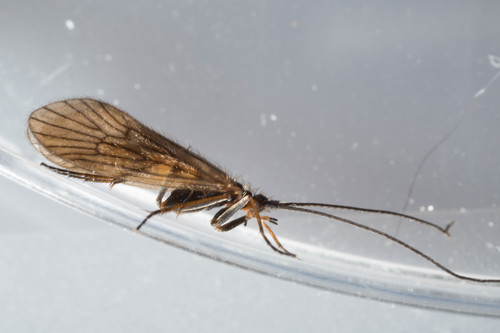
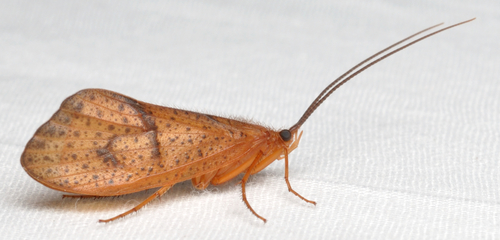
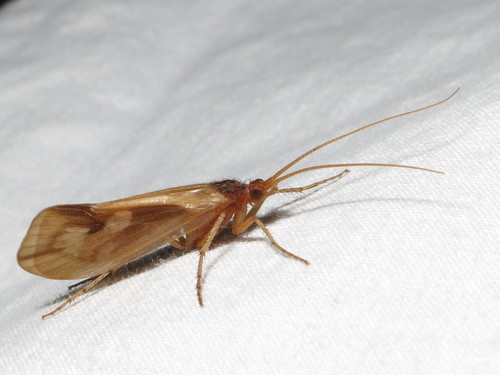
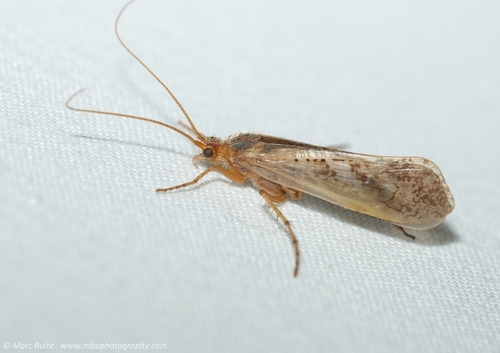
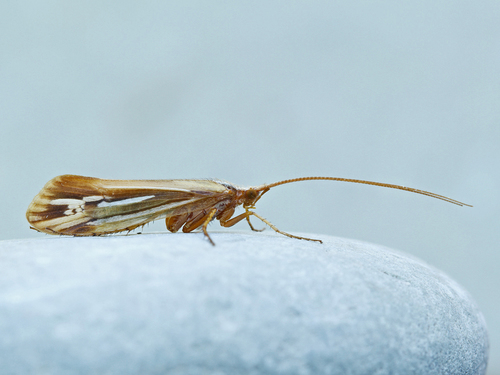
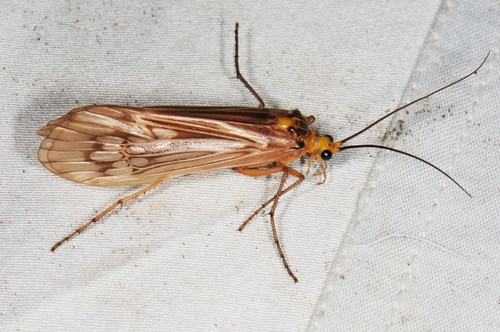
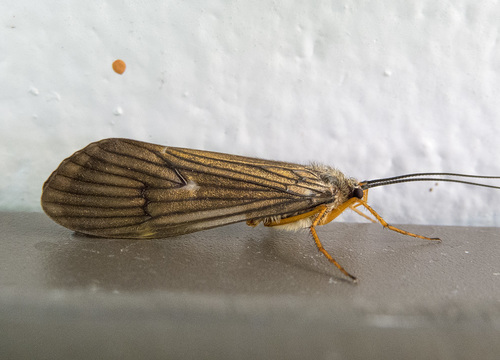
Dicosmoecus gilvipes (Hagen, 1875) is a species of northern caddisfly in the family Limnephilidae. This caddisfly is found in and near streams of North America, ranging from northern California and Colorado north to British Columbia, and east to Nevada, Idaho, Montana and Alberta. D. gilvipes is commonly called the October Caddis, Autumn Caddis, or Giant Orange Sedge, because adults are actively flying during the autumn season. All caddisflies build protective cases during their larval stage to shield themselves from predators like dragonflies, salmon, and trout. The October Caddisfly follows this pattern, building its cases from a variety of organic materials across its five larval stages. D. gilvipes occurs in the Nearctic and eastern Palaearctic regions, and inhabits mid-elevation areas in and near streams. In terms of flight and reproduction, males fly more often than females. Females produce pheromones to attract mates, and they limit their own flight activity to make their pheromone trail more detectable to males. Mating pairs can remain in copulation for up to 16 hours, and stay together through the entire attraction period to ensure that the female only mates with a single male.