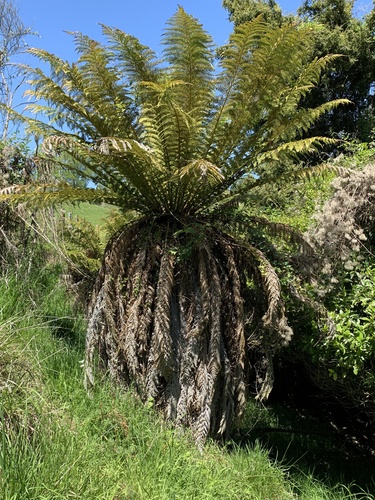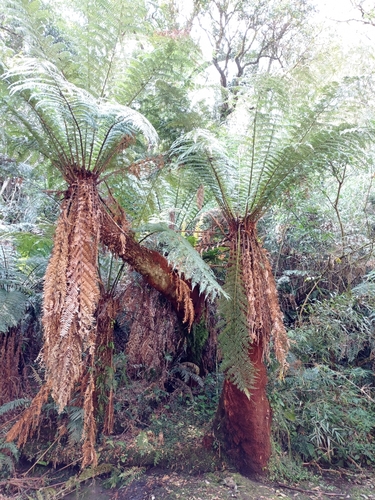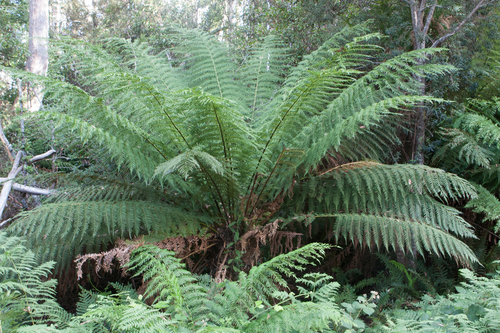
About Dicksonia antarctica Labill.
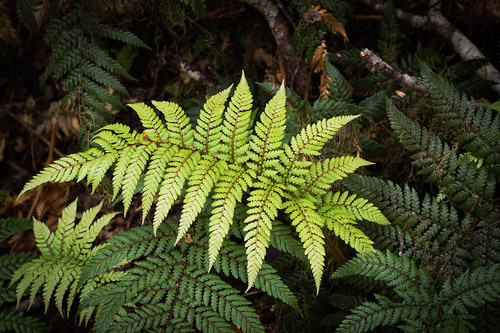
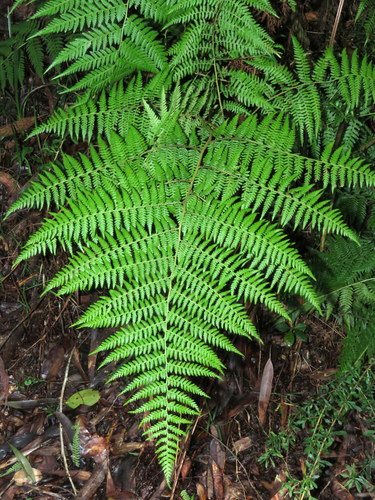
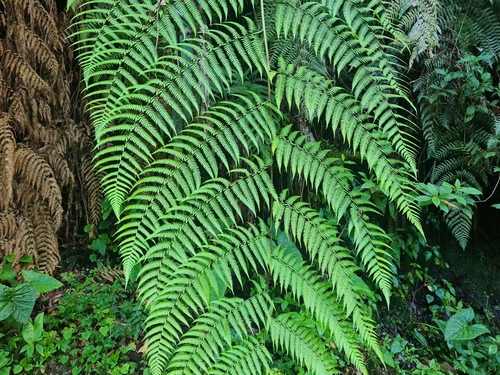
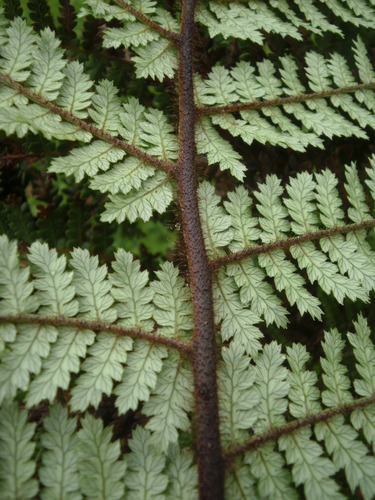
Dicksonia antarctica Labill., commonly known as the soft tree fern, is a fern species native to eastern Australia, where its natural range extends from the Bunya Mountains in southeast Queensland, south through near-coastal areas of New South Wales and Victoria, to Tasmania. At one point, it also grew in South Australia, but it is now probably extinct in the wild there. It has been introduced to Great Britain, Ireland, Madeira, the Azores, and South Africa. This species grows in rainforest and wet sclerophyll forest with high rainfall, most often in sheltered gullies and beside creeks, and can dominate large areas when growing conditions are suitable. It occurs at altitudes from near sea level up to approximately 1,000 m (3,300 ft). It is well adapted to bushfires, able to survive both in forest shade and in exposed post-fire sites. Its trunk is fire-resistant, and its crown can regrow after burning. In its ecology, possums may sleep in the fern's crown, and both possums and parrots eat its young croziers as they uncurl. Crimson rosellas (Platycercus elegans) have been observed feeding on the species' sori. The fern's caudices provide excellent support for epiphyte growth: a 2005 study of 120 naturally growing Dicksonia antarctica specimens in Tasmania found 97 total species of smaller ferns, mosses, and bryophytes growing on them. Soft tree fern is commonly cultivated as an ornamental plant in Australia and other regions worldwide. It generally requires a minimum of 500 mm (20 inches) of rainfall per year; in dry climates, overhead drip irrigation or spray systems are the most effective way to water it. It is particularly suited for garden planting and landscaping, and has earned the Royal Horticultural Society's Award of Garden Merit as an ornamental. The caudices of the soft tree fern have been used for fencing and to grow orchids. Both the pith and croziers are edible, and were eaten by Indigenous Australians. The 1889 book *The Useful Native Plants of Australia* records: "The pulp of the top of the trunk is full of starch, and is eaten by the aboriginals [sic] both raw and roasted. 'The native blacks [sic] of the colony used to split open about a foot and a-half of the top of the trunk, and take out the heart, in substance resembling a Swedish turnip, and of the thickness of a man's arm. This they either roasted in the ashes, or ate as bread; but it is too bitter and astringent to suit an English palate. (Gunn)'"