About Dichondra argentea Humb. & Bonpl. ex Willd.
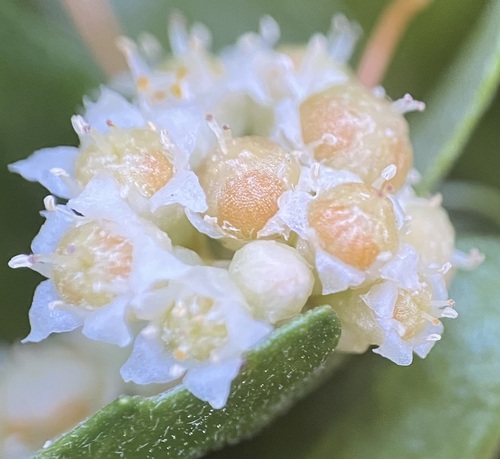
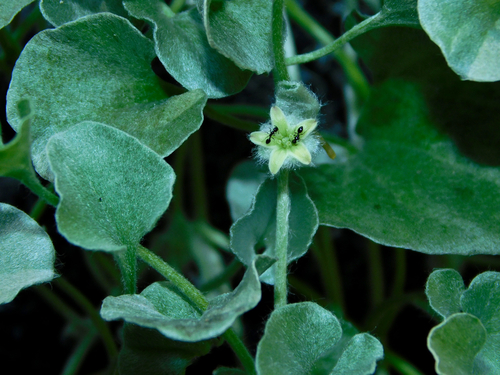
Dichondra argentea Humb. & Bonpl. ex Willd. is a xerophytic, creeping, climbing, fast-growing plant. It reaches 4 inches (10 cm) in height, and spreads 4 to 6 feet (1 to 2 meters) in length. Its stems are short and very heavily branched. The leaves are dark green, simple, entire, and alternate; they are kidney-shaped or ear-shaped, measuring 1-2 by 2 centimeters, with a cleft apex. Whitish flowers grow in isolation on recurved pedicels; they are barely visible, with a diameter of 5 millimeters. The fruit is a globose, cleft capsule 5 millimeters in diameter that has a hairy covering. Seeds are dark brown to black, 2 millimeters long, and covered in short, white hairs.
This species has a disjunct distribution across New Mexico, Texas, Mexico, Colombia, Bolivia, northwest Argentina, and southeast Brazil, and it is considered extinct in Arizona. It is hardy in USDA zones 10 through 12. In cultivation, it is typically grown as an annual, most often as a hanging accent plant or ground cover, and has a named cultivated variety called 'Silver Falls'.
In northern Mexico, specifically in the states of Aguascalientes and Durango, this plant is popularly known as a remedy for bile. It is also ingested to act as an appetizer, a laxative, and an anti-abortive, with the anti-abortive effect attributed to its property of relaxing the uterine muscle. It is also used as a form of birth control to avoid pregnancy. Additional traditional uses include treatment for heart problems, ant bites, mouth bitterness, headaches, fever regulation, toothache, tonsillitis, and pain described as pain due to anger. At the beginning of the 18th century, Juan de Esteyneffer used a decoction of this plant to treat protruding tripe. In the 20th century, Maximino Martínez documented this plant as an anti-inflammatory, a treatment for bilious diseases, and noted that it causes idiocy.