About Dichanthium annulatum (Forssk.) Stapf
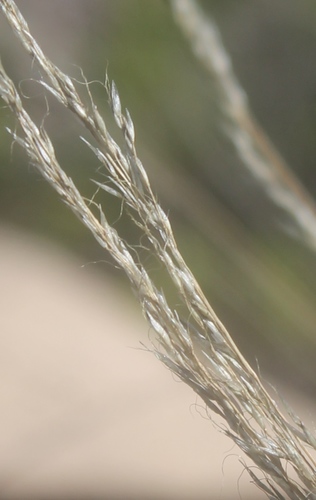
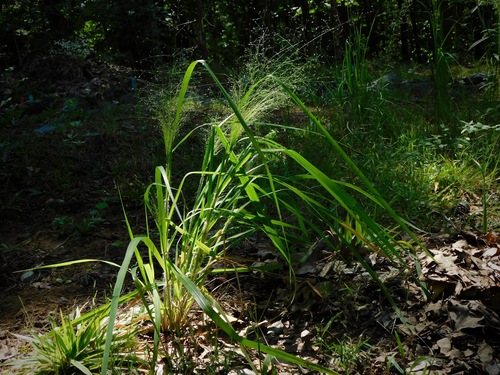
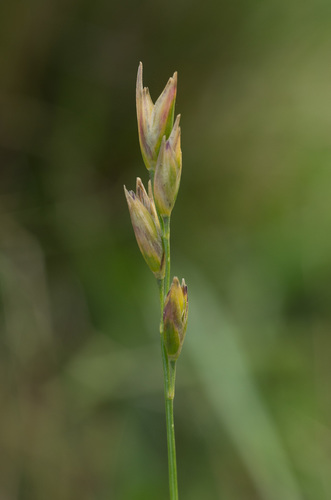
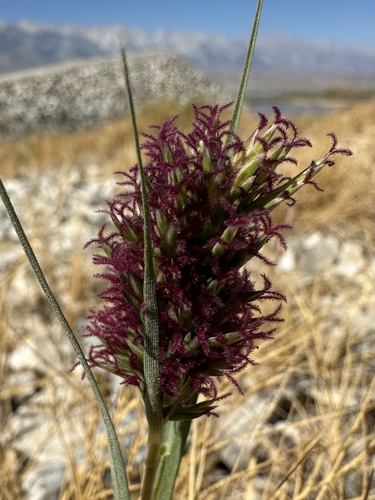
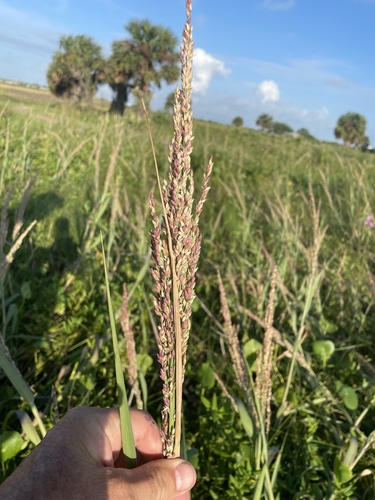
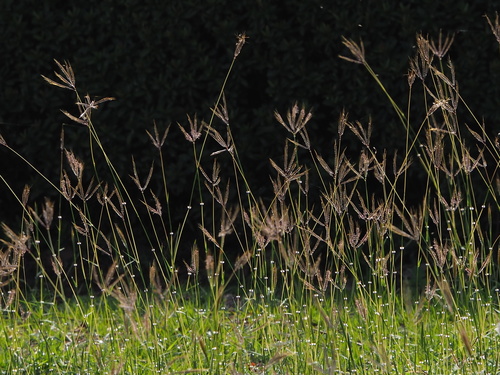
Dichanthium annulatum (Forssk.) Stapf is a quite variable perennial grass, often growing with stolons. Its stems spread outward before growing erect at their tips; an individual stem can reach one meter in total length, with an erect height of roughly 60 centimeters. Each stem node is surrounded by a complete ring of hairs. Rough-haired leaf blades grow up to 30 centimeters long. Its inflorescence is made up of 2 to 9 (sometimes up to 15) purplish or green branches, each up to 7 centimeters long. Including its long awn, the spikelet can measure well over 2 centimeters. The awn is twisted and has two bends. The root system of this grass does not grow deeper than one meter.
This grass often reproduces via apomixis, producing seeds without fertilization, though it can also reproduce sexually at times. Individual plants of this species may be diploid, tetraploid, or hexaploid.
In ecology, this grass acts as a host for a wide range of fungus species: Balansia sclerotica, Cerebella andropogonis, Chaetostroma atrum, Cochliobolus cymbopogonis, Curvularia andropogonis, C. lunata, C. robusta, Ellisiella caudata, Jamesdicksonia obesa, Phyllachora ischaemi, Physoderma dichanthicola, Pithomyces graminicola, Puccinia cesatii, P. duthiae, P. propinqua, Sclerospora dichanthicola, Sphacelotheca annulata, S. andropogonis-annulati, Tolyposporella obesa, Uredo susica, Uromyces andropogonis-annulati, U. clignyi, and Ustilago duthiei. Most of these fungi are not highly destructive to the grass, but D. annulatum is susceptible to ergot caused by Claviceps species. It is also a host for the parasitic plant Striga lutea.
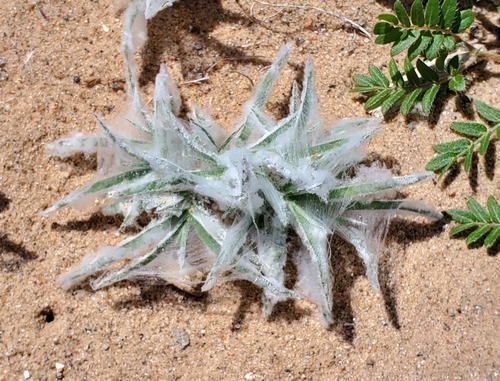
This grass can escape cultivation and become established in the wild. It is able to grow in harsh, disturbed habitats including roadsides, and can become a weed. It is classed as an invasive species in Fiji, Hawaii, and New Caledonia, and has displaced native grasses across large areas of south Texas. It is cited as a contributing factor to the decline of the slender rushpea (Hoffmannseggia tenella), a federally listed endangered plant native to the United States.
In cultivation, this is a popular pasture grass grown in many regions. It can be used in fields for grazing livestock, and also cut to make hay and silage. It tolerates a wide range of soil conditions, including clay-heavy soils, sand-heavy soils, poorly drained soils, and moderately alkaline and saline soils. It forms a turf that can withstand heavy grazing pressure. It can recover after fire and drought events, but it has lower tolerance for frost and shade. It does not require fertilizer, but responds well to small amounts of supplemental nitrogen. Horses and cattle find this grass very palatable. While it can aggressively outcompete many other plant species, it grows successfully alongside certain companion species: the grasses Bothriochloa insculpta, Dichanthium aristatum, and D. caricosum, and the legumes Medicago sativa, Stylosanthes hamata, and S. seabrana.
This grass can also be used to revegetate degraded grasslands, and works very effectively as a binding plant for erosion control. It is an especially favored pasture grass in India, where it is widely familiar, commonly planted, and grows successfully. One known cultivar is 'Marvel 8'.