About Dicentrarchus labrax (Linnaeus, 1758)
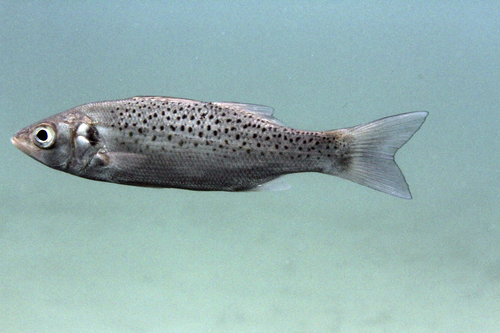
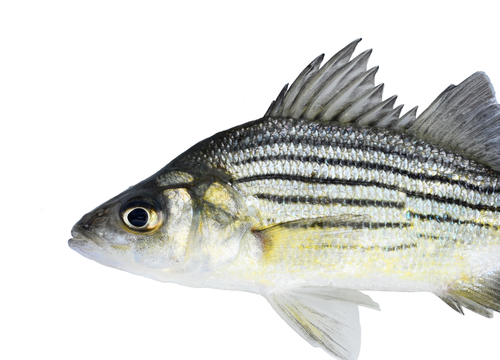
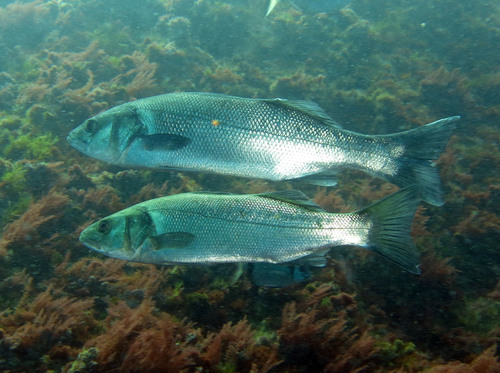
The European seabass, scientifically named Dicentrarchus labrax, has many common names including branzino, European bass, sea bass, common bass, white bass, capemouth, white salmon, white mullet, sea dace, and loup de mer. It is a primarily ocean-going fish native to the western and southern coasts of Europe and the northern coasts of Africa, and can also be found in shallow coastal waters and river mouths during summer and late autumn. It is one of only six species in the family Moronidae, a group collectively known as temperate basses. This species is fished and farmed commercially, and is considered the most important fish currently cultured in the Mediterranean. In Ireland and the United Kingdom, the popular restaurant fish sold and eaten as sea bass is exclusively the European bass. In North America, it is widely known by its Italian name branzino. European seabass is a slow-growing species that takes several years to reach adulthood. Adult European seabass usually weigh around 2.5 kg (5 lb 8 oz). The species can reach up to 1 m (3 ft 3 in) in length and 12 kg (26 lb) in weight, but the most common size is half that maximum length, at around 0.5 m (1 ft 8 in). Their bodies are silvery grey, and their backs are sometimes dark-bluish. Juveniles form schools and feed on invertebrates, while adults are less social and prefer to eat other fish. They generally live in the littoral zone near river banks, lagoons, and estuaries during the summer, and migrate offshore during the winter. Their diet consists of prawns, crabs, and small fish. European seabass is a popular sought-after game fish, and the International Union for Conservation of Nature lists it as Near Threatened because its population is decreasing. Its habitats include estuaries, lagoons, coastal waters, and rivers. It is found across a large portion of the eastern Atlantic Ocean, ranging from southern Norway to Senegal. It can also be found throughout the entire Mediterranean Sea and in the southern Black Sea, but is not present in the Baltic Sea. It has entered the Red Sea through the Suez Canal as an anti-Lessepsian migrant. It is a seasonally migratory species: it travels to winter spawning grounds and stays there for at least one month, before moving toward its summer feeding areas.