About Dicamptodon ensatus (Eschscholtz, 1833)
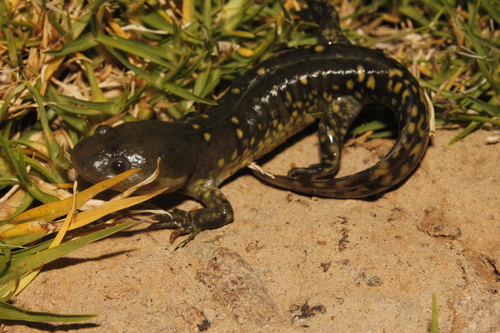
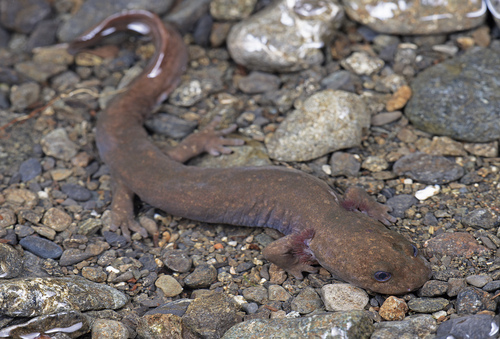
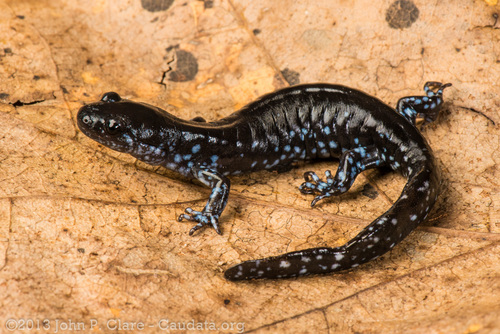
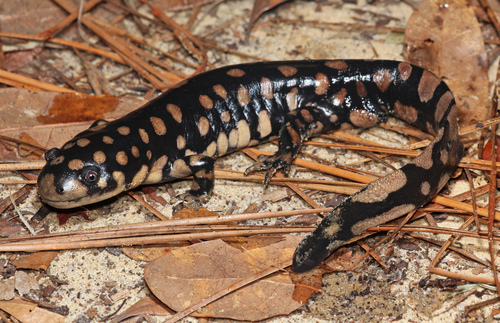
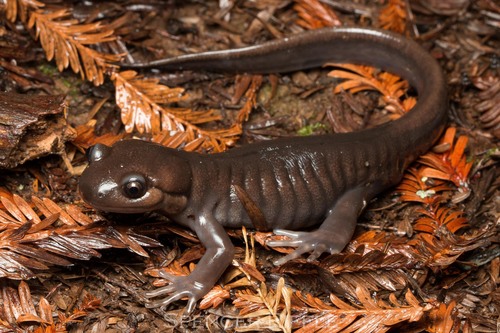
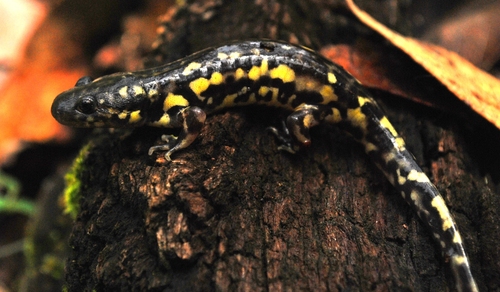
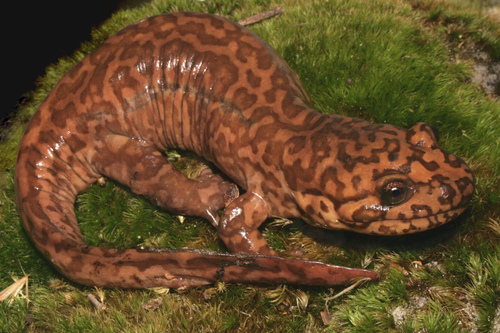
Adult Dicamptodon ensatus, the California giant salamander, reach a total length (including tail) of 17–30.5 cm (6.7–12.0 in). Like most salamanders, they have four toes on their front feet and five toes on their back feet. Their tail makes up approximately 40% of their total body length and is laterally compressed. A marbled or reticulate pattern of dark blotches covers the head, back, and sides, set against a light brown or brassy background. This species has a broad head with a shovel-like snout, and a fold of skin across the throat called the gular fold. Its eyes are medium-sized, with a brass-flecked iris and a large black pupil. Dicamptodon ensatus is one of the few salamander species that can vocalize. This species is endemic to Northern California, where it occurs up to 6,500 feet (2,000 m) in elevation. It primarily inhabits damp coastal forests, including forests of coast Douglas fir (Pseudotsuga menziesii var. menziesii) and California coast redwood (Sequoia sempervirens), occupying both montane and valley-foothill riparian habitats. It tends to be common in areas where it occurs. Terrestrial adults live under surface litter and in tunnels, while aquatic adults and larvae live mainly in cool, rocky streams, and occasionally in lakes and ponds. It is found in two (possibly three) isolated regions. The first confirmed range covers Sonoma, Napa, and Marin Counties, southwestern Lake County, western Glenn County, and southern Mendocino County. The other documented region is south of the San Francisco Bay, spanning from central San Mateo County to southern Santa Cruz County, plus western Santa Clara County. The species does not occur in the East Bay, creating a gap between these two established populations. There is an unconfirmed sight record from Big Sur in Monterey County, approximately 75 miles (100 km) south of the documented Santa Cruz area population. Natural habitats of Dicamptodon ensatus are damp temperate forests and clear, cold freshwater streams, ponds, and lakes. They are commonly found near hiding spots such as large rocks or wood, close to leaf debris, small shallow water bodies, and moist soil near stream banks. Research has identified the California giant salamander as a good indicator species for the health of headwater streams. Adult salamanders have been found near deteriorating waterway infrastructure, but more research is needed to determine if this is a preferred habitat. California giant salamanders have been observed reproducing in aquatic environments such as small puddles and freshwater streams. Mothers guard their egg clutches for months until they hatch, protecting the eggs from predation.