About Diaulula sandiegensis (J.G.Cooper, 1863)
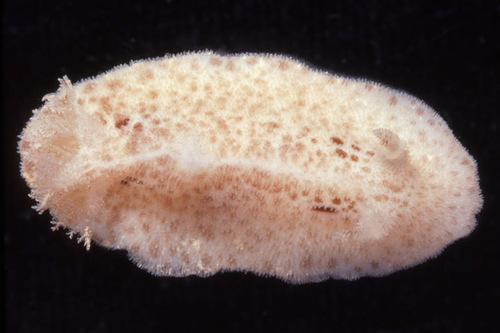
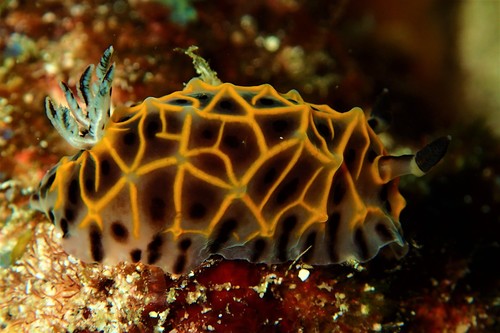
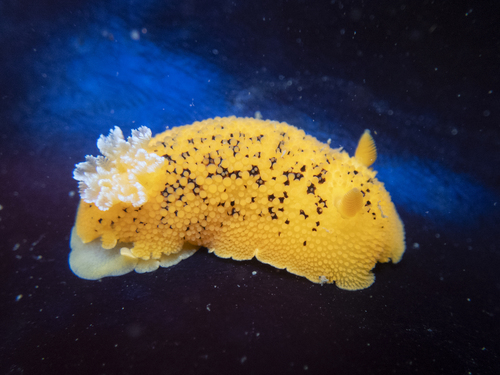
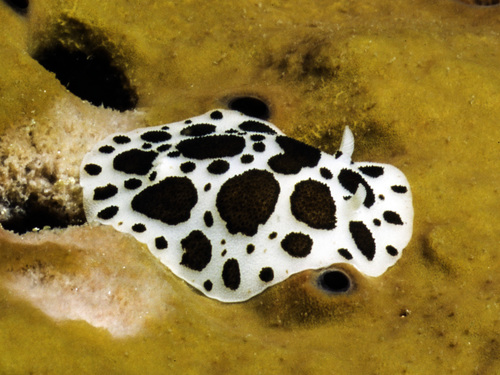
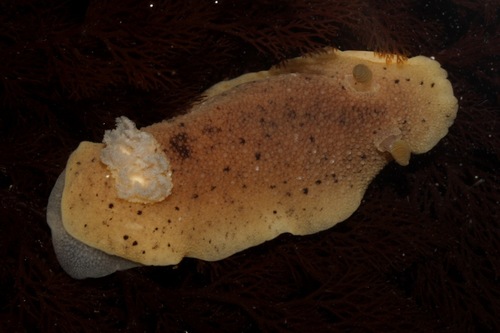
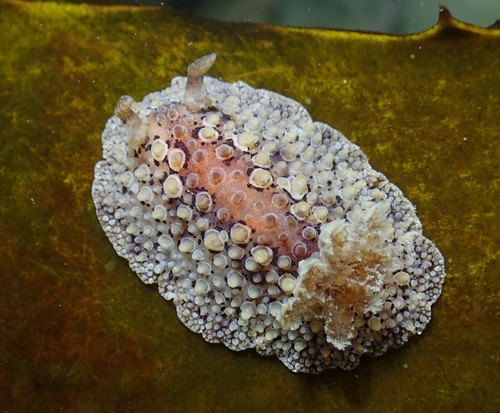
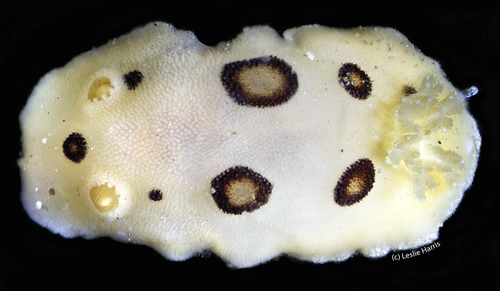
Diaulula sandiegensis reaches a length of 5 to 10 cm (2 to 5 inches). This species of nudibranch displays body color ranging from white to golden-yellow or light brown, and has characteristic markings: sparse, irregularly scattered dark brown rings and spots across its mantle. It is likely that these spots represent the early developmental stage of the rings. The mantle of Diaulula sandiegensis has a velvety texture, which is produced by minute spiculate papillae called caryophillidia; these sensory nodules are a typical feature of dorid nudibranchs.
Although both the common name and scientific name of Diaulula sandiegensis reference San Diego, this species occurs along the northeastern Pacific coast, ranging from Alaska to Puerto Penasco, Mexico. This dorid nudibranch lives in the intertidal zone at depths between 0 and 35 m (115 ft), and can be found in both sandy and rocky habitats.
Like all nudibranchs, Diaulula sandiegensis is a simultaneous hermaphrodite. When mating, individual nudibranchs wrestle for dominance, and attempt to penetrate and impregnate one another by darting their penises into each other’s body wall. The species produces a narrow, white egg ribbon that is attached as an oval spiral to rock substrates. Eggs develop and hatch into planktonic veliger larvae. After completing metamorphosis, Diaulula sandiegensis lives the rest of its life in the benthic zone. Like many other bottom-dwelling nudibranchs, it uses specially developed pedal ganglia in its foot to assist with movement. These ganglia work by producing peptides that trigger an increase in the beating rate of cilia on the underside of the foot, which enables crawling.