About Diadema savignyi (Audouin, 1809)
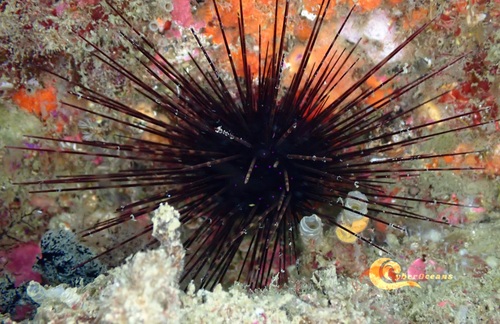
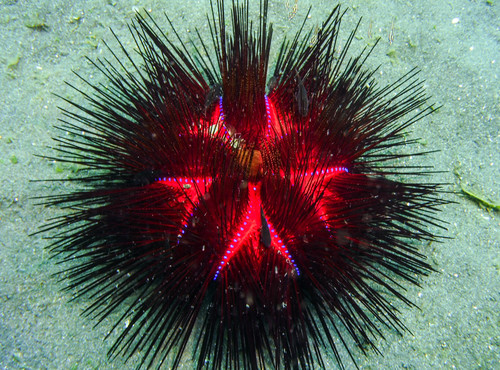
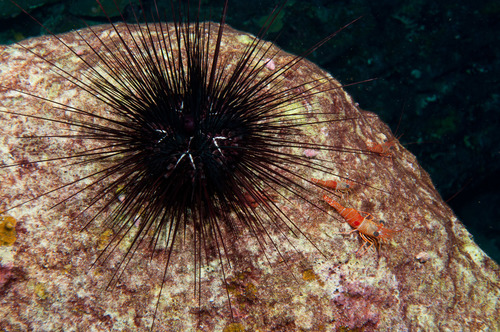
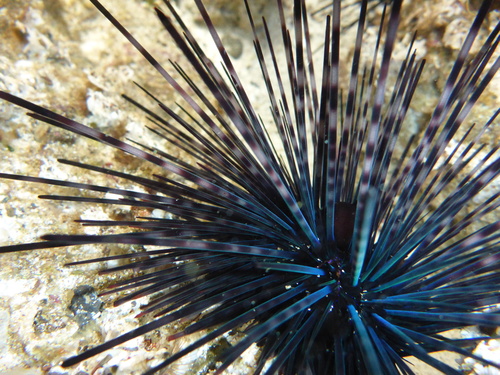
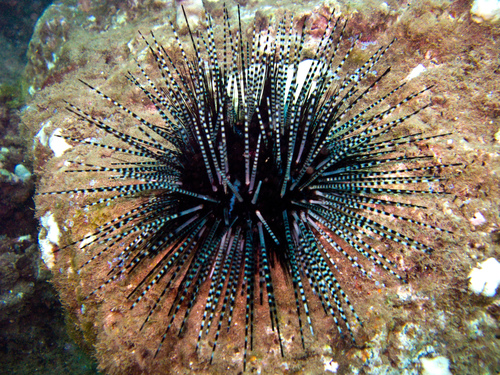
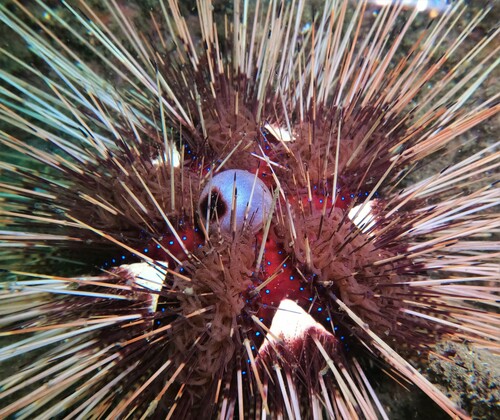
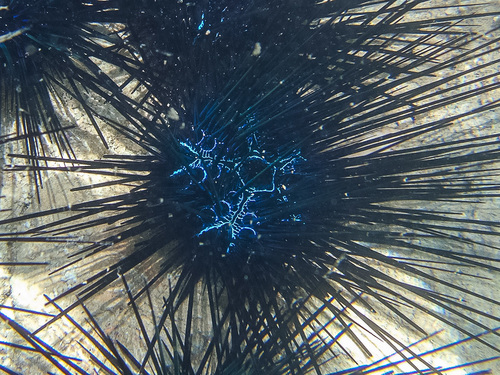
Diadema savignyi (Audouin, 1809) typically has a black, spherical, slightly flattened test reaching up to around 9 cm (3.5 in) in diameter. Its brittle, thin, hollow spines grow in tufts and can reach 25 cm (10 in) in length. These spines are usually black, but may also be grey, dark brown, or purple. Juveniles may have spines banded with lighter and darker shades, and rare individual sea urchins of this species are entirely white. Diadema savignyi is closely related and sympatric with Diadema setosum, meaning the two species share a common geographic range and frequently encounter one another. D. savignyi can be distinguished from D. setosum by several physical features: it has iridescent green or blue lines in its interambulacral areas and around the periproct, the cone-shaped region that surrounds the anus. A small number of individuals have pale spots at the aboral (upper) ends of their interambulacrals. A key distinguishing trait is that D. savignyi lacks the thin orange ring around the periproct that D. setosum has. The geographic range of Diadema savignyi stretches from the eastern coast of Africa and the Red Sea east to French Polynesia, Hawaii, New Caledonia, and northern Australia. This sea urchin typically lives on mixed sandy, rocky, and coral substrates, particularly in areas disturbed by storms or other natural causes. It occurs at depths ranging from the ocean surface down to around 70 metres (230 ft).