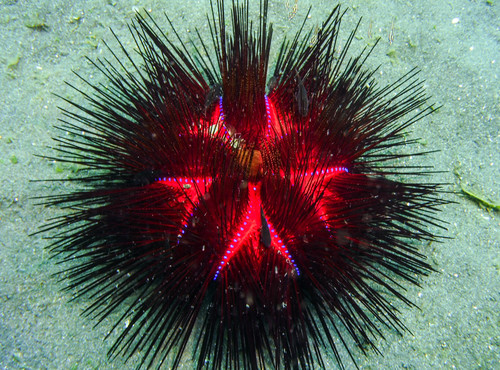
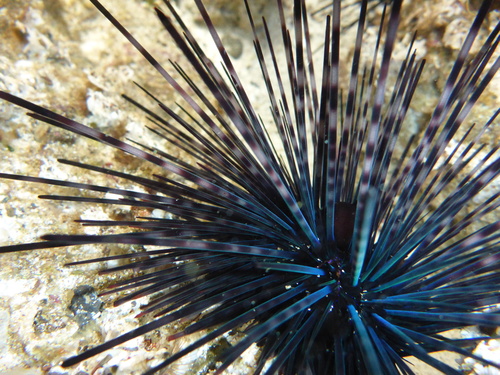
About Diadema mexicanum A.Agassiz, 1863
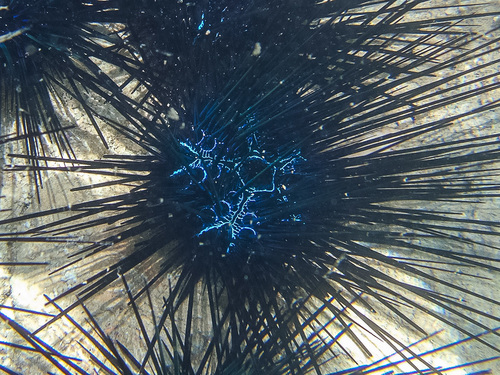
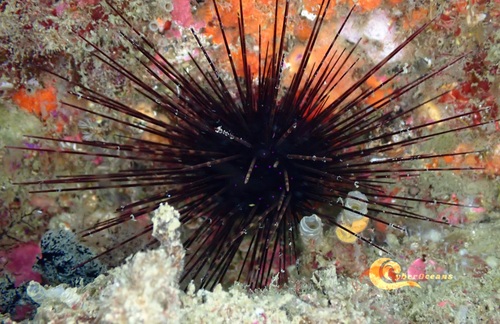
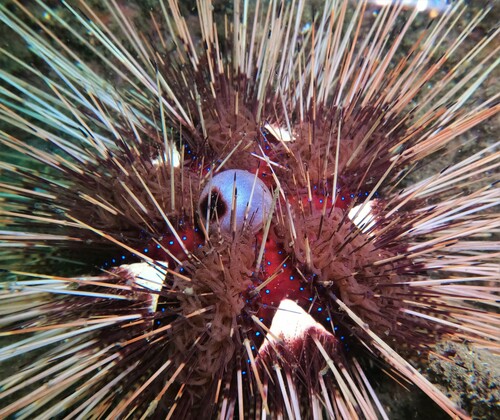
Diadema mexicanum A.Agassiz, 1863 is a species of long-spined sea urchin in the family Diadematidae. It is native to the Pacific coasts of Mexico, Costa Rica, El Salvador, Nicaragua and Panama. The coral reefs along the Pacific coast of Central America are thinner and smaller than coral reefs in the Indo-Pacific and Caribbean regions, and they experience periodic stress from events like El Niño. Between 1982 and 1983, 50 to 90% of corals in this region were lost. After this coral loss, the population of Diadema mexicanum grew greatly, leading to increased reef damage caused by the urchins' spines. As a herbivore, Diadema mexicanum is an important member of the reef community that plays a major role in controlling algal growth. By limiting algal growth, the species helps preserve corals by reducing competition for space and light between algae and corals. However, when Diadema mexicanum populations become too large, their spines cause excessive abrasion to corals and bioerosion of the reef. Even at large population sizes, the reduction in algae that the urchins create is beneficial for the settlement of coral larvae. When Diadema mexicanum numbers decrease, algae overgrow, which harms corals and leads to very little coral recruitment. For reefs to recover after a bleaching event, the balance between reef accumulation rate and reef erosion rate needs to shift. A healthy level of grazing by these sea urchins is required to maintain moderate algal cover and support successful coral recruitment.