About Desmognathus monticola Dunn, 1916
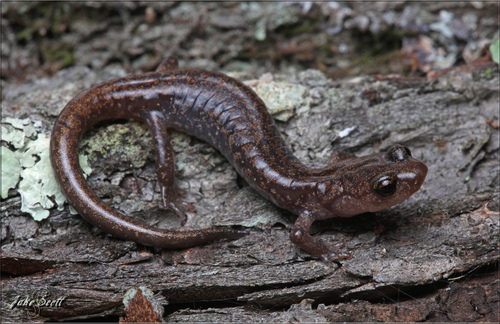
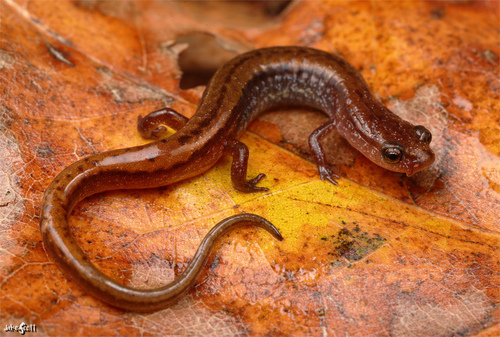
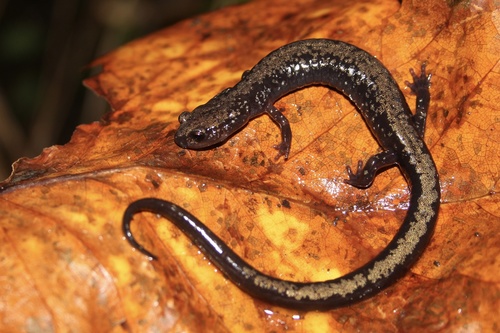
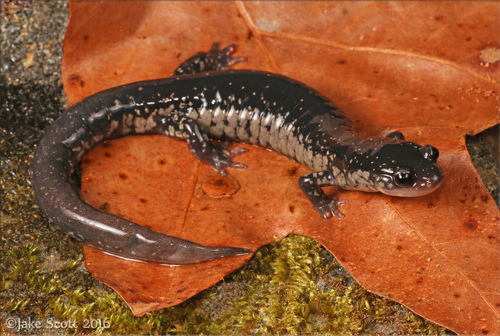
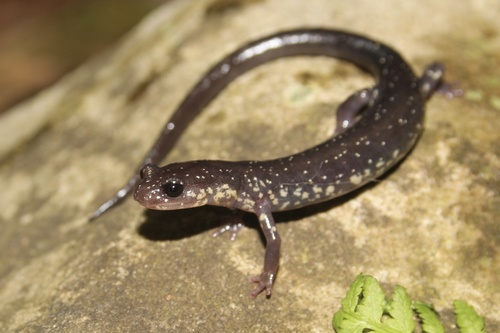
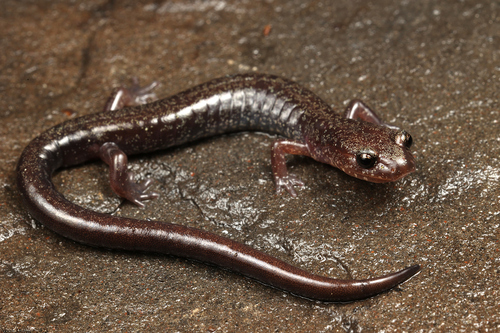
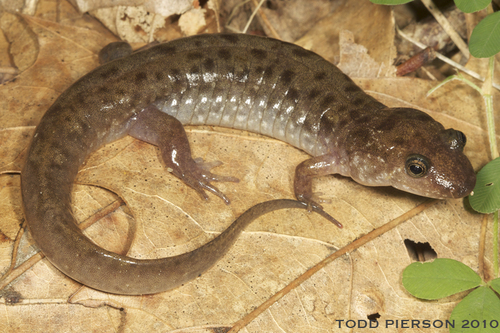
The seal salamander, with the scientific name Desmognathus monticola Dunn, 1916, is a species of lungless salamander that is endemic to the Eastern United States. Its distribution extends from southwestern Pennsylvania, south through high-elevation areas of the Appalachian Mountains in West Virginia, western Maryland, western and northern Virginia, eastern Kentucky, western North Carolina, eastern Tennessee, western South Carolina, and northern Georgia, to central Alabama. Disjunct populations also exist in southern Alabama, and at the far western end of the Florida panhandle. In the northern part of its range, it has never been observed north or west of the Ohio River. An introduced population of this salamander is found in Benton County, Arkansas. This population was first discovered in 2003, and occurs at higher densities than was initially expected. The introduced population is a potential conservation concern for the local native ecosystem. The species' habitat includes rocky mountain streams, spring-fed brooks in the ravines of deciduous forests, muddy sections of streams, and seepages. The total adult population size of Desmognathus monticola is estimated to be greater than 100,000.