About Desmognathus abditus Anderson & Tilley, 2003
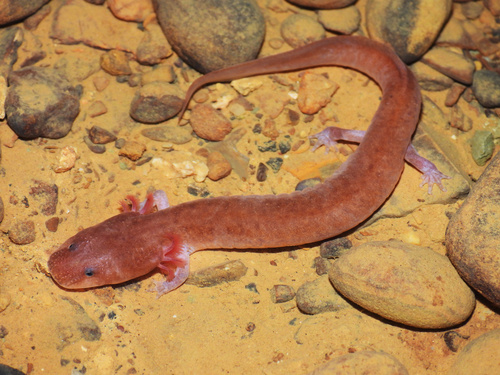
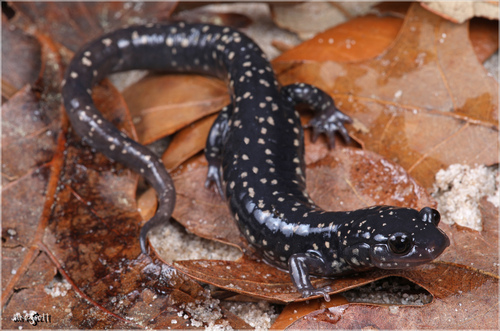
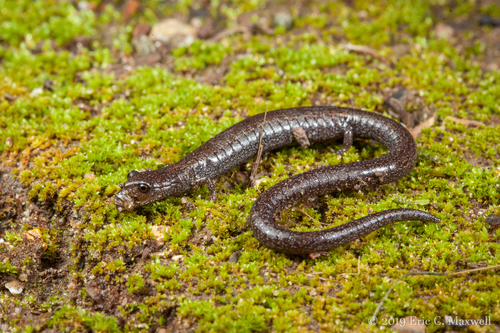
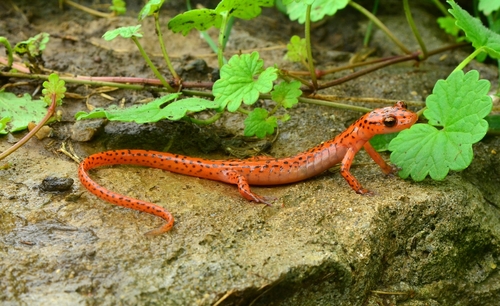
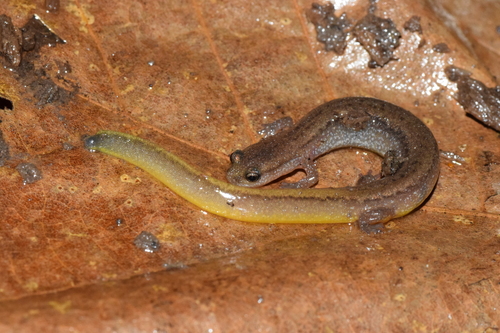
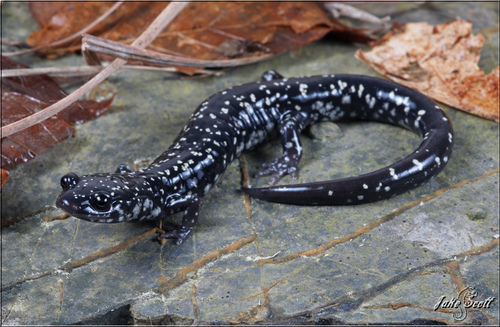
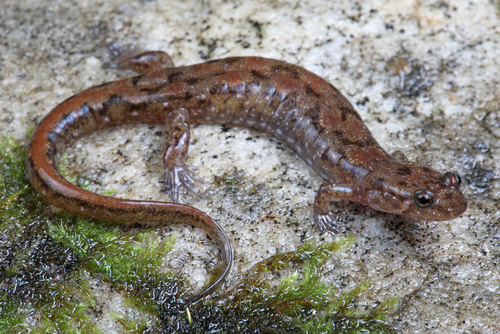
The Cumberland dusky salamander (Desmognathus abditus Anderson & Tilley, 2003) is a lungless salamander species belonging to the family Plethodontidae. It is endemic to the United States, and its natural habitats are temperate forests and rivers. This species is currently threatened by habitat loss. This species was first formally described in 2003, and little information is available about it overall. Before its description, the Allegheny Mountain dusky salamander (Desmognathus ochrophaeus) was considered to be a single species. Studies using nucleic acid sequencing and agar gel electrophoresis later demonstrated that D. ochrophaeus is actually a species complex. The Cumberland dusky salamander is one of five members of this complex. It has only been recorded at several sites on the Cumberland Plateau in Tennessee, United States. Its northernmost known site is near Wartburg in Morgan County, and its southernmost known site is on the southern side of the Cumberland Plateau near Tracy City in Grundy County. All known specimens have been found under rocks in streams, or within one meter of flowing water. This species particularly favors moss-covered rocks behind cascades. Several other salamander species share the Cumberland dusky salamander's range, and it is thought to hybridize with the Allegheny Mountain dusky salamander (Desmognathus ochrophaeus) and the Ocoee salamander (Desmognathus ocoee). It is likely that the Cumberland dusky salamander feeds on small invertebrates found in leaf litter. Potential predators of this species include small mammals, birds, snakes, and possibly larger salamanders of the genus Desmognathus.