About Deroceras laeve (O.F.Müller, 1774)
Scientific name: Deroceras laeve (O.F.Müller, 1774)
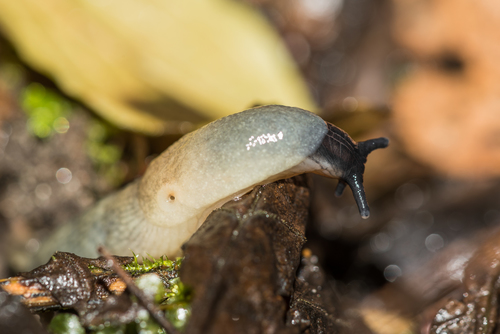
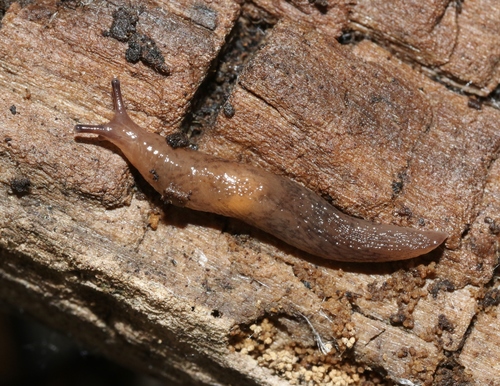
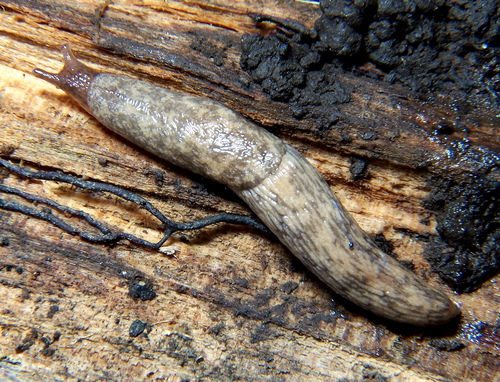
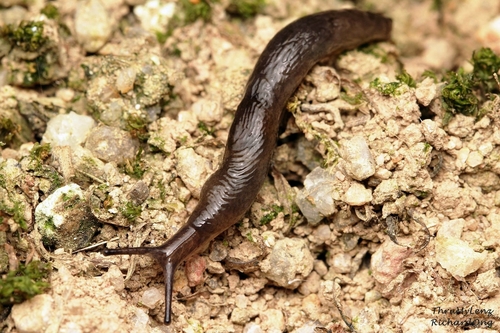
Description: This slug ranges in color from brown to dark brown, and usually has characteristic clustered dark spots that are not easily visible. Its body is almost cylindrical, with an abruptly widened posterior end. The mantle covers 50% of its body length, which is unusually large. Skin wrinkles are present, though these may disappear in preserved specimens. The slug produces thin, colorless mucus. Preserved adult specimens measure 15–25 mm in body length. For the reproductive system: the penis is often reduced. If present, it is elongated, lacks a distinct penial gland, and has two or more tiny glandular papillae at its tip. The penis retractor is unforked and attached at half the length of the penis. The stimulator is small and cone-shaped, but resembles a papilla. The tubular oviduct and atrium are unusually long. A rectal caecum is absent.
Distribution: Deroceras laeve was originally native to the Palearctic, ranging from subpolar zones to the southern margins of the region. It has since been introduced worldwide except Antarctica, including tropical islands like New Guinea and various Pacific islands. Within Europe, it occurs on the British Isles (Great Britain and Ireland); there is little evidence of significant population decline in Britain. It is found in the Czech Republic, Netherlands, Poland, Slovakia, Ukraine, Sweden, and Switzerland, where it is classified as lower conservation concern. In Asia, it has been recorded in Pakistan, China, Taiwan, India, and Vietnam. In the Americas, it occurs in California, Costa Rica, El Hatillo Municipality (Miranda, Venezuela), and Colombia; it was introduced to Dominica (first reported in 2009) and Brazil.
Habitat: Deroceras laeve has high ecological tolerance, but requires permanently wet habitats. It is most often found in lowlands in very humid environments including swamps, riversides, wetlands (especially alder and oak woodlands), marshlands, degraded areas, and greenhouses. It typically occurs near water, under wood or detritus. It tolerates both subpolar and tropical temperatures, and often colonizes newly created habitats within a few years. Its maximum recorded altitude is 1800 m in Switzerland (where it usually occurs below 1000 m) and 2500 m in Bulgaria. Deroceras laeve can be a serious pest in greenhouses. The species is threatened by ongoing loss of wet habitats from drainage, construction projects, and road construction. It is the only land gastropod that deliberately enters water, and can survive submerged for multiple days. This unusual behavior allows it to be dispersed by flowing water.
Life cycle: The eggs of this species are translucent, with a diameter of approximately 1.5 mm to 2 mm. Eggs can survive submerged; juveniles can hatch underwater before climbing to the surface. Hatching occurs 2 to 4 weeks after eggs are laid. Newly hatched slugs measure 3 mm to 5 mm in length, are translucent, and have a pink tint. The species has an extremely short life cycle, which can complete in less than one month. It can produce up to 5 generations per year, with multiple generations coexisting at the same time. Individuals with reduced penises are common, and these reproduce via self-fertilisation. The maximum lifespan of this slug is no more than one year.