About Dermestes lardarius Linnaeus, 1758
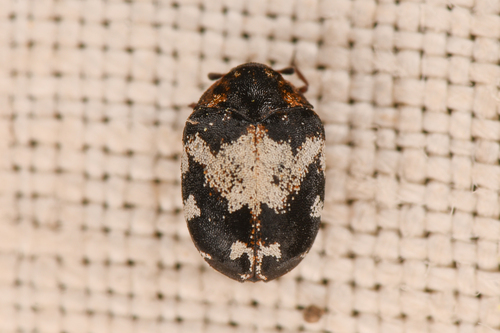
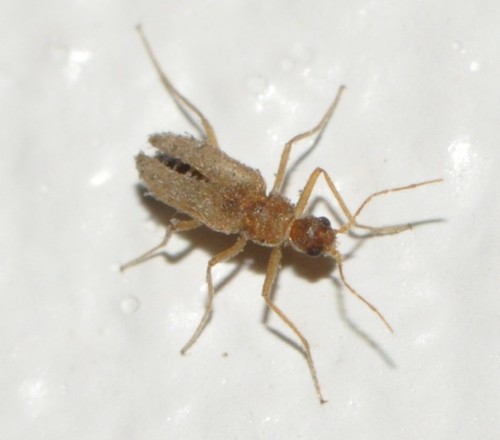
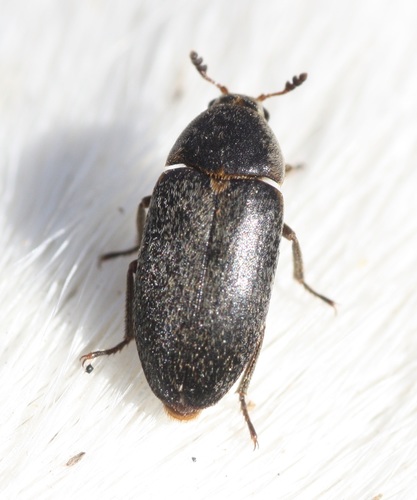
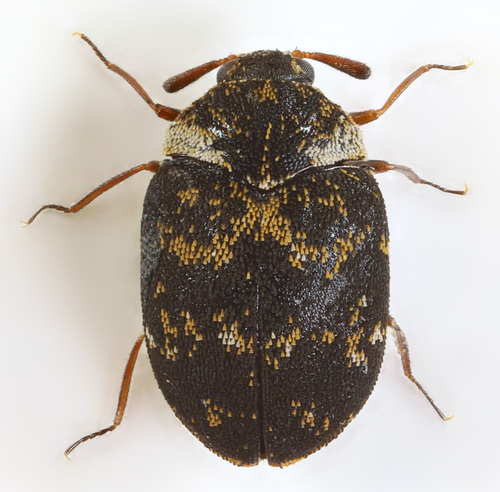
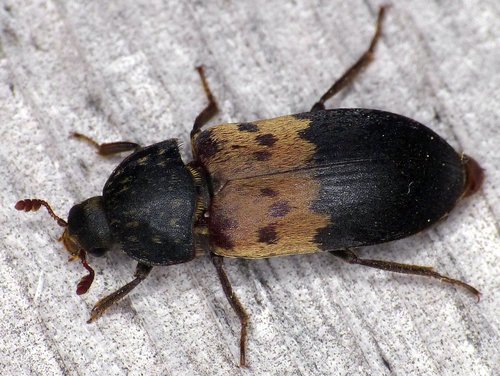
Dermestes lardarius, commonly known as the larder beetle or moisture bug, is a species of beetle belonging to the skin beetle family Dermestidae. This species has a worldwide distribution. It is a widespread household and storage facility pest across much of the globe. It feeds on a range of animal products including dried meats and fish, pet food, skins and hides, feathers, cheese, and preserved museum specimens such as dried insects. It may also consume plant material that is high in protein, such as grain. Larder beetle larvae are longer than adult larder beetles, and their bodies are covered in reddish brown or black setae. The posterior end of the larva has two spine-like, backward-curved appendages. Larvae of the related black larder beetle have appendages that are less strongly curved. Mature larvae of both the larder beetle and the black larder beetle typically bore into hard substrates like wood, cork, and plaster to pupate. Adult larder beetles are generally 1/3 to 3/8 of an inch long, and have a dark brown body marked with a broad, pale yellow spotted band across the upper section of the elytra. Within this band, three black dots are arranged in a triangular shape. Fine, yellow setae cover the larder beetle's sternum and legs. During winter, adult larder beetles are typically found outdoors in protected areas, and they move into buildings during spring and early summer. Females lay approximately 135 eggs close to a food source, and these eggs hatch after around 12 days. The entire life cycle of the larder beetle takes approximately 40 to 50 days to complete.