About Dermacentor variabilis Say, 1821
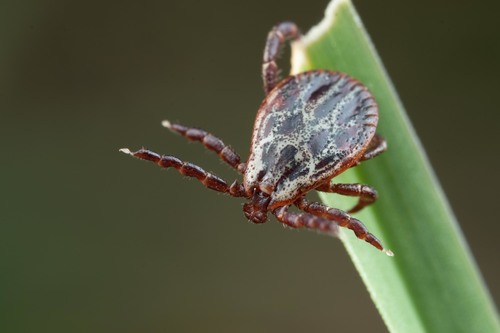
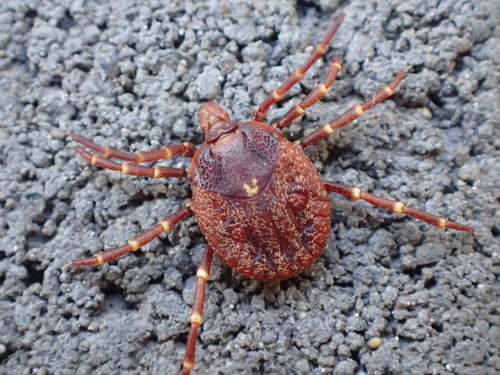
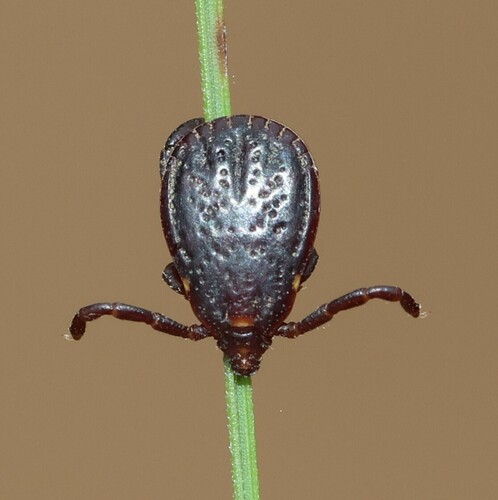
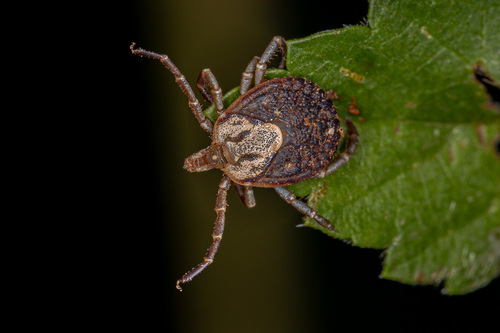
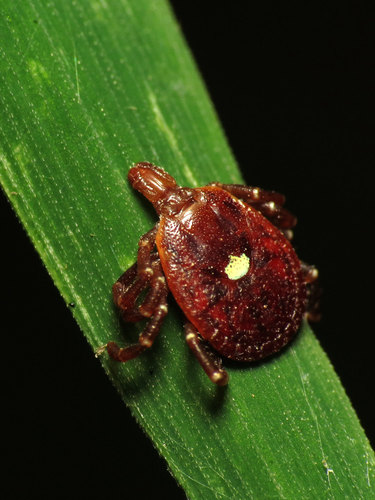
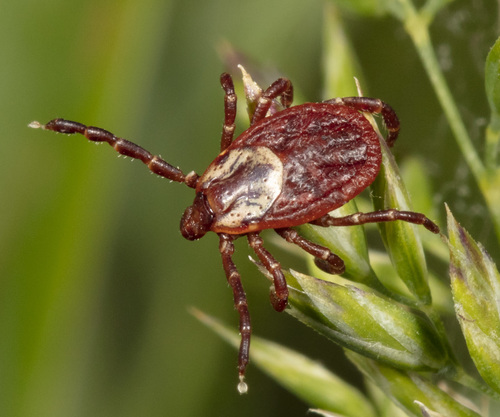
Dermacentor variabilis Say, 1821, commonly called the American dog tick or wood tick, is a well-known species of hard tick. It carries bacteria that cause several human diseases, including Rocky Mountain spotted fever and tularemia (caused by Francisella tularensis). The tick spreads these diseases when it feeds on a host’s blood, and it can take several days before a host develops symptoms. While D. variabilis can be exposed to Borrelia burgdorferi, the bacterium that causes Lyme disease, these ticks are not effective vectors for transmitting this disease. The primary vectors for B. burgdorferi are deer ticks: Ixodes scapularis in the eastern United States, Ixodes pacificus in California and Oregon, and Ixodes ricinus in Europe. D. variabilis may also carry Anaplasma phagocytophilum, the causative agent of human granulocytic anaplasmosis, and Ehrlichia chaffeensis, the causative agent of human monocytic ehrlichiosis. Dermacentor ticks can also cause tick paralysis by producing a neurotoxin that leads to rapidly progressive flaccid quadriparesis, a condition similar to Guillain–Barré syndrome. This neurotoxin blocks the presynaptic release of acetylcholine at neuromuscular junctions. Within North America, D. variabilis is primarily distributed in the eastern part of the continent, with some reported occurrences in California. At the northern edge of its range, in Nova Scotia and Massachusetts, ticks are active from April to August, with peak activity between May and June. In coastal Virginia, adult ticks are active from April to September or October, with activity peaks in May and July. In Ohio, seasonal activity runs from late April to September, with a main peak from May to June and a smaller secondary peak from August to September. In Georgia, adult ticks are active from late March to August, with peaks in early May, late May, and late June. In Florida, adult activity occurs from April to July, and is limited by high summer temperatures and low winter humidity. Most tick species go through four life stages: egg, six-legged larva, eight-legged nymph, and adult. After hatching from an egg, a tick must consume a blood meal at every life stage to survive. Ticks can feed on mammals, birds, reptiles, and amphibians. Unlike most tick species, D. variabilis prefers to use the same type of host across all stages of its life cycle.