About Dendropsophus phlebodes (Stejneger, 1906)
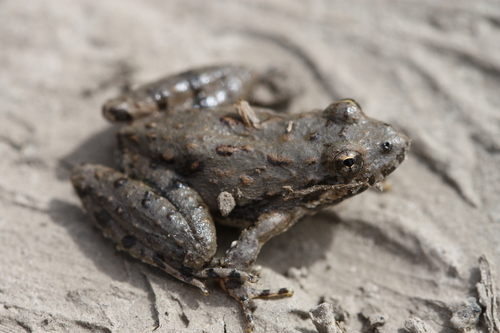
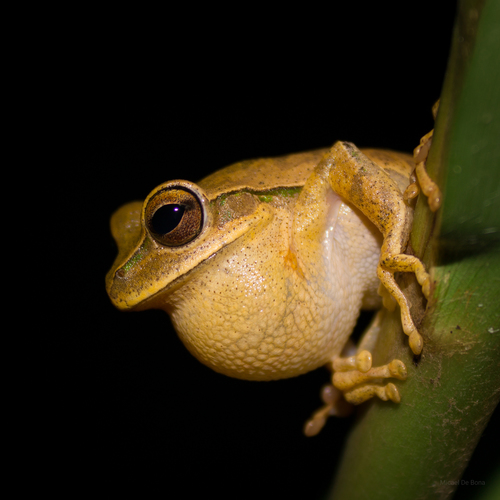
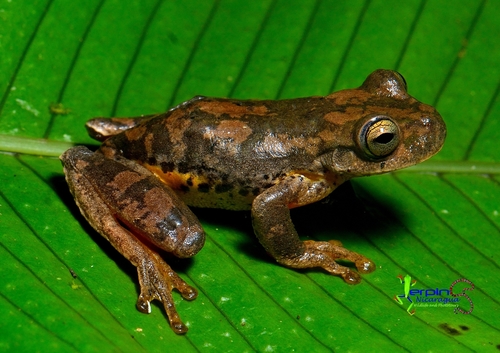
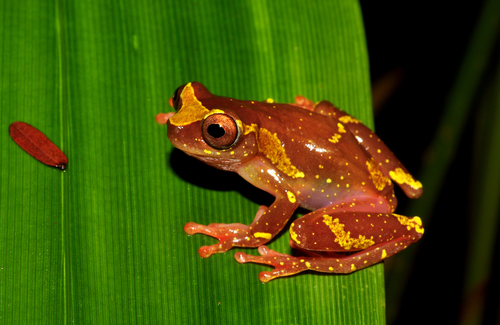
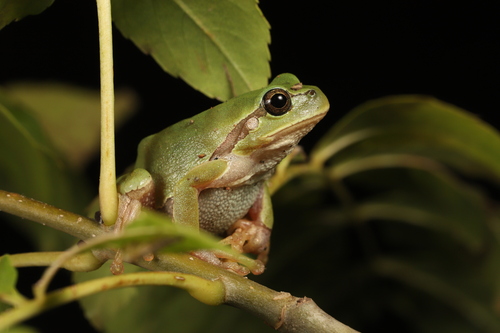
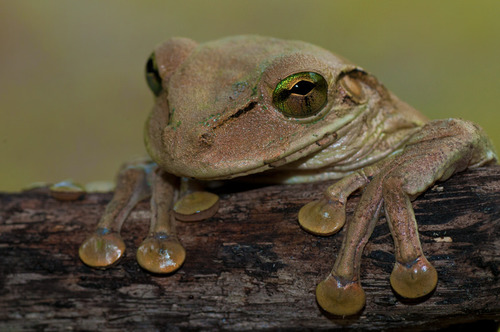
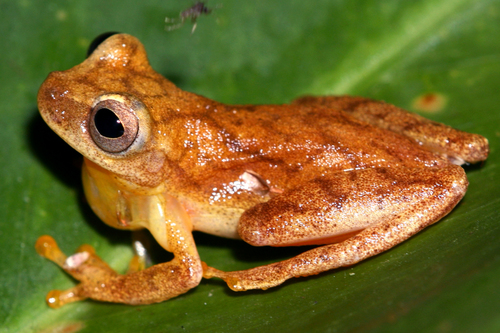
Commonly known as the San Carlos treefrog, Dendropsophus phlebodes (Stejneger, 1906) is a small, sturdy frog species. Females reach a snout–vent length of 28 millimetres (1.1 in), while males are slightly smaller. This species has a blunt snout, a wide head, and a tympanum that is partially concealed by a fold of skin. Males have a single vocal sac in the throat and a pair of vocal slits, and the male’s vocal sac turns yellow during the breeding season. The fore-legs are short; the long, slender fingers have large flattened pads at their tips. The hind legs are short but powerful; the long toes are partially webbed and have expanded tips. The skin on the dorsal (upper) surface is smooth, pale brown with faint darker patterning. The ventral (lower) surface is granular and white, blending into cream and yellow on the inner thighs. The iris is yellowish-bronze. Dendropsophus phlebodes is sometimes confused with other species in the same genus. It can be distinguished from Dendropsophus ebraccatus by D. ebraccatus’s characteristic hourglass pattern on its back, and by the shorter primary calling notes of D. phlebodes. The San Carlos treefrog is a nocturnal lowland species. It is found in Pacific northwestern Colombia (Chocó and Risaralda Departments) and Panama, as well as on the Atlantic slopes of Panama, Costa Rica, and Nicaragua. Its natural habitat is humid forest, where it breeds in shallow pools. It generally does not occur at elevations greater than 700 metres (2,300 ft) above sea level. It can also often be found in cultivated land, swampy meadows, and drainage ditches.