About Dendropsophus minutus (Peters, 1872)
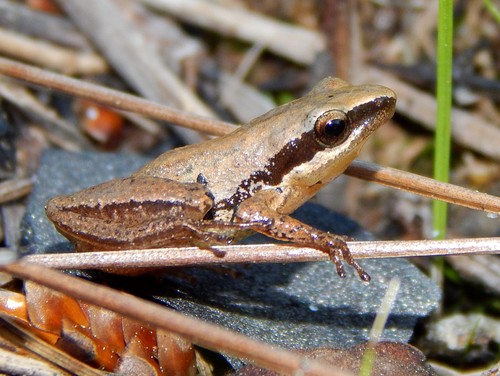
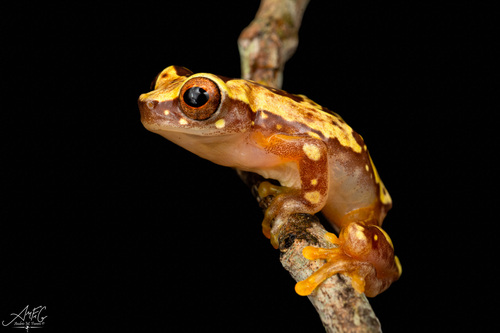
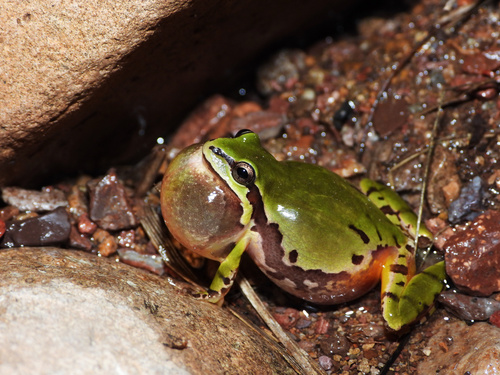
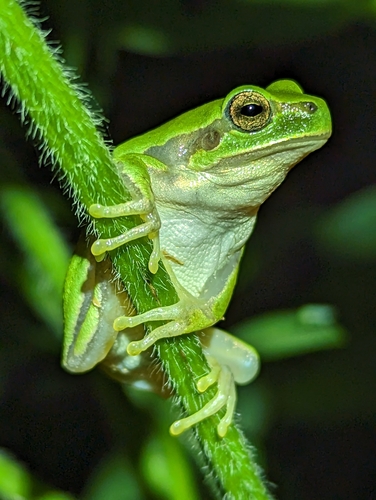
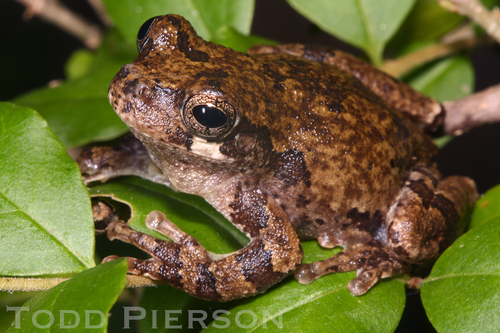
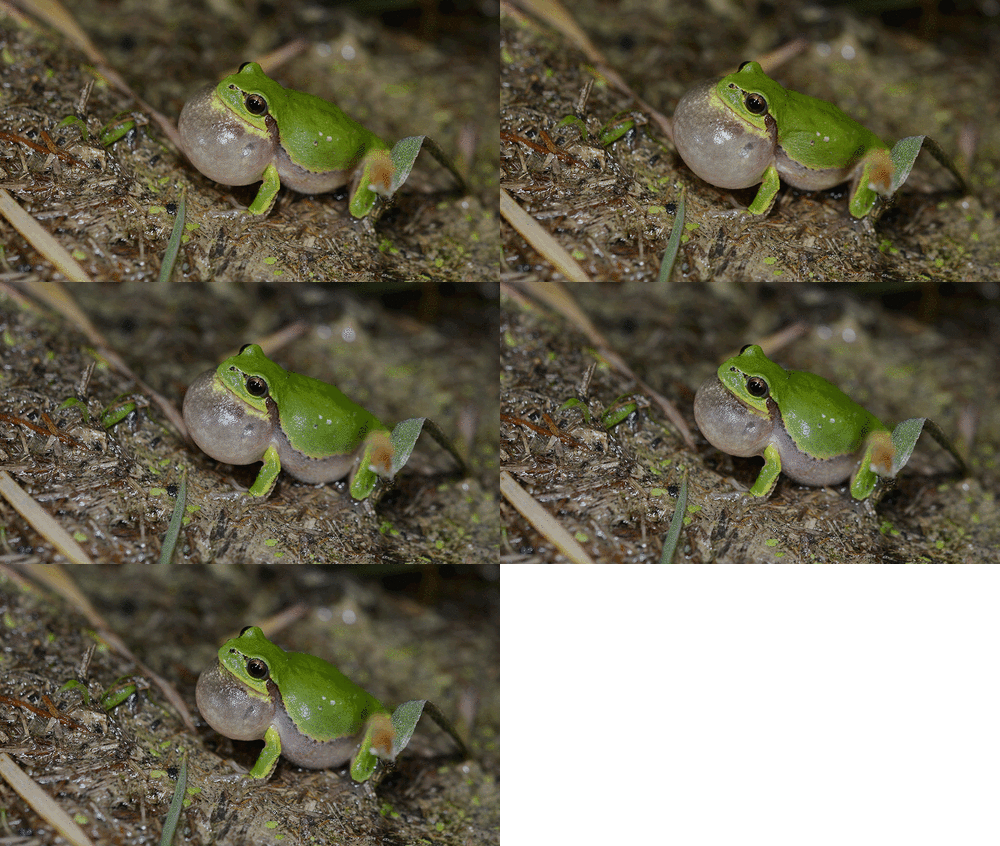
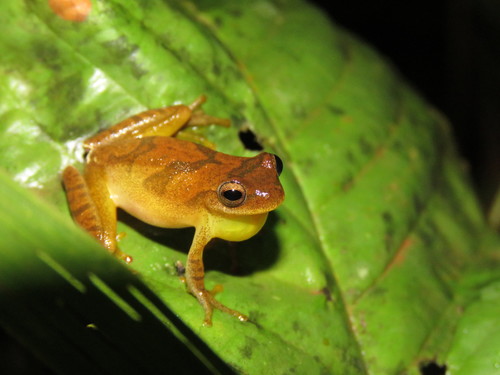
Dendropsophus minutus, commonly called the lesser treefrog, is a species of frog in the Hylidae family. It is found in Argentina, Bolivia, Brazil, Colombia, Ecuador, French Guiana, Guyana, Paraguay, Peru, Suriname, Trinidad and Tobago, Uruguay, and Venezuela. In Spanish, this species is referred to as ranita amarilla común. Its natural habitats include subtropical or tropical dry forests, subtropical or tropical moist lowland forests, subtropical or tropical moist montane forests, dry savanna, moist savanna, subtropical or tropical seasonally wet or flooded lowland grassland, intermittent freshwater marshes, pastureland, rural gardens, urban areas, heavily degraded former forest, ponds, and canals and ditches. This species has been recorded at elevations ranging from sea level up to 2000 meters above sea level. During its breeding period, male frogs perch on grasses and shrubs near water, as well as on aquatic plants in open water. Males exhibit territorial and competitive behavior around their preferred perching sites. Females lay their eggs in still bodies of water, including ponds and puddles. Because this species occupies a very large range across South America and lives in a wide variety of habitats, individual Dendropsophus minutus frogs can vary substantially in traits from one individual to another. In 2014, a group of 30 scientists studied the mitochondrial DNA of this species and identified 47 distinct genetic groups within Dendropsophus minutus.