About Dendropsophus microcephalus (Cope, 1886)
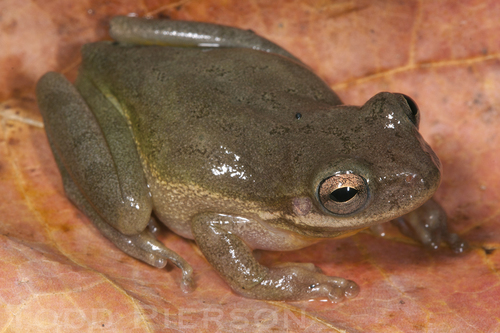
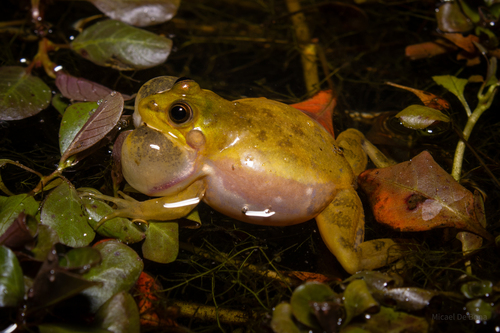
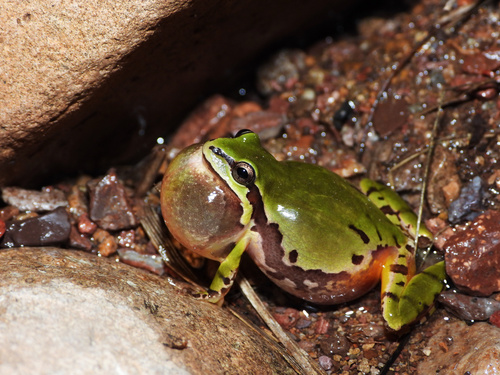
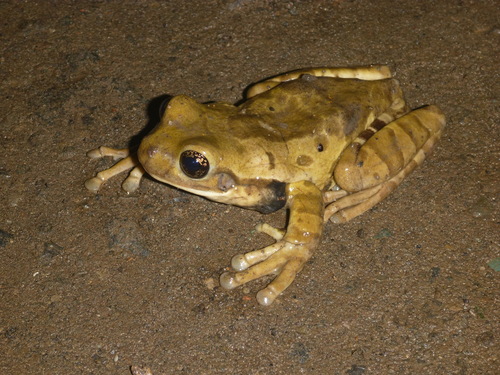
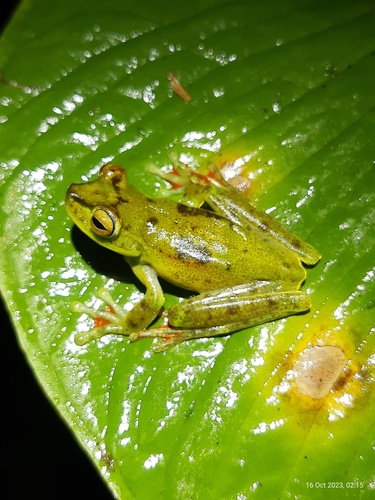
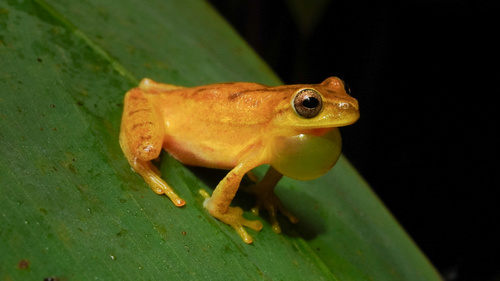
Males of Dendropsophus microcephalus reach approximately 25 mm (0.98 in) in snout–vent length, while females reach 31 mm (1.2 in). The dorsal surface is smooth, and ranges in color from pale to bright yellow, with two fairly distinct parallel light brown lines running the full length of the body. The upper surfaces of the thighs bear dark markings. The ventral surface is pale cream or white, and the throat may be more yellowish in color. The iris is bronze. D. microcephalus is commonly mistaken for D. ebraccatus, the hourglass treefrog. It can be distinguished from D. ebraccatus by the absence of an hourglass pattern on its dorsum, and the absence of a pale lip strip. Dendropsophus microcephalus is a species that inhabits savannas and forest edges, and is often found in association with wetlands. It also occurs in disturbed or altered habitats at foothills and low elevations, including secondary forests, pasture grasslands, and cut-over forests. It can also be found in marshy areas outside or adjacent to forest, including temporarily open areas. Breeding occurs in both temporary and permanent pools. This species is nocturnal. Its altitudinal range is 0–1,300 m (0–4,265 ft) above sea level, reaching up to 1,800 m in Colombia. Dendropsophus microcephalus is very abundant throughout its range, faces no known significant threats, and occurs in many protected areas.