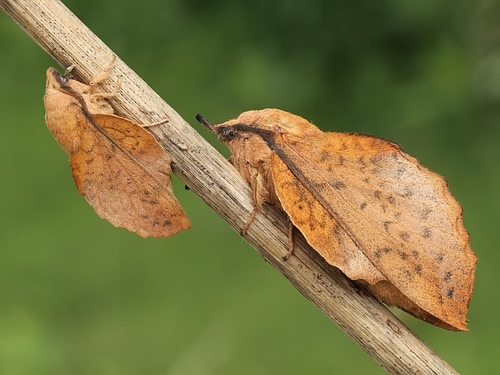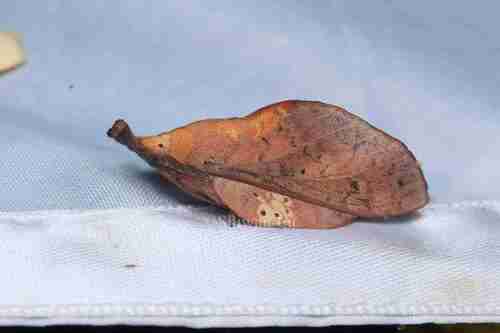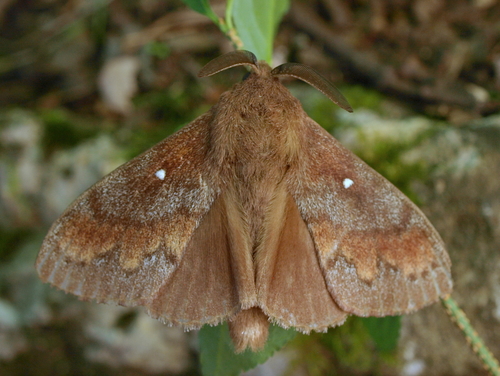
About Dendrolimus pini (Linnaeus, 1767)
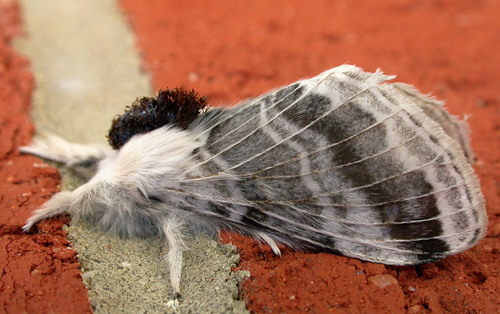
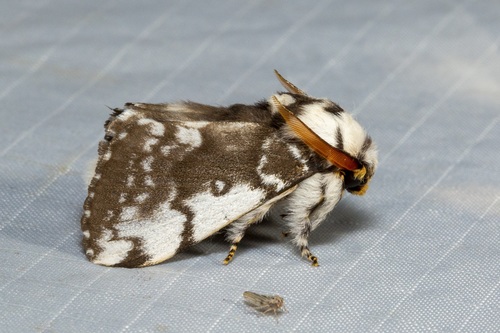
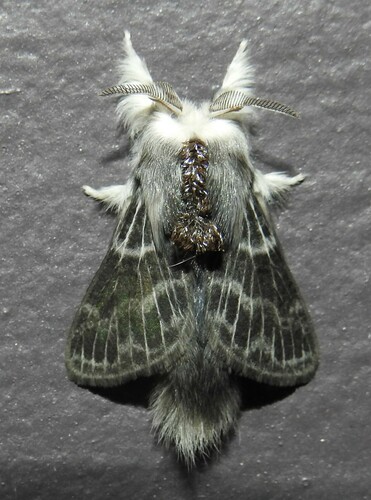
Dendrolimus pini, commonly known as the pine tree lappet moth or pine moth, is a pest defoliator of coniferous forests. It is a member of the order Lepidoptera, and one of many lappet moths in the Lasiocampidae family. Carl Linnaeus first described this species in the 10th edition of Systema Naturae in 1767, and it has a wide geographic range, with documented populations across Europe, Asia, and North Africa. This moth strongly prefers Scots pine (Pinus sylvestris), which is its main host plant.
The pine moth’s growth cycle varies from one to three years, depending on climate and habitat. Swarming of adults takes place in July and August, after which moths lay eggs on host trees. D. pini can disperse across long distances by wind, or shorter distances by crawling. Female D. pini lay 150 to 300 eggs total, in egg groups that can reach up to 100 eggs per aggregation. Eggs are most often placed on the needles of P. sylvestris, but may also be laid on host tree branches and trunks.
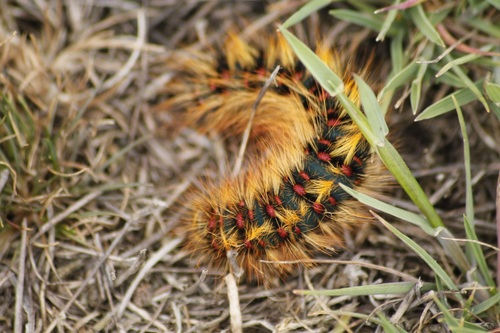
After hatching, larvae first feed on their egg shells before moving to uninfested trees to feed. Individual larvae consume the bark of young shoots and up to 1000 needles each. By October and November, larvae stop feeding, move into the tree litter on the ground, and remain there to overwinter. After snowmelt, which occurs around February to March, larvae climb back up the trees and feed on the tree crowns, causing widespread mass defoliation. Pupation happens by late May or early June, and adult moths emerge around four weeks later. Adult D. pini do not feed, so they only live for approximately 9 to 10 days.
From larva to adult moth, D. pini goes through up to eight larval instars, with the total number depending on conditions during larval development. Females go through more instars than males due to their larger body size. In warmer climates, D. pini has one generation per year (this is called univoltine). In cooler regions, larvae overwinter twice, leading to a full development period of approximately two years (called semivoltine).