About Dendroligotrichum tongariroense (Colenso) Tangney
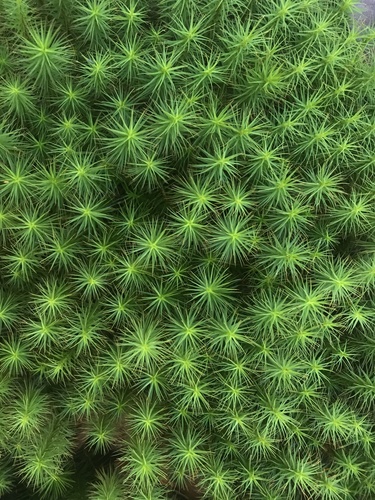
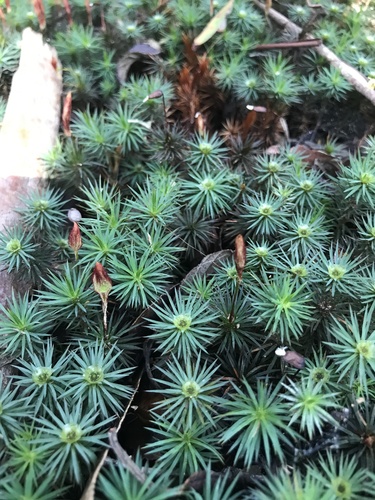
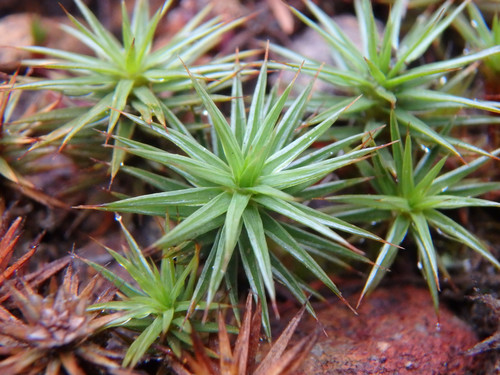
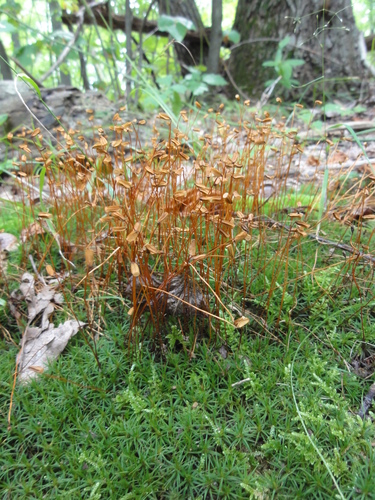
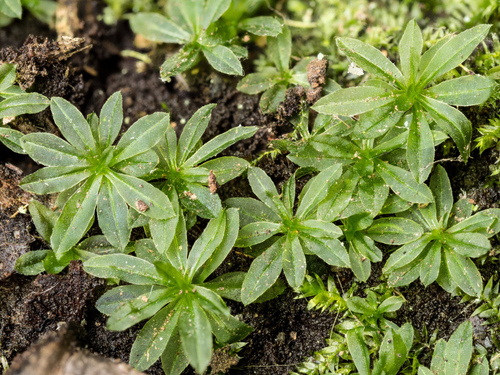
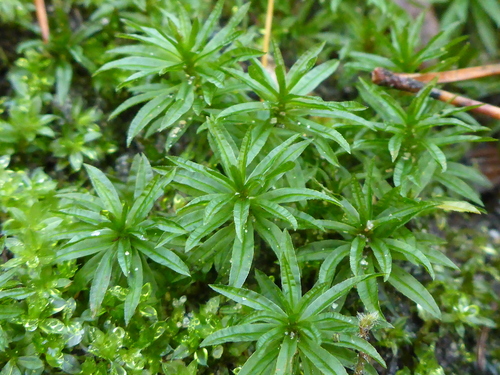
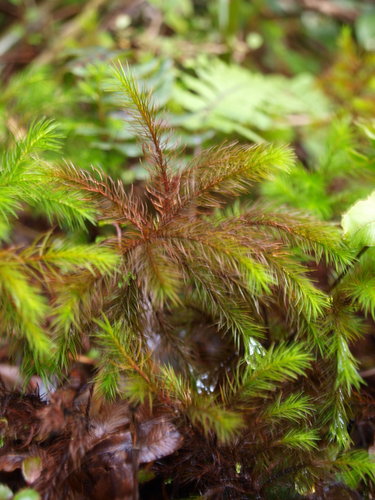
Dendroligotrichum tongariroense (Colenso) Tangney is a dense, tall moss that typically grows around 20 cm tall, and sometimes reaches up to 40 cm in height. Its stalks have a stiff hypodermal sterome, which lets the moss grow to this height similar to how woody plants support themselves. The upper portion of the moss splits into multiple fronds, each of which bears thick leaves arranged in a star-like pattern. The bases of these branches have broad sheaths, and the leaves themselves have marginate teeth and a thin lamina. This moss retains water via cohesion: water adheres to the narrowly divided leaves between the lamellae, which are scale-like structures located on the leaves. Dendroligotrichum tongariroense can be distinguished from related species: it lacks paired apical cells in the leaf laminae, which differentiates it from Dendroligotrichum squamosum, and it differs from Dendroligotrichum dendroide by producing oblong, cylindrical capsules that are not flaring, growing to a shorter maximum height, and having a broader leaf sheath. Dendroligotrichum tongariroense is found across the main islands of New Zealand. In the South Island, it grows in beech forests, while in the North Island it occurs mainly at elevated sites. A single specimen of the moss has been collected from the Auckland Islands, and this specimen is currently held in the New York Botanical Garden Herbarium. Dendroligotrichum tongariroense does not have an assigned threat classification in the New Zealand Threat Classification System (NZTCS).