About Dendrocopos himalayensis (Jardine & Selby, 1831)
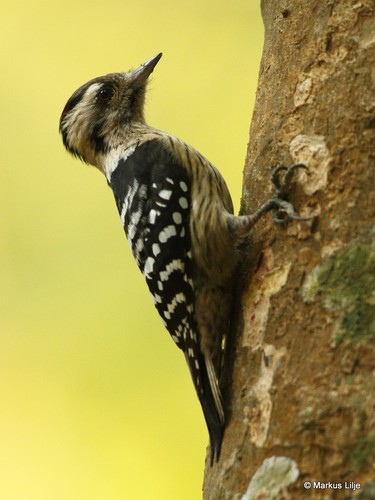
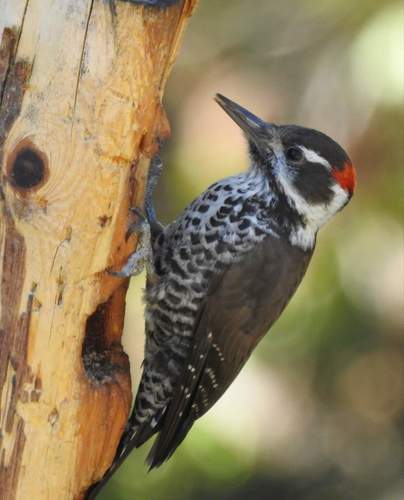
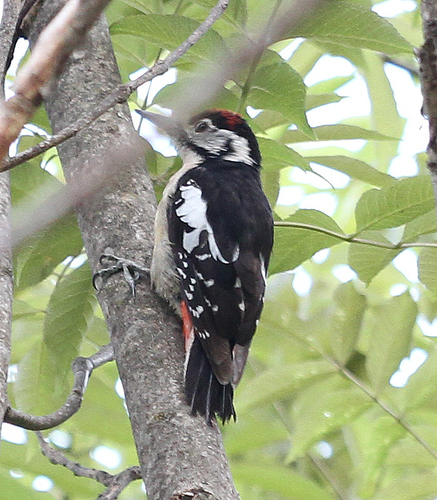
Dendrocopos himalayensis, the Himalayan woodpecker, is a medium-sized pied woodpecker that reaches approximately 24 cm (9 inches) in length. Its upperparts are glossy black, with broad white patches extending from the shoulder to the lower back, limited white barring on the flight feathers, and clean white edging along the tail. The underparts and head are white or solid pale buff, marked with a black Y-shaped pattern across the neck and cheeks. Males have a red crown, while females have a black crown. Unique black marks under the eyes set this species apart from other woodpeckers. The vent and undertail coverts are red or pink. It has chestnut irises, blackish beaks, and grey legs. Juvenile birds are duller, with greyish-black upperparts, less vivid coloration on the vent and undertail areas, and a greyish crown with some red present in both sexes. In terms of ecology, the Himalayan woodpecker occurs at altitudes between 1,500 and 3,200 m (4,900 and 10,500 ft). It inhabits either wet or dry upland forest, which can feature either deciduous or coniferous trees, and often contains rhododendrons. It forages alone, most typically on tree trunks and large branches, though it occasionally forages on the ground. It has a varied diet that includes insects, fruits, seeds, and sap. It will sometimes hammer fir cones against stones to extract the seeds inside.