About Dendragapus fuliginosus (Ridgway, 1873)
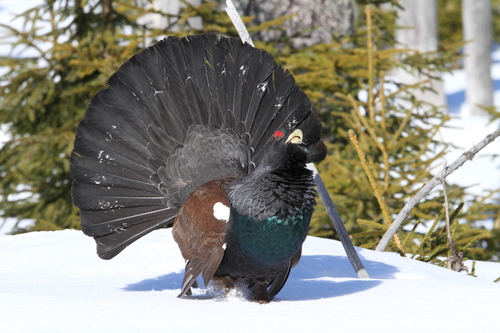
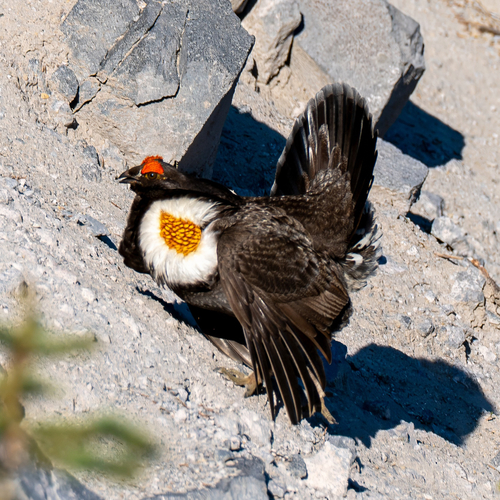
Dendragapus fuliginosus, commonly known as sooty grouse, has distinct physical traits between adult sexes. All adults have a long square tail that is light gray at the tip. Adult males are primarily dark in color. During displays, they have a yellow throat air sac surrounded by white feathers, and a yellow wattle above the eye. Adult females have mottled brown plumage, with dark brown and white markings on their underparts. Females also have longer, thinner necks than males, while males have stouter bodies than females. Their breeding habitat is located at the edges of conifer and mixed forests in mountainous areas of western North America, stretching from southeastern Alaska and Yukon south to California. Their range is closely tied to the distribution of various conifer species. They thrive in old forests because these areas provide the diverse plants and trees they need. Regenerated areas that have been logged or burned also attract sooty grouse, as long as these areas have abundant bushes and shrubs for nesting. The sooty grouse builds its nest as a shallow scrape on the ground, hidden under a shrub or log. Grouse Mountain, the peak overlooking Vancouver, Canada, gets its name from the blue grouse that live on the mountain. The first hikers to reach the mountain’s peak hunted these birds, and named the mountain in their honor. The name also reflects the large population of sooty grouse found on the mountain.