About Delphinia picta (Fabricius, 1781)
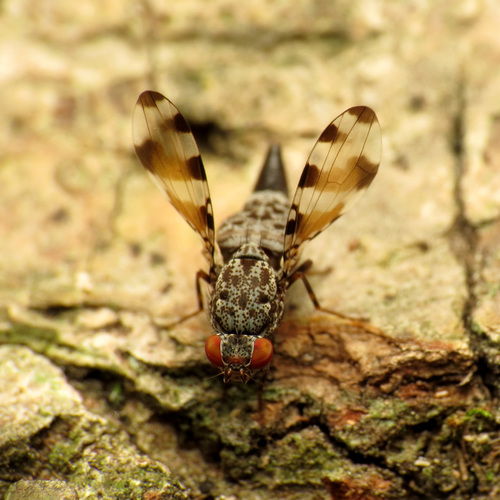
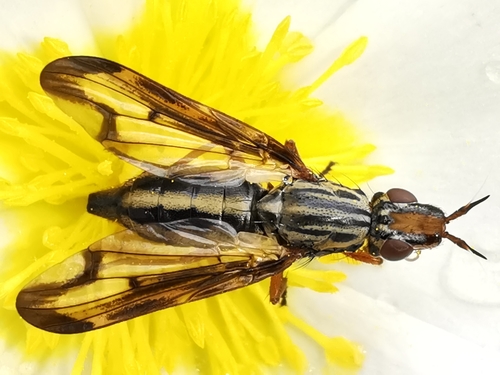
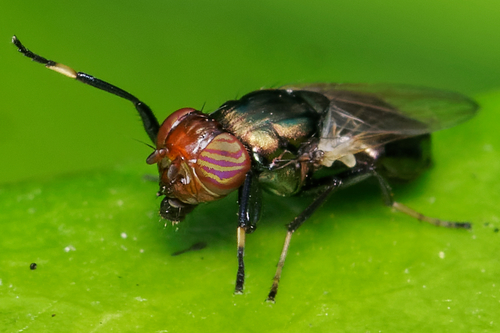
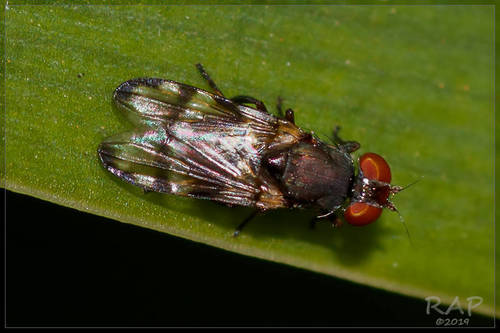
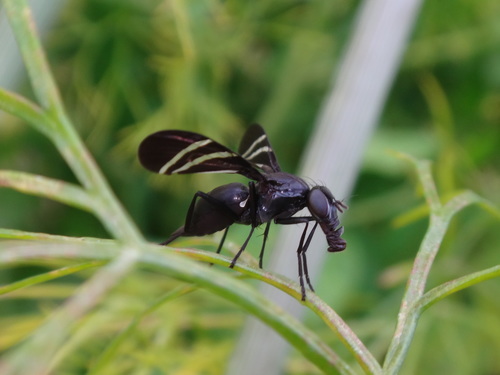
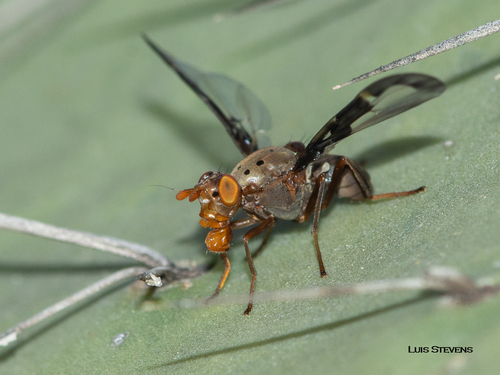
Delphinia picta (Fabricius, 1781) can be most reliably identified by its unique wing pattern: the wings are shiny dark brown markings against a clear, transparent hyaline background. Adults have an overall body length of approximately 7 millimeters, with a black abdomen and light brown head, thorax, and legs. For females, the ovipositor has an average length of 1.27 millimeters, bears two prominent pairs of dorsal setae and one prominent pair of ventral setae, plus many shorter setae along both sides; the tip of the ovipositor curves slightly downward. In laboratory conditions, adult Delphinia picta typically live less than 40 days, with a maximum recorded lifespan of 69 days. Mating occurs in the evening, two days after adults emerge from their pupal stage. To initiate courtship, the female waves her wings gently, and the male responds by flicking his wings before copulation; courtship may also include either one or both partners blowing a bubble from their mouth. Females can lay up to 500 eggs in decaying herbaceous plant matter. Eggs hatch into larvae 4 to 6 days after being laid. Larvae go through three instar developmental stages, reach the pupal stage 21 to 30 days after hatching, and complete pupal development after an additional 14 to 17 days. The rate of this species’ development is impacted by daylight duration. D. picta is multivoltine, with one generation active from May to July, and a second generation that overwinters as mature larvae. This species is ecologically associated with three plant species: black locust (Robinia pseudoacacia), eastern cottonwood (Populus deltoides), and saw palmetto (Serenoa repens). It is preyed on by wasps, including the species Crabro monticola.