About Delma inornata Kluge, 1974
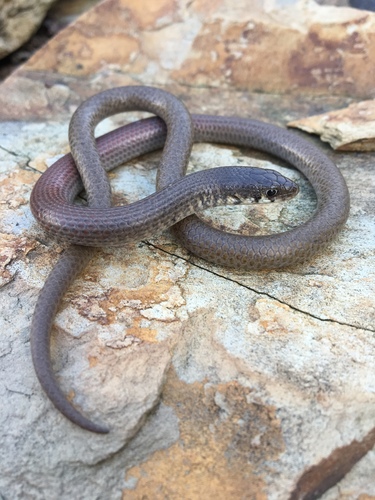
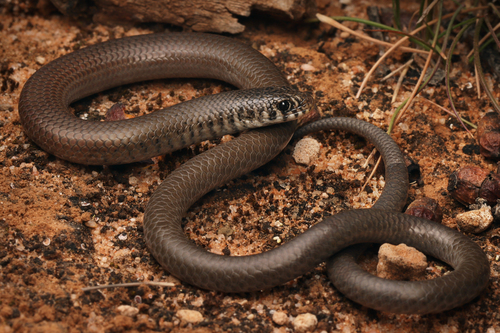
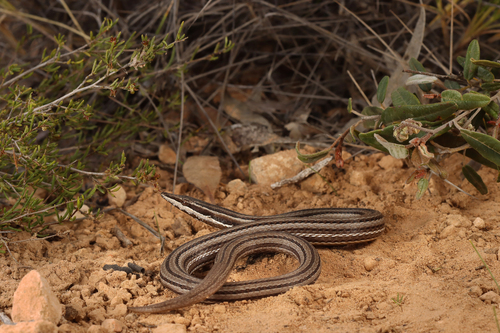
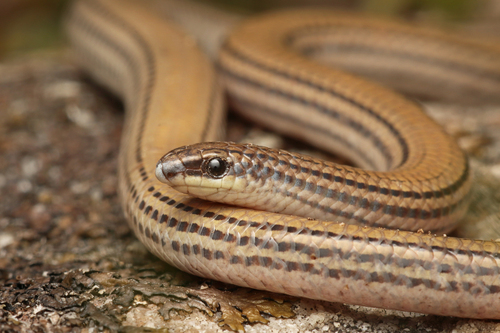
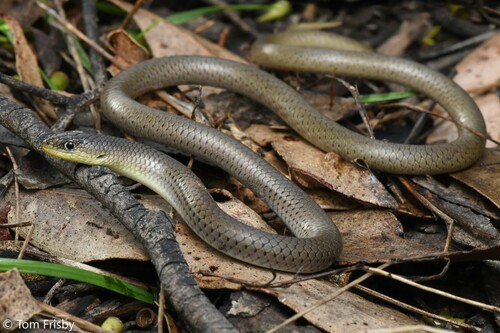
Delma inornata, scientifically described by Kluge in 1974, is one of the largest species in the Delma genus. Its average snout-to-vent length measures 13.3 centimetres (5.2 inches). The tail is typically 2 to 4 times the length of the body, and makes up to two thirds of the lizard’s total body length. This species got its name from its lack of a uniform pattern or unique distinguishing features, traits that are commonly used to characterize other members of the Delma genus. Its dorsal colouration is grey, grey-brown, or olive brown, and most individuals have a yellow throat. Delma inornata shares multiple traits with Pygopus and their gekkonid relatives: it has a diet heavily focused on invertebrates, a rounded head shape, peglike crushing dentition, and a low degree of cranial kinesis. This species is adapted to deliver a slower, more powerful bite that can crush and pierce arthropod cuticles. This species has a relatively wide distribution across most of the interior of Australia’s east coast. Its range stretches from the Darling Downs region in south-east Queensland, extending south to the area west of the Great Dividing Range in New South Wales, and continues to the south-eastern region of South Australia. Isolated populations have also been recorded in Northern Queensland and Central Queensland. In the southern portion of its range, Delma inornata inhabits dry to temperate lowland open grasslands and grassy woodlands of the southeast Australian temperate savanna. North of its main range, it occupies temperate, wetter forests along the ranges and slopes of the Great Dividing Range. This lizard frequently uses logs, rocks, and surface debris as cover to protect itself from predators. It also occurs in farming and grazing lands, where vegetation is often cleared and sparse, though native perennial grasses still tend to dominate these areas. Populations in these modified landscapes have adapted to use farming infrastructure such as water troughs, alongside rocks, logs, and metal and wooden debris, for cover. All species in the Delma genus are oviparous. Most Delma species lay a clutch of two eggs, which are elongated and have parchment shells. Breeding for Delma inornata takes place in early summer, when ideal temperatures stay consistent, though pregnant females have been found in January.