About Delias eucharis (Drury, 1773)
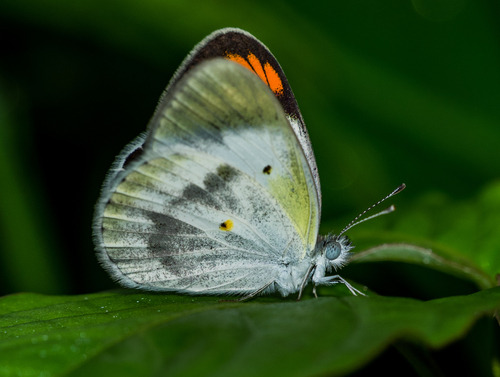
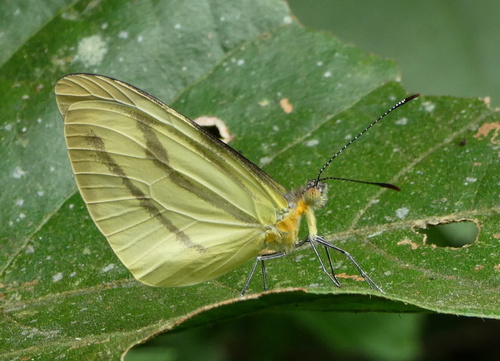
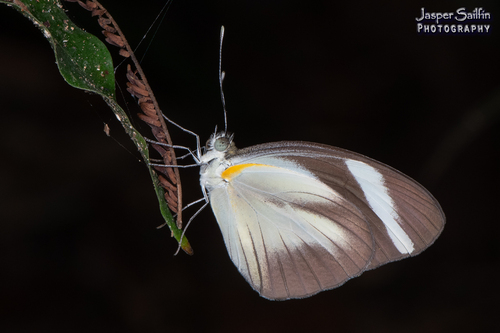
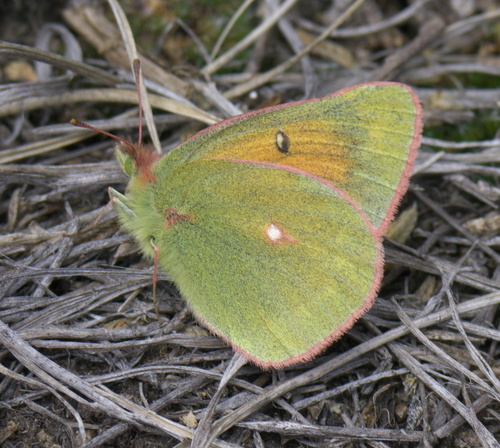
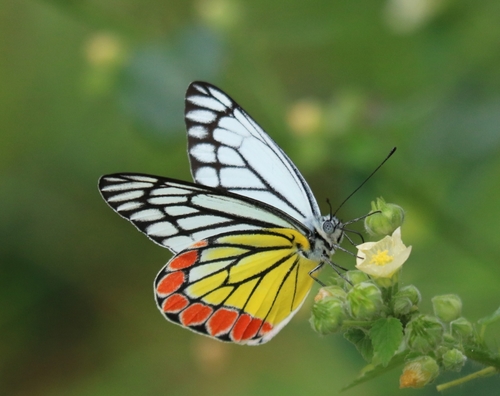
Delias eucharis (Drury, 1773), commonly called the common Jezebel, is a butterfly with a wingspan ranging from 6.5 to 8.5 cm in both males and females. This species is nomadic in behavior. It can be found in a wide range of environments, including temperate hill forests, tropical rainforests, dry open woodlands, and beach hinterlands, and is not limited to these habitat types. It occurs across most of India, absent only from desert regions, and can be found at altitudes up to 2,100 m (7,000 feet) in hilly areas. This butterfly can be found anywhere that trees grow, including within towns, cities, and gardens, where it flies high among tree canopies and visits flowers to feed. Females fly among trees searching for food plants, while males are more often seen visiting flowers to feed on nectar. When at rest, it holds its wings closed, showing off the brightly colored underside of the wings. Because the common Jezebel usually flies high in the tree canopy and only comes lower to feed on flower nectar, it is thought to have evolved a dull upper wing surface and bright lower wing surface. This coloration lets birds below recognize it immediately both in flight and when it is resting. This species breeds year-round. Its caterpillars feed on various species of parasitic mistletoes, such as Loranthus, which are small shrubs that grow on tree branches. Because caterpillars of Delias eucharis can form dense groups and feed on Loranthus, researchers have suggested that the butterfly could be used to control these parasitic mistletoes. Confirmed host plants for Delias eucharis larvae include Butea monosperma, Dendrophthoe falcata, Dendrophthoe glabrescens, Loranthus, Loranthus cordifolius, Helicanthes elasticus, Loranthus longiflorus, Scurrula parasitica, Taxillus vestitus, Abelmoschus moschatus, Pterospermum acerifolium, and Viscum album.