About Deinacrida connectens (Ander, 1939)
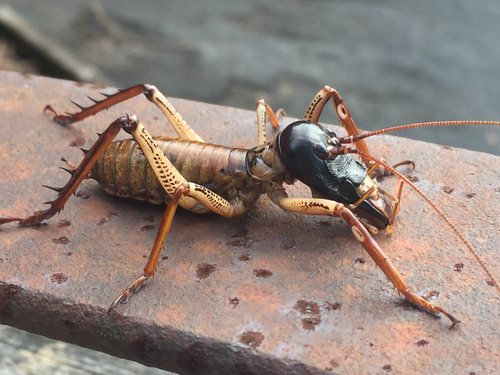
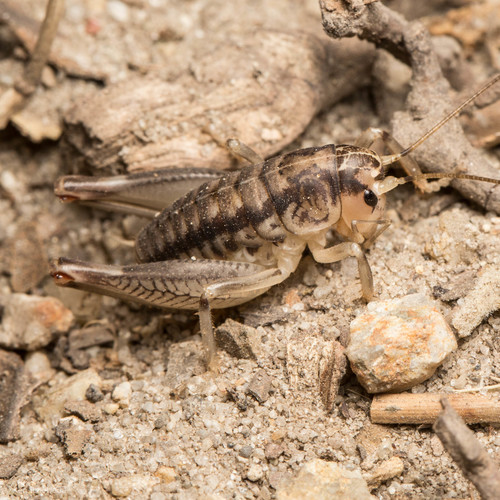
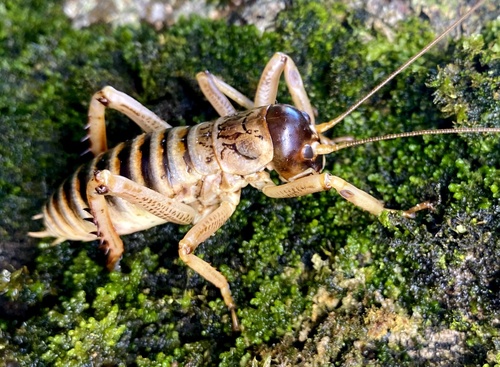
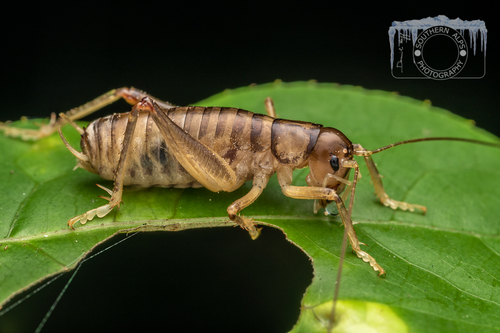
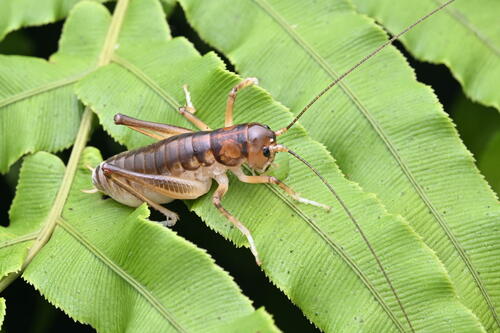
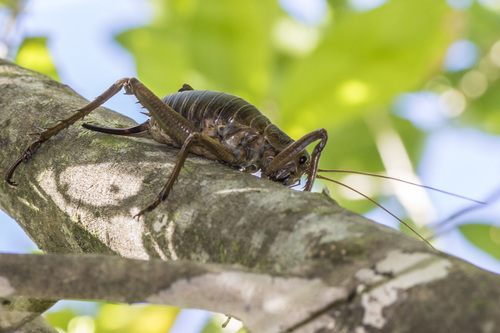
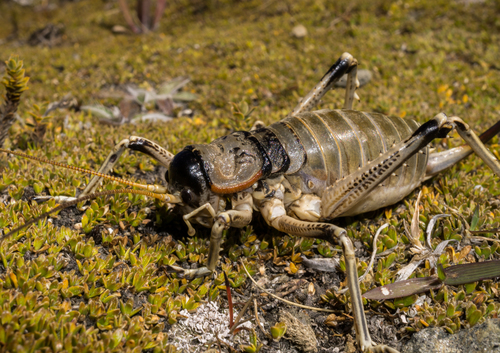
Morphology: Like other species in the Deinacrida genus, male Deinacrida connectens are smaller than females. Most adult males measure around 3.5 cm in length, while most adult females measure around 4.5 cm. One recorded source notes an exceptionally large female that reached 7.2 cm in length. Adult body weight can reach almost 10 grams. As a member of the Anostostomatidae family, D. connectens produces sound by rubbing its hind legs against small peg-shaped structures on its abdominal tergites; these structures are called stridulatory pegs. Across the entire range of D. connectens, body color varies extremely between populations. Some populations, such as the one at Spence Peak in Southland, have individuals that are mostly black, while other populations have individuals with mixed red, grey, and olive body colors. Habitat and distribution: Deinacrida connectens is found only on the South Island of New Zealand. Its distribution extends from the Wharepapa / Arthur Range in North West Nelson south to the Takitimu Range in Southland. Its range overlaps with the range of Deinacrida pluvialis in the mountains of western Otago. This relatively widespread distribution is unusual for the Deinacrida genus, as most other species in this genus have much smaller, restricted ranges. D. connectens typically lives on alpine scree slopes at elevations between 1200 meters and 3600 meters above sea level, though juveniles have been found as low as 990 meters above sea level. It is unknown what environmental factor limits this species to this alpine scree zone. The lower elevation boundary of its range keeps populations isolated on separate mountain ranges. Some sources claim D. connectens is the most abundant species in the Deinacrida genus. Ecology: Deinacrida connectens is the largest nocturnal alpine insect in New Zealand, but it occurs at lower population densities than smaller co-occurring grasshopper and cockroach species in its alpine habitat. This species, commonly called the scree wētā, can disperse the seeds of some fleshy fruits through endozoochory. Experiments testing its seed dispersal ability for the species Gaultheria depressa found that effectiveness depends on the size of the wētā. Smaller individuals eat fewer seeds, and act mostly as seed predators; almost no seeds remain intact after passing through the guts of individuals 2 cm or shorter in length. Larger individuals can consume thousands of seeds, some of which remain intact and can be dispersed long distances, so larger D. connectens can act as effective seed dispersers. One captive individual was recorded passing 686 intact Gaultheria depressa seeds.