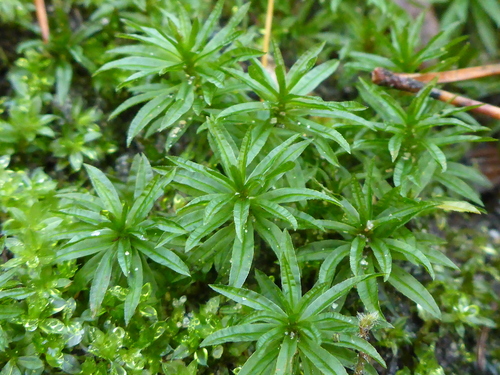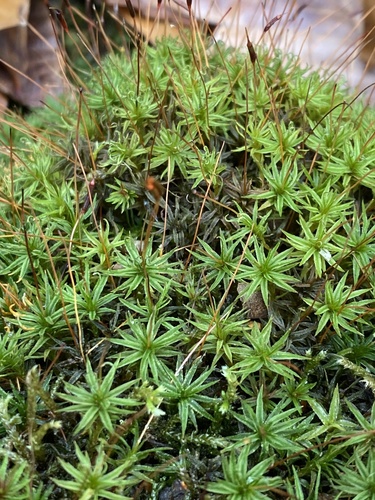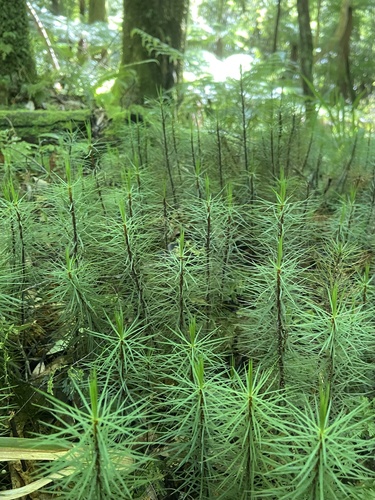
About Dawsonia superba Grev.
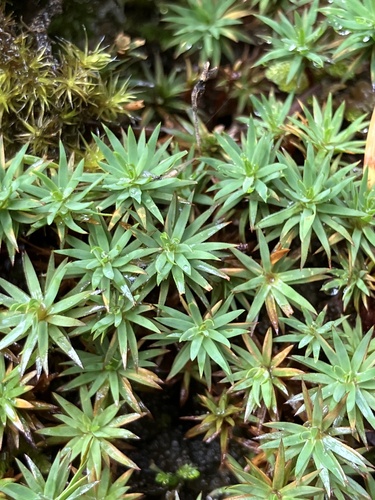
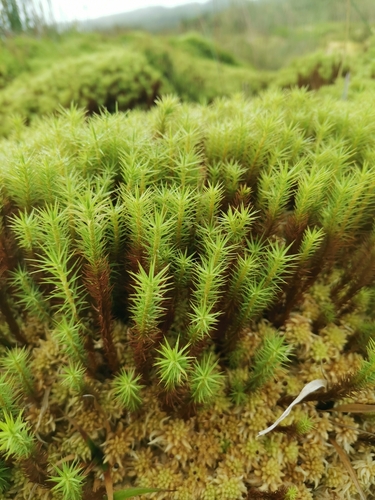
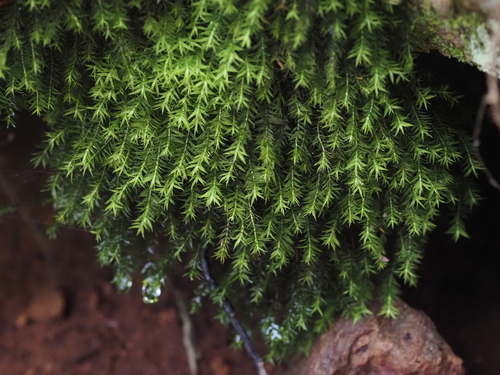
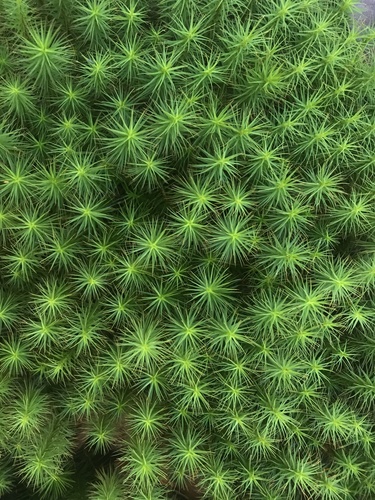
Dawsonia superba Grev. is a species of moss in the Polytrichaceae family, distributed across Australia, New Guinea, Malaysia, and New Zealand. It holds the record as the tallest self-supporting moss in the world, growing up to 60 cm (24 in) tall. It has structural features analogous to those of vascular plants that enable its large size: hydroid and leptoid cells that conduct water and photosynthate respectively, and lamellae that form gas chambers to improve the efficiency of photosynthesis. D. superba is classified in the class Polytrichopsida, but its sporophyte is unique among other hair-cap mosses. There is ongoing taxonomic uncertainty about whether D. superba and Dawsonia longifolia are separate species or the same taxon. Some sources have merged the two species, and both names have been used to refer to the same species with regional variation in usage for a long time. Both terms remain in common use today. In its distribution and habitat, D. superba is most commonly found in Australia, New Guinea, Malaysia, and New Zealand. It favors moist, sub-exposed habitats, including cloud forests and shady forests. It is frequently observed growing at the base of uprooted trees. For sexual reproduction, the gametophytes of D. superba are dioicious: male and female reproductive structures grow on separate individual plants. The male antheridium produces sperm that must travel to a female plant bearing archegonia for fertilization to take place. Though male and female plants are separate, they typically grow very close to one another. Male gametophytes use a splash-cup mechanism to disperse sperm: perigonial leaves (the leaves surrounding the antheridia) form a shallow cup-shaped structure. When water falls into this cup, it collects the sperm produced by the antheridia; when the water splashes out of the cup, the sperm are carried along with it. This mechanism allows sperm to disperse as far as 3 metres (9.8 ft) away from the original male gametophyte. Archegonia grow at the tips of female gametophytic shoots. For asexual reproduction, a 1980 study by Selkirk showed that leaves separated from the main D. superba plant can develop protonemal filaments. However, this type of regeneration is rarer in D. superba than in other species of the Dawsonia genus. Additionally, the rhizomes of D. superba often produce new vegetative shoots.