About Davidia involucrata Baill.
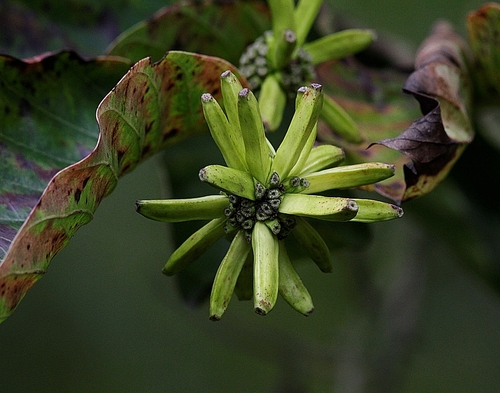
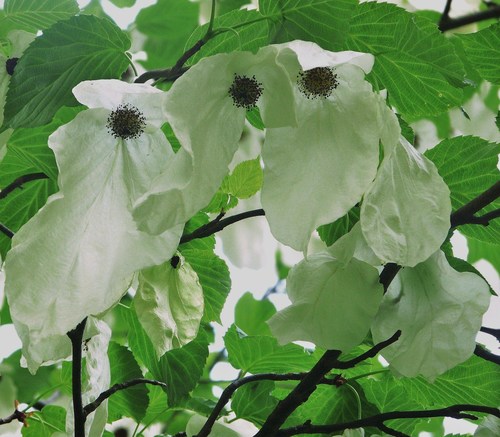
Davidia involucrata Baill. is a moderately fast-growing tree that reaches 20–25 meters (66–82 feet) in height. It produces toothed, alternate, ovate-cordate leaves that look similar to lime (Tilia) leaves at first glance, but differ because they are symmetrical, without the lop-sided leaf base that is typical of lime leaves. Most of its leaves are 10–20 cm long and 7–15 cm wide. This species is most famous for its inflorescence, which has two large white bracts surrounding a purplish-red flower head; the lower bract is almost twice the size of the upper one. The Latin specific epithet involucrata translates to "with a ring of bracts surrounding several flowers". The actual true flowers form a tight head around 1–2 cm across, and each flower head has a pair of large 12–25 cm pure white bracts at its base. These bracts act like petals to attract pollinators. Inflorescences hang in long rows beneath the tree's horizontal branches, and bloom prolifically in late spring. On windy days, the bracts flutter in the wind like white doves or folded handkerchiefs, which gives this tree its common English names. The fruit is a very hard nut roughly 3 cm long, surrounded by a green husk that measures around 4 cm long by 3 cm wide. This fruit hangs from a 10 cm stalk, and the nut inside contains 3–6 seeds. According to Turner and Wasson, these seeds can take up to three full years to germinate. Davidia involucrata is native to South Central and Southeast China, where it grows in montane mixed forests. The species was introduced from China to Europe and North America in 1904, and it is now a popular ornamental tree for parks and larger gardens. Most cultivated trees belong to the glabrous form, which has shown much better adaptation to the climatic conditions of Europe and North America. Both the parent species and the cultivated variety D. involucrata var. vilmoriniana have received the Royal Horticultural Society's Award of Garden Merit.