About Daucus decipiens (Schrad. & J.C.Wendl.) Spalik, Wojew., Banasiak & Reduron
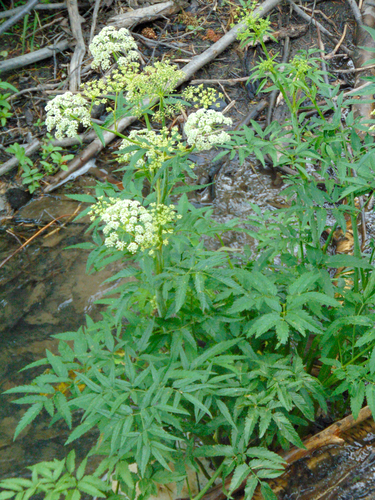
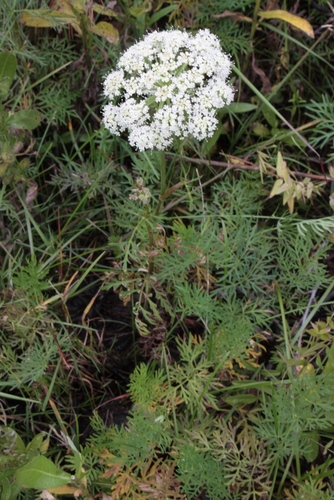
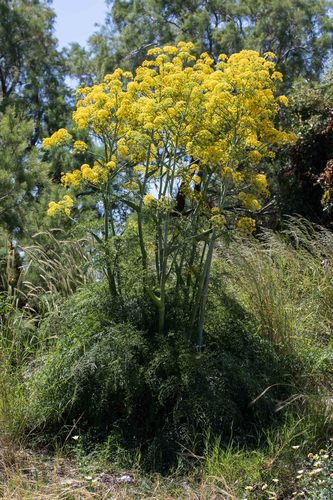
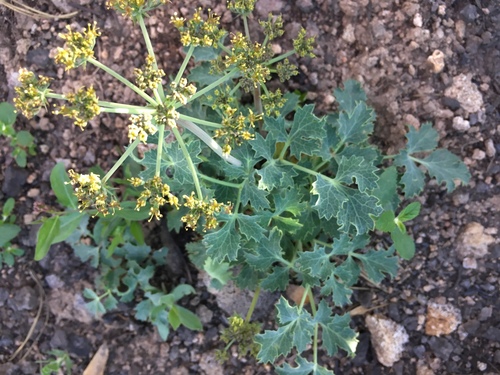
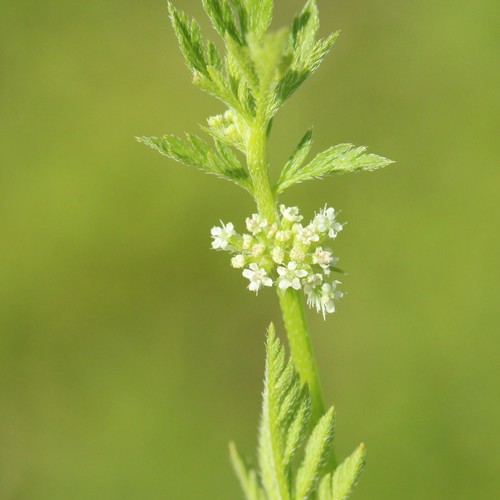
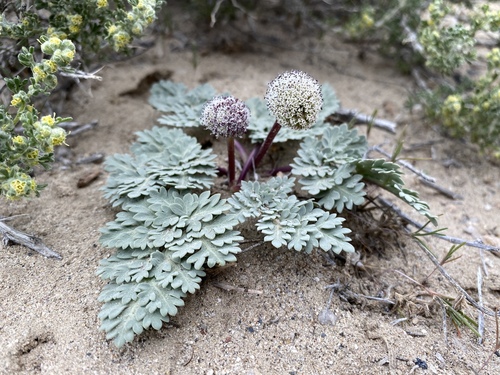
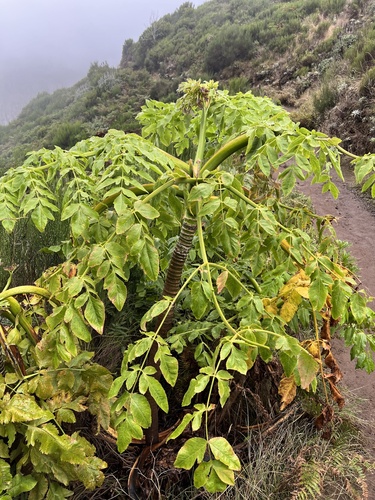
Daucus decipiens is an erect biennial or perennial large plant, with a spreading crown and a woody stem, similar in form to the New Zealand cabbage tree. It is native to Madeira, Portugal, and was introduced to Great Britain and to New Zealand in 1969. In New Zealand it occurs across both the North and South Islands, and is classified as an invasive pest in the Wellington area. This species prefers sunny, well-drained habitats and grows successfully along roadsides. It flowers from November to January in the Southern Hemisphere, and its seeds can remain viable for up to one year. Stems can reach up to 2 m in height and 4 cm in diameter; lower stem sections are woody, leafless, and marked with distinct leaf scars, with a central pith and partial hollowing. Stem leaves have fine hairs along their rachis and midribs, and are glabrous elsewhere. Mature stem leaves are 2–3-pinnate, while seedling leaves are 1-pinnate. Ultimate leaf segments are ovate to lanceolate, serrate, 15–20 mm long, either pinnatisect or unlobed, and are either shortly petiolulate or sessile. Leaves on inflorescence branches are much reduced in size. The leaf petiole is sparsely to moderately hairy and striate. Umbels can grow up to 20 cm in diameter, with numerous rays. There are 10–12 bracts, which are narrowly ovate-lanceolate, sometimes serrate, and reach up to 5 cm long, plus 7–12 lanceolate bracteoles. Flowers are numerous, and range in color from white to purplish. Fruits are dark brown, sparsely hairy, and 12–18 mm long.