About Datura ferox L.
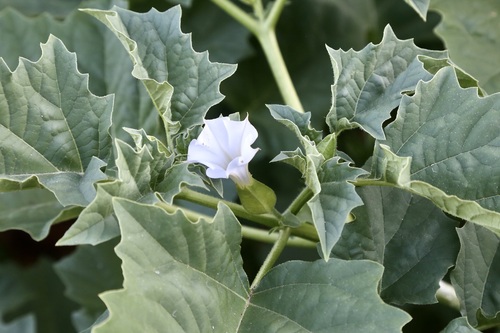
Datura ferox L. is a species in the Datura genus, with common names including long spined thorn apple, fierce thornapple, and Angel's-trumpets. Like all Datura species, every part of this plant contains deadly toxins that can kill any animal, including humans, that ingests it. Its ripe fruit is red-brown, and bears unusually long thorns or spikes. This species was first formally described in 1756 by Linnaeus. Its specific epithet "ferox" means "strongly fortified", a reference to the intimidating spines covering its seed pod. For a long time, researchers thought Datura ferox originated in southeastern China, but recent work by Symon and Haegi has shown that, like all other Datura species, it is actually native to the Americas. Datura ferox is very similar in morphology to Datura quercifolia, and it may actually be a subspecies of Datura quercifolia. Currently, Datura ferox grows across all warm regions of the world, where it is classified as a dangerous pasture weed. Datura ferox is a stout, upright annual herb, growing 45 to 90 cm (1.5 to 3 ft) tall. Its thick stalks often have a red-violet color at the base, and all young shoots are distinctly hairy. The most prominent feature of the plant is its very wide, wavy, irregularly toothed leaves, which are covered in soft, downy hairs. Its flowers are yellowish white, funnel-shaped, and inconspicuous, and usually do not open fully. All parts of Datura plants, including Datura ferox, contain dangerous levels of tropane alkaloids. Ingestion by humans or other animals, including livestock and pets, can be fatal. In some regions, buying, selling, or cultivating Datura plants is prohibited.