About Datura discolor Bernh.
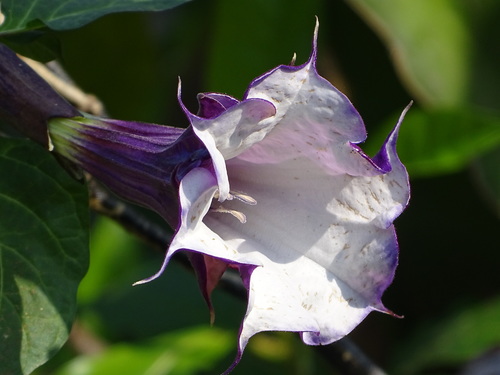
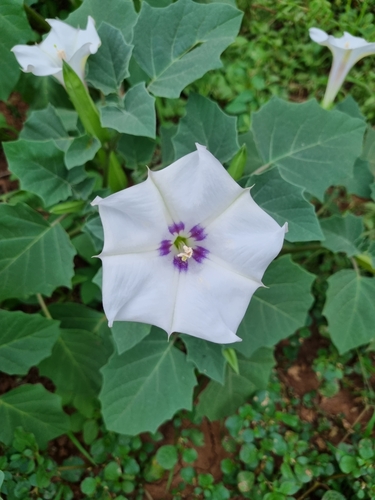
Datura discolor Bernh. was first formally described in 1833. Its specific epithet discolor means "various colors", a name that refers to its upward-growing trumpet-shaped flowers: the interior of the flower bell is white, and the color shifts from pale to dark violet between the narrow section of the bell and the flower base. This species is an upright or low-lying shrub that can reach 1.4 meters (4.5 feet) in height. It has light green foliage, and stalks marked with distinct, conspicuous purple stripes. Its leaves are ovate-shaped, and may be smooth-edged or toothed. Datura discolor produces large flowers, which makes it popular for garden cultivation. Each flower opens for just one night, and withers by the following day. Like most other Datura species, its seed capsule is covered in thorns; this capsule can grow up to 76 mm (3 inches) long and 64 mm (2.5 inches) in diameter. The species' native natural range extends from Mexico, through the Southwestern United States, to the Caribbean Islands. It prefers full sun, and grows well planted beneath overhanging eaves, which protect its flowers from rain damage. It naturally grows in sandy and gravelly soils. All parts of all Datura plants, including Datura discolor, contain dangerous levels of poison. Ingestion of any part by humans or animals, including livestock and pets, may be fatal. In some regions, it is illegal to buy, sell, or cultivate Datura plants.